





FoxP3 Antibodies
Explore over 5 clones against Foxp3 available for ASR and RUO use. These antibodies can be used for applications such as Intracellular staining (flow cytometry) and flow cytometry against Human, Rhesus, Cynomolgus, Baboon, and Mouse targets. Our FoxP3-specific antibodies were developed in Mouse and Rat and have Rat IgG2b κ, Mouse (BALB/c) IgG1 κ, and Rat IgG2a κ isotypes. Our anti-FOXP3 FoxP3-specific antibodies have been used in over 100 articles in peer-reviewed journals. Review over 50 figures from product development to select the best reagents for your needs.
Entrez Gene
Description: The protein encoded by this gene is a member of the forkhead/winged-helix family of transcriptional regulators. Defects in this gene are the cause of immunodeficiency polyendocrinopathy, enteropathy, X-linked syndrome (IPEX), also known as X-linked autoimmunity-immunodeficiency syndrome. Alternatively spliced transcript variants encoding different isoforms have been identified.
Description: The protein encoded by this gene is a member of the forkhead/winged-helix family of transcriptional regulators. Defects in this gene result in the scurfy phenotype (sf). Alternative splicing results in multiple transcript variants.
UniProt
Function: Transcriptional regulator which is crucial for the development and inhibitory function of regulatory T-cells (Treg). Plays an essential role in maintaining homeostasis of the immune system by allowing the acquisition of full suppressive function and stability of the Treg lineage, and by directly modulating the expansion and function of conventional T-cells. Can act either as a transcriptional repressor or a transcriptional activator depending on its interactions with other transcription factors, histone acetylases and deacetylases. The suppressive activity of Treg involves the coordinate activation of many genes, including CTLA4 and TNFRSF18 by FOXP3 along with repression of genes encoding cytokines such as interleukin-2 (IL2) and interferon-gamma (IFNG). Inhibits cytokine production and T-cell effector function by repressing the activity of two key transcription factors, RELA and NFATC2. Mediates transcriptional repression of IL2 via its association with histone acetylase KAT5 and histone deacetylase HDAC7. Can activate the expression of TNFRSF18, IL2RA and CTLA4 and repress the expression of IL2 and IFNG via its association with transcription factor RUNX1. Inhibits the differentiation of IL17 producing helper T-cells (Th17) by antagonizing RORC function, leading to down-regulation of IL17 expression, favoring Treg development. Inhibits the transcriptional activator activity of RORA. Can repress the expression of IL2 and IFNG via its association with transcription factor IKZF4.
Molecular Function: Activator, DNA-binding, Repressor
Subcellular location: Nucleus, Cytoplasm
kDa: 47
Function: Transcriptional regulator which is crucial for the development and inhibitory function of regulatory T-cells (Treg). Plays an essential role in maintaining homeostasis of the immune system by allowing the acquisition of full suppressive function and stability of the Treg lineage, and by directly modulating the expansion and function of conventional T-cells. Can act either as a transcriptional repressor or a transcriptional activator depending on its interactions with other transcription factors, histone acetylases and deacetylases. The suppressive activity of Treg involves the coordinate activation of many genes, including CTLA4 and TNFRSF18 by FOXP3 along with repression of genes encoding cytokines such as interleukin-2 (IL2) and interferon-gamma (IFNG). Inhibits cytokine production and T-cell effector function by repressing the activity of two key transcription factors, RELA and NFATC2. Mediates transcriptional repression of IL2 via its association with histone acetylase KAT5 and histone deacetylase HDAC7. Can activate the expression of TNFRSF18, IL2RA and CTLA4 and repress the expression of IL2 and IFNG via its association with transcription factor RUNX1. Inhibits the differentiation of IL17 producing helper T-cells (Th17) by antagonizing RORC function, leading to down-regulation of IL17 expression, favoring Treg development. Inhibits the transcriptional activator activity of RORA. Can repress the expression of IL2 and IFNG via its association with transcription factor IKZF4
Molecular Function: Activator, DNA-binding, Repressor
Subcellular location: Nucleus, Cytoplasm
kDa: 47
AKA
JM2; AIID; IPEX; PIDX; XPID; DIETER, Scurfin, sf
SAMPLE DATA
Our antibody reagents portfolio is designed for exceptional specificity, sensitivity, and consistency to empower researchers to generate high-resolution, reproducible data with confidence. The figures below showcase antibody performance in relevant model systems, highlighting minimal background staining and robust signal-to-noise ratios. Whether you’re studying rare cell population or scaling up for high-throughput analysis, our reagents are designed to elevate and standardize your flow cytometry experiments.
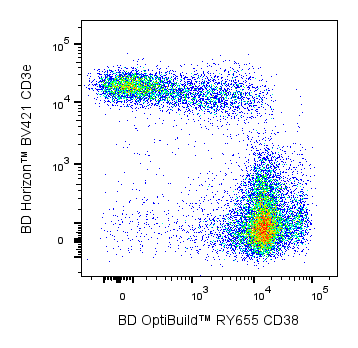

Samples were acquired using the BD FACSymphony™ A5 SE Cell Analyzer and analyzed with FlowJo™ v10.8 Software.
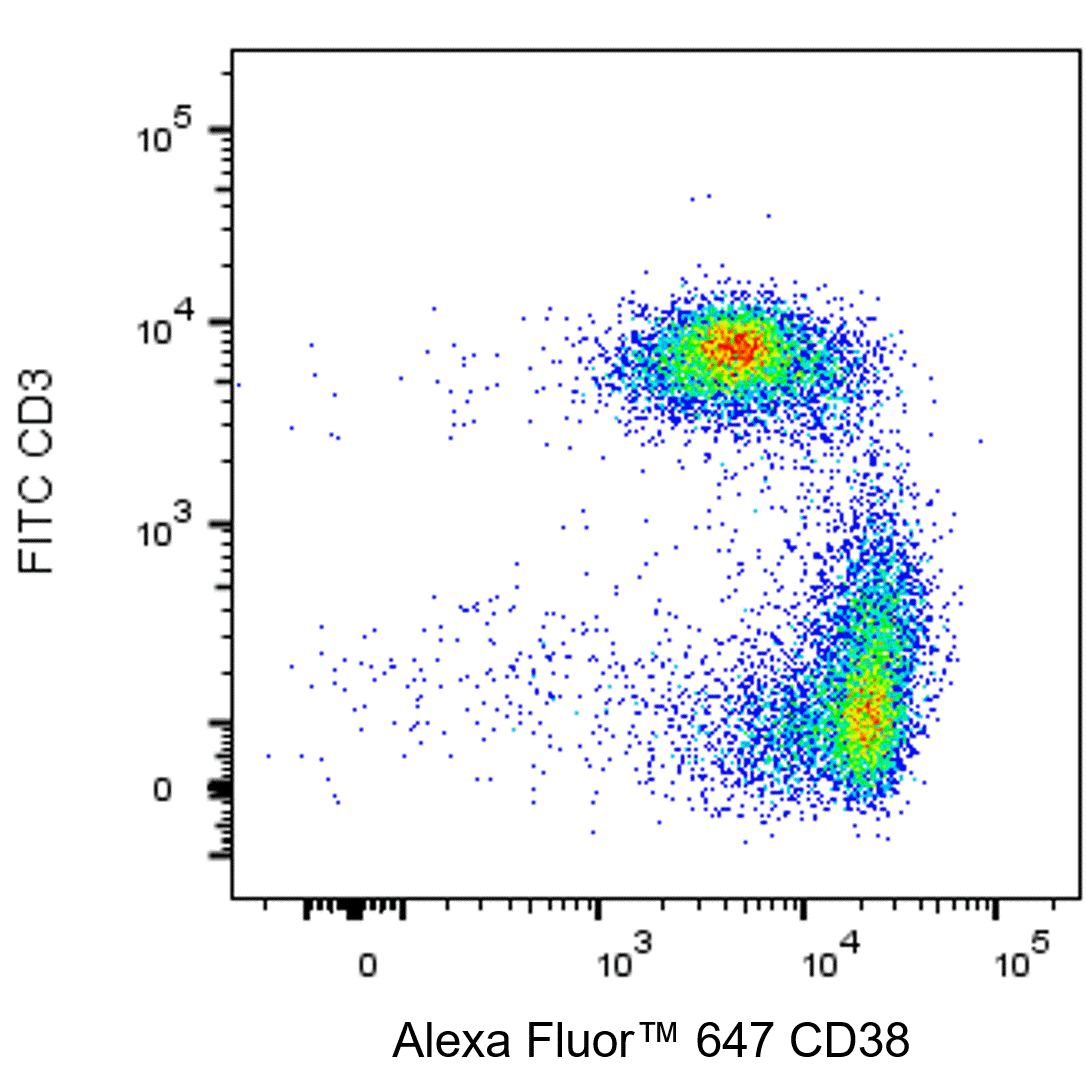
Flow cytometric analysis of CD38 expression on Rat splenic leukocytes.
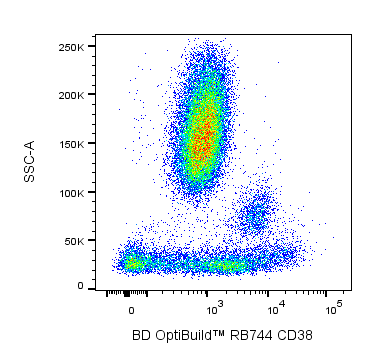
Samples were acquired on the BD FACSymphony™ A5 SE Cell Analyzer.

Multiparameter flow cytometric analysis of CD38 expression on human peripheral blood leucocyte populations.
COLLATERAL
Maximize the impact of your flow cytometry experiments with our comprehensive suite of support materials. From detailed protocols for experimental setup to academic posters showcasing real-world applications, our resources are designed to help you uncover the full potential of our antibodies. Explore product flyers and brochures that highlight key features, performance data, and use cases; deepen your expertise through educational webinars led by our immunology and flow cytometry specialists. Whether you're new to flow or optimizing complex panels, our collateral empowers you to generate high-quality data and drive meaningful discoveries.
Shop Our FoxP3 Antibodies
For Research Use Only. Not for use in diagnostic or therapeutic procedures.