







준비 및 보관


권장 분석 절차
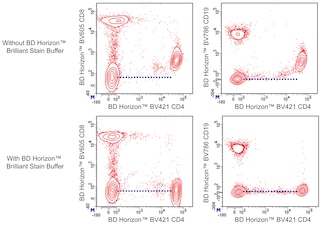
For optimal and reproducible results, BD Horizon Brilliant Stain Buffer should be used anytime two or more BD Horizon Brilliant dyes (including BD OptiBuild Brilliant reagents) are used in the same experiment. Fluorescent dye interactions may cause staining artifacts which may affect data interpretation. The BD Horizon Brilliant Stain Buffer was designed to minimize these interactions. More information can be found in the Technical Data Sheet of the BD Horizon Brilliant Stain Buffer (Cat. No. 563794).
제품 고시
- This antibody was developed for use in flow cytometry.
- The production process underwent stringent testing and validation to assure that it generates a high-quality conjugate with consistent performance and specific binding activity. However, verification testing has not been performed on all conjugate lots.
- Researchers should determine the optimal concentration of this reagent for their individual applications.
- An isotype control should be used at the same concentration as the antibody of interest.
- Caution: Sodium azide yields highly toxic hydrazoic acid under acidic conditions. Dilute azide compounds in running water before discarding to avoid accumulation of potentially explosive deposits in plumbing.
- For fluorochrome spectra and suitable instrument settings, please refer to our Multicolor Flow Cytometry web page at www.bdbiosciences.com/colors.
- Please refer to www.bdbiosciences.com/us/s/resources for technical protocols.
- BD Horizon Brilliant Stain Buffer is covered by one or more of the following US patents: 8,110,673; 8,158,444; 8,575,303; 8,354,239.
- BD Horizon Brilliant Violet 786 is covered by one or more of the following US patents: 8,110,673; 8,158,444; 8,227,187; 8,455,613; 8,575,303; 8,354,239.
- Cy is a trademark of GE Healthcare.
관련 제품
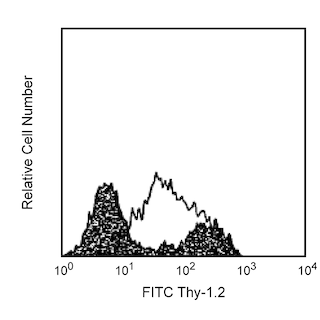
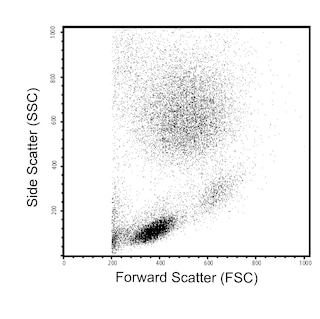
The 3F1 monoclonal antibody specifically binds to CD155, which is also known as Poliovirus receptor (Pvr) or Tumor-associated antigen 1 (Taa1). CD155 is a type I transmembrane glycoprotein that belongs to the Ig supergene family. CD155 is an adhesion receptor that binds to different ligands including nectin-3, CD96, CD226, TIGIT, and the extracellular matrix protein vitronectin. It is highly expressed on double positive thymocytes and variably expressed on mature thymocytes and T cells, including regulatory T cells and NKT cells. CD155 is also differentially expressed on subsets of B cells, plasma cells, dendritic cells, and monocytes. CD155 expression is upregulated by activated T cells, B cells, and dendritic cells. CD155 is involved in forming adherens junctions between adjacent epithelial or endothelial cells. CD155 plays roles in regulating cell growth, adhesion, motility, migration, and cell-mediated cytotoxicity. CD155-deficient mice exhibit impaired secondary humoral immune responses to orally administered antigens.
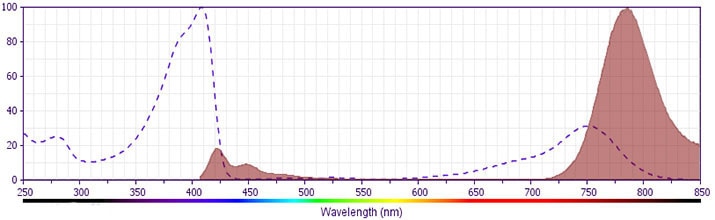
The antibody was conjugated to BD Horizon™ BV786 which is part of the BD Horizon Brilliant™ Violet family of dyes. This dye is a tandem fluorochrome of BD Horizon BV421 with an Ex Max of 405-nm and an acceptor dye with an Em Max at 786-nm. BD Horizon BV786 can be excited by the violet laser and detected in a filter used to detect Cy™7-like dyes (eg, 780/60-nm filter).
개발 참고 자료 (3)
-
Danisch S, Qiu Q, Seth S, et al. CD226 interaction with CD155 impacts on retention and negative selection of CD8 positive thymocytes as well as T cell differentiation to follicular helper cells in Peyer's Patches.. Immunobiology. 2013; 218(2):152-8. 참조 보기
-
Maier MK, Seth S, Czeloth N, et al. The adhesion receptor CD155 determines the magnitude of humoral immune responses against orally ingested antigens.. Eur J Immunol. 2007; 37(8):2214-25. 참조 보기
-
Stanietsky N, Rovis TL, Glasner A, et al. Mouse TIGIT inhibits NK-cell cytotoxicity upon interaction with PVR.. Eur J Immunol. 2013; 43(8):2138-50. 참조 보기
Please refer to Support Documents for Quality Certificates
Global - Refer to manufacturer's instructions for use and related User Manuals and Technical data sheets before using this products as described
Comparisons, where applicable, are made against older BD Technology, manual methods or are general performance claims. Comparisons are not made against non-BD technologies, unless otherwise noted.
For Research Use Only. Not for use in diagnostic or therapeutic procedures.
