





How to Reduce Burnout Among Flow Cytometry Lab Staff?
Automation may provide the answer
August 12, 2025
Flow cytometry is the typical workhorse of clinical laboratories, facilitating various research and diagnostic applications. Generally considered as an esoteric and complex technique mastered by a few experts, the technique involves several steps, and the manual aspects of this work are not only time-consuming but also mentally and physically taxing.
Burnout in laboratories
Manual tasks in flow cytometry involve repetitive actions and meticulous attention to detail, often under time pressure. These tasks range from preparing samples (including repetitive manual pipetting steps) and setting up the flow cytometer to manually entering data and adjusting settings during the process. This continuous, repetitive and monotonous workload can lead to physical fatigue and mental exhaustion, commonly referred to as burnout. Burnout not only affects the health and morale of the lab staff but also compromises the quality of the scientific work being conducted.1 With a staggering 85.3 percent of lab personnel reporting burnout as a laboratory professional,2 it's clear that the traditional methods are taking a toll on staff well-being and efficiency.
Automation to the rescue
The introduction of automation in flow cytometry labs offers a beacon of hope for overburdened lab staff. By automating routine and repetitive tasks, labs can significantly reduce the manual workload, thus addressing the root cause of burnout.
Reduction in hands-on time
Substituting automation to manual steps significantly reduces manual labor. The substantial decrease in manual labor allows staff to engage in more fulfilling and less tiresome activities.
Minimization of human errors
One of the indirect effects of burnout is an increase in human errors. Automation helps in minimizing these errors by maintaining consistency and accuracy in tasks that would otherwise be prone to mistakes from fatigue. Automated systems process large volumes of samples consistently and accurately, ensuring reliable results. This reliability not only improves the quality of research but also reduces the stress and frustration that lab staff might face when dealing with inconsistent or erroneous data.
Creating a balanced work environment
Automation allows lab staff to shift their focus from mundane tasks to more intellectually stimulating activities, such as data analysis and interpretation. This not only makes the job more interesting but also helps in maintaining a healthier work-life balance, which is crucial for mental health. Consequently, a more balanced workload can reduce burnout rates, enhance job satisfaction, and boost overall productivity within the lab. By adopting automation, labs can create a more sustainable and supportive environment for their staff, ultimately leading to better scientific outcomes and a more motivated workforce.
Flow cytometry lab automation using the BD FACSLyric™ Flow Cytometer Integrated with the BD FACSDuet™ Sample Preparation System
The BD FACSDuet™ Sample Preparation System is designed with the specific needs of flow cytometry labs in mind. It integrates seamlessly with the BD FACSLyric™ Flow Cytometer to provide a comprehensive solution that minimizes manual intervention. The system can be used to automate sample preparation for both IVD and user-defined assays.
Through automated onboard cocktailing, washing, centrifuging and automatic sample transfer to an integrated flow cytometer, the RUO BD FACSDuet™ Premium System reduces manual labor significantly and help increase lab efficiency. By automating manual error-prone steps that may introduce user-to-user variability, it helps to drive workflow standardization. It reduces hands-on time by up to 80% for wash preparation methods when compared to manual workflows.
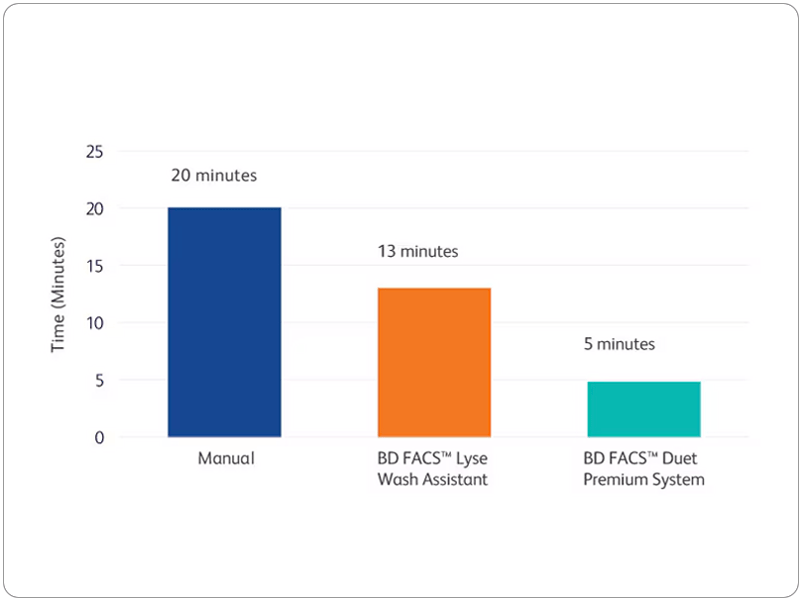
The shift towards automation in flow cytometry labs is essential for addressing the widespread issue of burnout among lab technicians. By integrating advanced systems like the BD FACSDuet™ System, labs can significantly alleviate the manual burden, leading to improved health outcomes for staff and superior scientific results. As we look to the future, the role of automation will continue to grow, proving indispensable in the evolution of laboratory work.
Learn more about the BD FACSDuet™ Sample Preparation System.


