





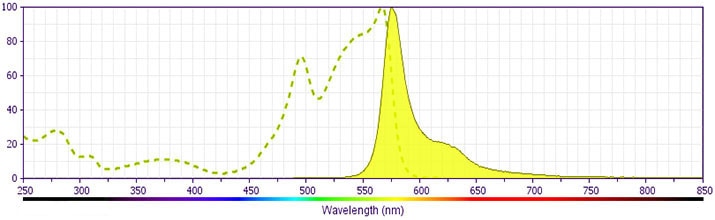
Consider BD Horizon RealYellow™ 586 (RY586) Reagents, a bright and clean fluorochrome alternative to PE off the yellow-green laser. RY586 can be used alongside PE on spectral cytometers.
More Info


.png)


.png?imwidth=320)
For Research Use Only. Not for use in diagnostic or therapeutic procedures.
