







Preparation And Storage


Recommended Assay Procedures
Put all BD® AbSeq Reagents to be pooled into a Latch Rack for 500 µL Tubes (Thermo Fisher Scientific Cat. No. 4900). Arrange the tubes so that they can be easily uncapped and re-capped with an 8-Channel Screw Cap Tube Capper (Thermo Fisher Scientific Cat. No. 4105MAT) and the reagents aliquoted with a multi-channel pipette.
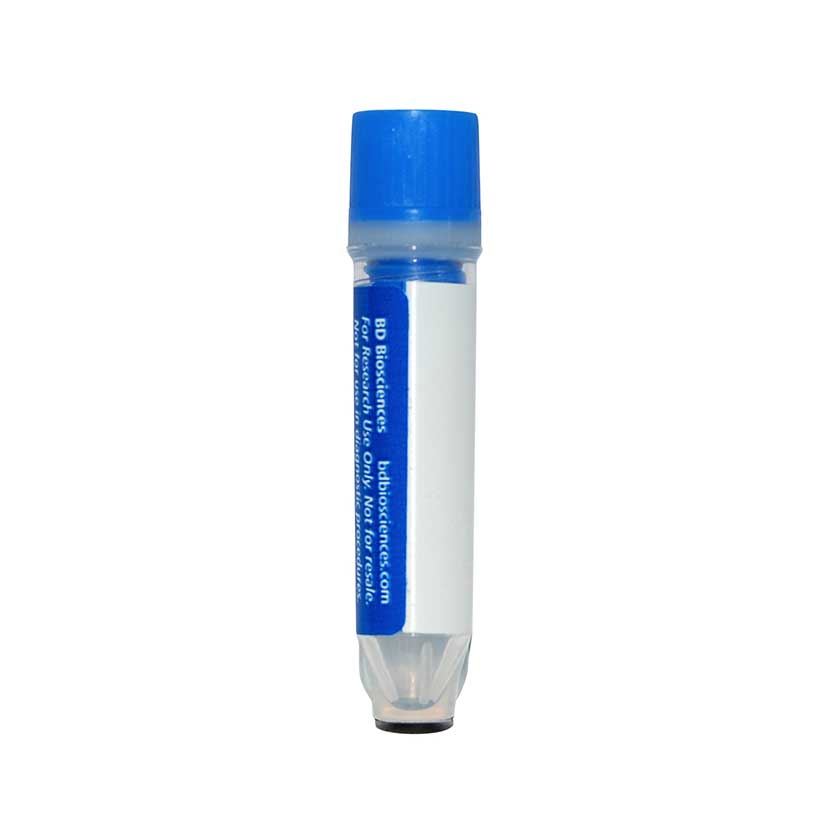
BD® AbSeq tubes should be centrifuged for ≥ 30 seconds at 400 × g to ensure removal of any content in the cap/tube threads prior to the first opening.
Product Notices
- This reagent has been pre-diluted for use at the recommended volume per test. Typical use is 2 µl for 1 × 10^6 cells in a 200-µl staining reaction.
- Source of all serum proteins is from USDA inspected abattoirs located in the United States.
- Caution: Sodium azide yields highly toxic hydrazoic acid under acidic conditions. Dilute azide compounds in running water before discarding to avoid accumulation of potentially explosive deposits in plumbing.
- The production process underwent stringent testing and validation to assure that it generates a high-quality conjugate with consistent performance and specific binding activity. However, verification testing has not been performed on all conjugate lots.
- Illumina is a trademark of Illumina, Inc.
- Please refer to http://regdocs.bd.com to access safety data sheets (SDS).
- Please refer to bd.com/genomics-resources for technical protocols.
- For U.S. patents that may apply, see bd.com/patents.
Companion Products



The 3D10 monoclonal antibody specifically binds to mouse Lymphocyte antigen 49H (Ly-49H; also known as Klra8 or Killer cell lectin-like receptor 8). The 3D10 antibody does not crossreact with related molecules such as Ly-49A, C, D or G2. Ly-49H is a type II transmembrane protein and a member of the Ly-49 C-type lectin multigene family of receptors expressed by NK cells. Cell surface Ly-49H is expressed by a subset of NK cells but not by NKT cells. Ly-49H is expressed by C57BL/6 and NWNA but not by BALB/c or DBA/2 mouse NK cells. Cell surface Ly-49H presents as a ~110 kDa disfulfide-linked homodimer and associates with signaling subunits such as DAP10 and DAP12 for optimal transduction of intracellular activation signals. Crosslinking of Ly-49H with the 3D10 antibody reportedly induces NK cell cytotoxicity and cytokine production. Ly-49H recognizes the mouse cytomegalovirus m157 glycoprotein that is expressed by infected cells and is required for protection against cytomegalovirus infection.
Development References (5)
-
Brennan J, Mager D, Jefferies W, Takei F. Expression of different members of the Ly-49 gene family defines distinct natural killer cell subsets and cell adhesion properties. J Exp Med. 1994; 180(6):2287-2295. (Biology). View Reference
-
Brown MG, Dokun AO, Heusel JW, et al. Vital involvement of a natural cell activation receptor in resistance to viral infection. Science. 2001; 292(5518):934-937. (Clone-specific: Activation, Bioassay, Blocking, Cytotoxicity, Flow cytometry). View Reference
-
Orr MT, Sun JC, Hesslein DG, et al. Ly49H signaling through DAP10 is essential for optimal natural killer cell responses to mouse cytomegalovirus infection. J Exp Med. 2009; 206(4):807-817. (Clone-specific: Blocking, Flow cytometry). View Reference
-
Silver ET, Elliott JF, Kane KP. Alternatively spliced Ly-49D and H transcripts are found in IL-2-activated NK cells. Immunogenetics. 1996; 44(6):478-482. (Biology). View Reference
-
Smith HR, Chuang HH, Wang LL, Salcedo M, Heusel JW, Yokoyama WM. Nonstochastic Coexpression of activation receptors on murine Natural Killer cells. J Exp Med. 2000; 191(8):1341-1354. (Immunogen: Activation, Cytotoxicity, Flow cytometry, Immunoprecipitation). View Reference
Please refer to Support Documents for Quality Certificates
Global - Refer to manufacturer's instructions for use and related User Manuals and Technical data sheets before using this products as described
Comparisons, where applicable, are made against older BD Technology, manual methods or are general performance claims. Comparisons are not made against non-BD technologies, unless otherwise noted.
For Research Use Only. Not for use in diagnostic or therapeutic procedures.