The site is undergoing maintenance on
Thursday, September 10, 8:00 pm through Friday, September 11, 8:00 pm (EDT), 2026.
If you encounter problems while ordering, please contact us at BDBCustomerService@bd.com
See More
The site is undergoing maintenance on
Thursday, September 10, 8:00 pm through Friday, September 11, 8:00 pm (EDT), 2026.
If you encounter problems while ordering, please contact us at BDBCustomerService@bd.com
See MoreThe site is undergoing maintenance on
Thursday, September 10, 8:00 pm through Friday, September 11, 8:00 pm (EDT), 2026
.If you encounter problems while ordering, please contact us at BDBCustomerService@bd.com
Looks like you're visiting us from {countryName}.
Would you like to stay on the current country site or be switched to your country?
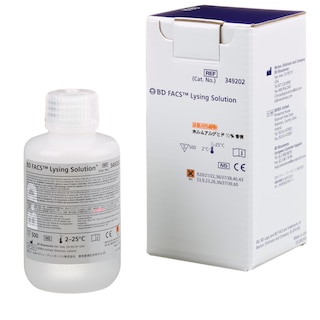
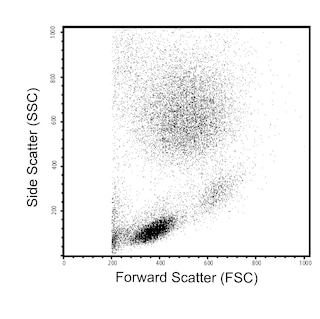
Flow cytometric analysis of CD66 expression on peripheral blood granulocytes. Whole blood was stained with either PE Mouse Anti-Human CD66 (Cat. No. 551480; solid line histogram), or PE Mouse IgG2a, κ Isotype Control (Cat. No. 555574; dashed line histogram). Erythrocytes were lysed with BD FACS™ Lysing Solution (Cat. No. 349202). The fluorescence histograms were derived from gated events with the forward and side light-scattering characteristics of viable granulocytes.
Any use of products other than the permitted use without the express written authorization of Becton, Dickinson and Company is strictly prohibited.
The B1.1 monoclonal antibody binds to several glycosylphosphatidylinositol-anchored glycoproteins present on granulocytes and epithelial cells. As reported in the Sixth International Workshop and Conference on Human Leucocyte Differentiation Antigens, the B1.1 antibody recognized CD66a (CEACAM1), CD66c (CEACAM6), CD66d (CEACAM3) and CD66e (CEACAM5). CD66 antigens belong to the carcinoembryonic antigen (CEA) family of molecules that are closely related to the immunoglobulin superfamily of glycoproteins. Studies on CD66 molecules suggest a potential adhesion function in vivo. These molecules exhibit both homophilic and heterophilic adhesion. CEA family members may be involved in transmembrane signaling and activation of neutrophils.
Please refer to Support Documents for Quality Certificates
Global - Refer to manufacturer's instructions for use and related User Manuals and Technical data sheets before using this products as described
Comparisons, where applicable, are made against older BD Technology, manual methods or are general performance claims. Comparisons are not made against non-BD technologies, unless otherwise noted.
For Research Use Only. Not for use in diagnostic or therapeutic procedures.