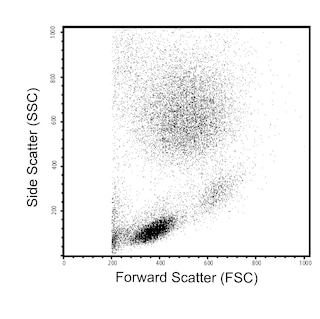
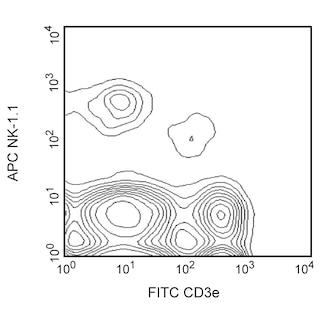
The monoclonal antibody 29A1.4 specifically binds to mouse CD335, also known as NKp46. NKp46 is a 46 kDa type I transmembrane glycoprotein that is a member of the natural cytotoxicity receptor (NCR) family and immunoglobulin superfamily. NKp46 is encoded by the Ncr1 gene located on chromosome 7. NKp46 functions as a cytotoxicity triggering receptor and is selectively expressed by immature and mature NK cells in all mouse strains tested. NKp46 is detected on a minute fraction of NK-like T cells (less than 2% of NKp46+ express CD3e) but not on CD1d-restricted NKT cells from C57BL/6 mice. When immobilized on tissue culture plates, the 29A1.4 antibody reportedly stimulates NK cells to produce interferon-gamma and to release their cytoplasmic granule contents. Although the ligands for the NKp46 receptor have not been fully characterized, recent evidence indicates that this receptor plays an important role in the NK cell-mediated recognition and killing of some virus-infected cells and tumor cells. The immunogen used to generate the 29A1.4 clone was mouse NKp46-Fc recombinant protein.
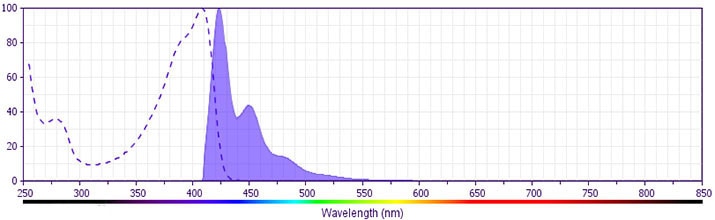
The antibody was conjugated to BD Horizon™ BV421 which is part of the BD Horizon™ Brilliant Violet™ family of dyes. With an Ex Max of 407-nm and Em Max at 421-nm, BD Horizon™ BV421 can be excited by the violet laser and detected in the standard Pacific Blue™ filter set (eg, 450/50-nm filter). BD Horizon™ BV421 conjugates are very bright, often exhibiting a 10 fold improvement in brightness compared to Pacific Blue™ conjugates.