







Preparation And Storage


Recommended Assay Procedures
For optimal and reproducible results, BD Horizon Brilliant Stain Buffer should be used anytime two or more BD Horizon Brilliant dyes (including BD Optibuild Brilliant reagents) are used in the same experiment. Fluorescent dye interactions may cause staining artifacts which may affect data interpretation. The BD Horizon Brilliant Stain Buffer was designed to minimize these interactions. More information can be found in the Technical Data Sheet of the BD Horizon Brilliant Stain Buffer (Cat. No. 563794/566349) or the BD Horizon Brilliant Stain Buffer Plus (Cat. No. 566385).
Product Notices
- This reagent has been pre-diluted for use at the recommended Volume per Test. We typically use 1 × 10^6 cells in a 100-µl experimental sample (a test).
- An isotype control should be used at the same concentration as the antibody of interest.
- Source of all serum proteins is from USDA inspected abattoirs located in the United States.
- Caution: Sodium azide yields highly toxic hydrazoic acid under acidic conditions. Dilute azide compounds in running water before discarding to avoid accumulation of potentially explosive deposits in plumbing.
- Pacific Blue™ is a trademark of Molecular Probes, Inc., Eugene, OR.
- For fluorochrome spectra and suitable instrument settings, please refer to our Multicolor Flow Cytometry web page at www.bdbiosciences.com/colors.
- Species cross-reactivity detected in product development may not have been confirmed on every format and/or application.
- BD Horizon Brilliant Violet 421 is covered by one or more of the following US patents: 8,158,444; 8,362,193; 8,575,303; 8,354,239.
- BD Horizon Brilliant Stain Buffer is covered by one or more of the following US patents: 8,110,673; 8,158,444; 8,575,303; 8,354,239.
- Please refer to www.bdbiosciences.com/us/s/resources for technical protocols.
Companion Products

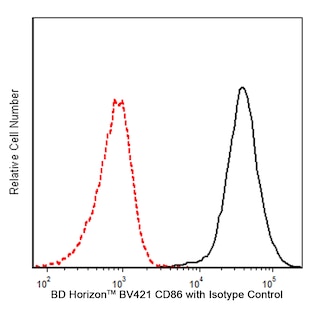
The 2331 (FUN-1) monoclonal antibody specifically recognizes a 75 kDa transmembrane cell surface protein, CD86 (B70/B7-2), expressed primarily on monocytes, dendritic cells and activated B cells. Competitive binding assays demonstrate that, while both 2331 (FUN-1) and IT2.2 (Anti-CD86) antibodies specifically recognize the same molecule, they react with different epitopes. CD86 is a ligand for CD28 and CTLA-4 and plays an important role in costimulation of T cells in primary immune response. The 2331 (FUN-1) antibody blocks the costimulatory activity of CD86 when tested in functional studies.
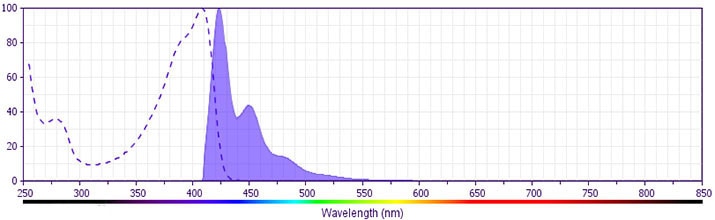
The antibody was conjugated to BD Horizon™ BV421 which is part of the BD Horizon™ Brilliant Violet™ family of dyes. With an Ex Max of 407-nm and Em Max at 421-nm, BD Horizon™ BV421 can be excited by the violet laser and detected in the standard Pacific Blue™ filter set (eg, 450/50-nm filter). BD Horizon™ BV421 conjugates are very bright, often exhibiting a 10 fold improvement in brightness compared to Pacific Blue™ conjugates.
Development References (6)
-
Azuma H, Uno Y, Shigekiyo T, Saito S. Congenital plasminogen deficiency caused by a Ser572 to Pro mutation. Blood. 1993; 82(2):475-480. (Biology). View Reference
-
Azuma M, Ito D, Yagita H, et al. B70 antigen is a second ligand for CTLA-4 and CD28.. Nature. 1993; 366(6450):76-9. (Biology). View Reference
-
Engel P, Gribben JG, Freeman GJ, et al. The B7-2 (B70) costimulatory molecule expressed by monocytes and activated B lymphocytes is the CD86 differentiation antigen. Blood. 1994; 84(5):1402-1407. (Biology). View Reference
-
Engel P, Wagner N, Tedder TF. CD86 Workshop Report. In: Schlossman SF. Stuart F. Schlossman .. et al., ed. Leucocyte typing V : white cell differentiation antigens : proceedings of the fifth international workshop and conference held in Boston, USA, 3-7 November, 1993. Oxford: Oxford University Press; 1995:703-705.
-
Nozawa Y, Wakasa H, Abe M. Production and usefulness of monoclonal antibodies against B cells. Fukushima J Med Sci. 1999; 45(1):1-11. (Biology). View Reference
-
Yang XF, Chen Z, Wormsley SB. Nashville: American Society of Hematology; 1994.
Please refer to Support Documents for Quality Certificates
Global - Refer to manufacturer's instructions for use and related User Manuals and Technical data sheets before using this products as described
Comparisons, where applicable, are made against older BD Technology, manual methods or are general performance claims. Comparisons are not made against non-BD technologies, unless otherwise noted.
For Research Use Only. Not for use in diagnostic or therapeutic procedures.
