







Preparation And Storage


Recommended Assay Procedures
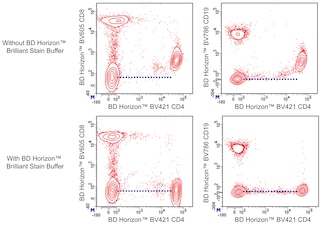
For optimal and reproducible results, BD Horizon Brilliant Stain Buffer should be used anytime two or more BD Horizon Brilliant dyes (including BD OptiBuild Brilliant reagents) are used in the same experiment. Fluorescent dye interactions may cause staining artifacts which may affect data interpretation. The BD Horizon Brilliant Stain Buffer was designed to minimize these interactions. More information can be found in the Technical Data Sheet of the BD Horizon Brilliant Stain Buffer (Cat. No. 563794).
Product Notices
- This antibody was developed for use in flow cytometry.
- The production process underwent stringent testing and validation to assure that it generates a high-quality conjugate with consistent performance and specific binding activity. However, verification testing has not been performed on all conjugate lots.
- Researchers should determine the optimal concentration of this reagent for their individual applications.
- An isotype control should be used at the same concentration as the antibody of interest.
- Caution: Sodium azide yields highly toxic hydrazoic acid under acidic conditions. Dilute azide compounds in running water before discarding to avoid accumulation of potentially explosive deposits in plumbing.
- For fluorochrome spectra and suitable instrument settings, please refer to our Multicolor Flow Cytometry web page at www.bdbiosciences.com/colors.
- Please refer to www.bdbiosciences.com/us/s/resources for technical protocols.
- BD Horizon Brilliant Stain Buffer is covered by one or more of the following US patents: 8,110,673; 8,158,444; 8,575,303; 8,354,239.
- BD Horizon Brilliant Ultraviolet 737 is covered by one or more of the following US patents: 8,110,673; 8,158,444; 8,227,187; 8,575,303; 8,354,239.
- Alexa Fluor® is a registered trademark of Life Technologies Corporation.
Companion Products
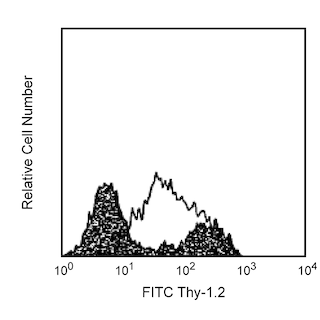
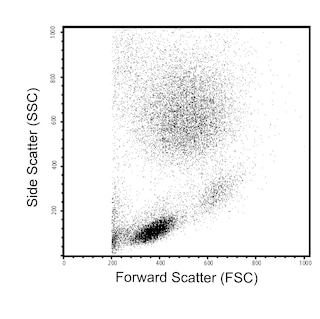
The TY25 monoclonal antibody specifically binds to CD273, also known as B7-DC or PD-L2. CD273 is a 42-kDa type I membrane glycoprotein encoded by the Pdcd1lg2 gene of the B7 family of the Ig superfamily. Pdcd1lg2 mRNA is expressed selectively in dendritic cells (DC), liver, and a few transformed cell lines (hepatic, neuroblastoma, and myeloid), but not in lymphoid tissues or macrophages. The protein has not been detected on resting peripheral T and B lymphocytes, macrophages, or DC, but it is upregulated upon activation of T cells, macrophages, and DC by a variety of stimulatory factors. B7-DC's receptor, PD-1, contains an ITIM (Immunoreceptor Tyrosine-based Inhibitory Motif) on its intracytoplasmic region and is expressed on activated B and T lymphocytes, suggesting that B7-DC-PD-1 interaction may be involved in the negative regulation of immune responses. The second PD-1 ligand, B7-H1 (PD-L1), is also a member of the B7 family of the Ig superfamily. B7-DC may also participate in positive immunoregulation, or costimulation of T cells, through an additional receptor, which is not PD-1 and distinct from the alternate receptor for B7-H1. Moreover, B7-DC is the first B7 ligand that has been found to participate in bi-directional communication; ligation of B7-DC on DC stimulates those DC. The TY25 antibody blocks the binding of B7-DC to PD-1, but not to its alternate ligand.
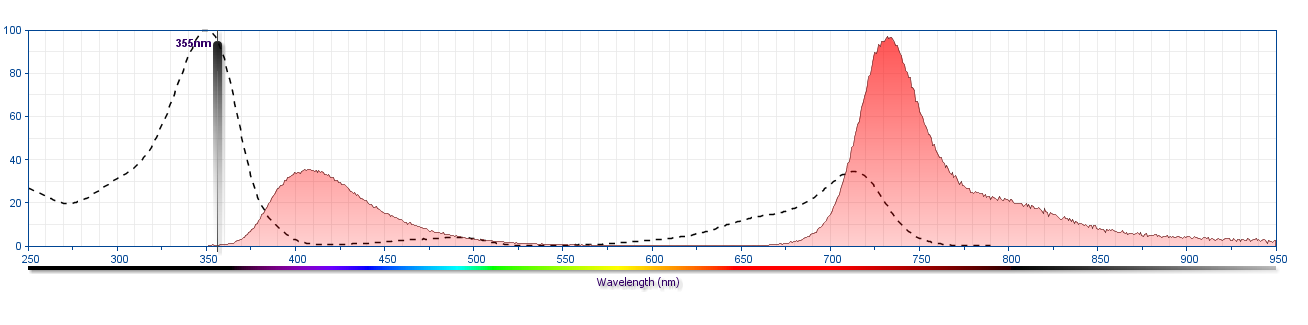
The antibody was conjugated to BD Horizon™ BUV737 which is part of the BD Horizon Brilliant™ Ultraviolet family of dyes. This dye is a tandem fluorochrome of BD Horizon BUV395 with an Ex Max of 348-nm and an acceptor dye with an Em Max at 737-nm. BD Horizon Brilliant BUV737 can be excited by the ultraviolet laser (355 nm) and detected with a 740/35 filter. Due to the excitation of the acceptor dye by other laser lines, there may be significant spillover into channels detecting Alexa Fluor® 700-like dyes (eg, 712/20-nm filter).
Due to spectral differences between labeled cells and beads, using BD™ CompBeads can result in incorrect spillover values when used with BD Horizon BUV737 reagents. Therefore, the use of BD CompBeads or BD CompBeads Plus to determine spillover values for these reagents is not recommended. Different BUV737 reagents (eg, CD4 vs. CD45) can have slightly different fluorescence spillover therefore, it may also be necessary to use clone specific compensation controls when using these reagents.
Development References (11)
-
Ansari MJ, Salama AD, Chitnis T, et al. The programmed death-1 (PD-1) pathway regulates autoimmune diabetes in nonobese diabetic (NOD) mice. J Exp Med. 2003 July; 198(1):63-69. (Clone-specific: Blocking, Flow cytometry, Immunohistochemistry). View Reference
-
Carreno BM, Collins M. The B7 family of ligands and its receptors: New pathways for costimulation and inhibition of immune responses. Annu Rev Immunol. 2002; 20:29-53. (Biology). View Reference
-
Latchman Y, Wood CR, Chernova T, et al. PD-L2 is a second ligand for PD-1 and inhibits T cell activation. Nat Immunol. 2001; 2(3):261-268. (Biology). View Reference
-
Liu X, Gao JX, Wen J, et al. B7DC/PDL2 promotes tumor immunity by a PD-1-independent mechanism. J Exp Med. 2003; 197:1721-1730. (Clone-specific: Blocking, Flow cytometry). View Reference
-
Nguyen LT, Radhakrishnan S, Ciric B, et al. Cross-linking the B7 family molecule B7-DC directly activates immune functions of dendritic cells. J Exp Med. 2002; 196:1393-1398. (Biology). View Reference
-
Salama AD, Chitnis T, Imitola J, et al. Critical role of the programmed death-1 (PD-1) pathway in regulation of experimental autoimmune encephalomyelitis. J Exp Med. 2003 July; 198(1):71-78. (Biology). View Reference
-
Shin T, Kennedy G, Gorski K et al. Cooperative B7-1/2 (CD80/CD86) and B7-DC costimulation of CD4+ T cells independent of the PD-1 receptor. J Exp Med. 2003; 198:31-38. (Biology). View Reference
-
Tseng S-Y, Otsuji M, Gorski K, et al. B7-DC, a new dendritic cell molecule with potent costimulatory properties for T cells. J Exp Med. 2001; 193:839-846. (Biology). View Reference
-
Tsushima F, Iwai H, Otsuki N, et al. Preferential contribution of B7-H1 to programmed death-1-mediated regulation of hapten-specific allergic inflammatory responses. Eur J Immunol. 2003; 33(10):2773-2782. (Clone-specific: Blocking, Immunohistochemistry, In vivo exacerbation). View Reference
-
Wang S, Bajorath J, Flies DB, Dong H, Honjo T, Chen L. Molecular modeling and functional mapping of B7-H1 and B7-DC uncouple costimulatory function from PD-1 interaction. J Exp Med. 2003; 197:1083-1091. (Biology). View Reference
-
Yamazaki T, Akiba H, Iwai H, et al. Expression of programmed death 1 ligands by murine T cells and APC. J Immunol. 2002; 169(10):5538-5545. (Immunogen: Flow cytometry, Immunoprecipitation, Western blot). View Reference
Please refer to Support Documents for Quality Certificates
Global - Refer to manufacturer's instructions for use and related User Manuals and Technical data sheets before using this products as described
Comparisons, where applicable, are made against older BD Technology, manual methods or are general performance claims. Comparisons are not made against non-BD technologies, unless otherwise noted.
For Research Use Only. Not for use in diagnostic or therapeutic procedures.
