





.png)


Preparation And Storage


Product Notices
- Since applications vary, each investigator should titrate the reagent to obtain optimal results.
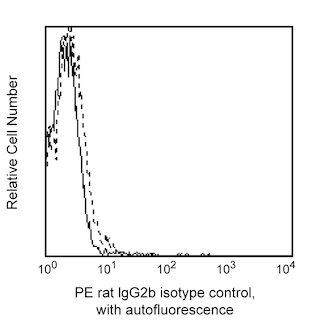
- An isotype control should be used at the same concentration as the antibody of interest.
- Caution: Sodium azide yields highly toxic hydrazoic acid under acidic conditions. Dilute azide compounds in running water before discarding to avoid accumulation of potentially explosive deposits in plumbing.
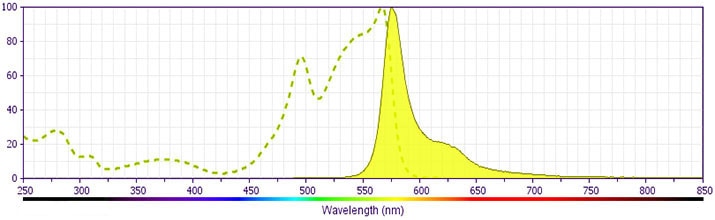
- For fluorochrome spectra and suitable instrument settings, please refer to our Multicolor Flow Cytometry web page at www.bdbiosciences.com/colors.
- Please refer to www.bdbiosciences.com/us/s/resources for technical protocols.
Companion Products
The 1560 monoclonal antibody specifically binds to CD201 which is also known as Endothelial protein C receptor (EPCR) or Activated protein C receptor (APC receptor). CD201 is encoded by Procr (Protein C receptor, endothelial). CD201 is a ~25 kDa single-pass type I transmembrane glycoprotein that binds both protein C and activated protein C (APC) and augments the activation of protein C by the thrombin-thrombomodulin/CD141 complex. APC functions as a serine protease that controls thrombin IIa generation by inhibiting factors Va and VIIIa. CD201 thus plays an essential role in preventing blood coagulation which may lead to tissue damage during sepsis and inflammatory responses. Procr-gene deletion reportedly leads to embryonic lethality due to placental thrombosis. CD201 is expressed by endothelial cells with higher expression on large blood vessels. The 1560 monoclonal antibody can reportedly be used for the detection of bone marrow hematopoietic stem cells (HSC) which express high levels of CD201. A soluble form of CD201 which can bind protein C and APC has also been described.
Development References (5)
-
Balazs AB, Fabian AJ, Esmon CT, Mulligan RC. Endothelial protein C receptor (CD201) explicitly identifies hematopoietic stem cells in murine bone marrow.. Blood. 2006; 107(6):2317-21. (Clone-specific: Blocking, Flow cytometry, Fluorescence activated cell sorting, Functional assay). View Reference
-
Crawley JT, Gu JM, Ferrell G, Esmon CT. Distribution of endothelial cell protein C/activated protein C receptor (EPCR) during mouse embryo development.. Thromb Haemost. 2002; 88(2):259-66. (Immunogen: Immunohistochemistry). View Reference
-
Disse J, Petersen HH, Larsen KS, et al. The endothelial protein C receptor supports tissue factor ternary coagulation initiation complex signaling through protease-activated receptors.. J Biol Chem. 2011; 286(7):5756-67. (Clone-specific: Functional assay). View Reference
-
Gu JM, Crawley JT, Ferrell G, et al. Disruption of the endothelial cell protein C receptor gene in mice causes placental thrombosis and early embryonic lethality.. J Biol Chem. 2002; 277(45):43335-43. (Clone-specific: Immunohistochemistry). View Reference
-
Stearns-Kurosawa DJ, Kurosawa S, Mollica JS, Ferrell GL, Esmon CT. The endothelial cell protein C receptor augments protein C activation by the thrombin-thrombomodulin complex.. Proc Natl Acad Sci USA. 1996; 93(19):10212-6. (Biology). View Reference
Please refer to Support Documents for Quality Certificates
Global - Refer to manufacturer's instructions for use and related User Manuals and Technical data sheets before using this products as described
Comparisons, where applicable, are made against older BD Technology, manual methods or are general performance claims. Comparisons are not made against non-BD technologies, unless otherwise noted.
For Research Use Only. Not for use in diagnostic or therapeutic procedures.
Refer to manufacturer's instructions for use and related User Manuals and Technical Data Sheets before using this product as described.
Comparisons, where applicable, are made against older BD technology, manual methods or are general performance claims. Comparisons are not made against non-BD technologies, unless otherwise noted.
