







Preparation And Storage


Recommended Assay Procedures
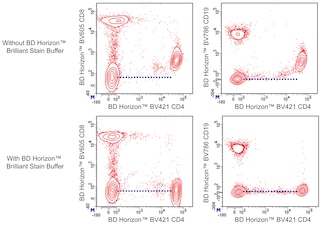
For optimal and reproducible results, BD Horizon Brilliant Stain Buffer should be used anytime two or more BD Horizon Brilliant dyes (including BD OptiBuild Brilliant reagents) are used in the same experiment. Fluorescent dye interactions may cause staining artifacts which may affect data interpretation. The BD Horizon Brilliant Stain Buffer was designed to minimize these interactions. More information can be found in the Technical Data Sheet of the BD Horizon Brilliant Stain Buffer (Cat. No. 563794).
Product Notices
- This antibody was developed for use in flow cytometry.
- The production process underwent stringent testing and validation to assure that it generates a high-quality conjugate with consistent performance and specific binding activity. However, verification testing has not been performed on all conjugate lots.
- Researchers should determine the optimal concentration of this reagent for their individual applications.
- An isotype control should be used at the same concentration as the antibody of interest.
- Caution: Sodium azide yields highly toxic hydrazoic acid under acidic conditions. Dilute azide compounds in running water before discarding to avoid accumulation of potentially explosive deposits in plumbing.
- For fluorochrome spectra and suitable instrument settings, please refer to our Multicolor Flow Cytometry web page at www.bdbiosciences.com/colors.
- Please refer to www.bdbiosciences.com/us/s/resources for technical protocols.
- BD Horizon Brilliant Stain Buffer is covered by one or more of the following US patents: 8,110,673; 8,158,444; 8,575,303; 8,354,239.
- BD Horizon Brilliant Violet 786 is covered by one or more of the following US patents: 8,110,673; 8,158,444; 8,227,187; 8,455,613; 8,575,303; 8,354,239.
- Cy is a trademark of GE Healthcare.
Companion Products
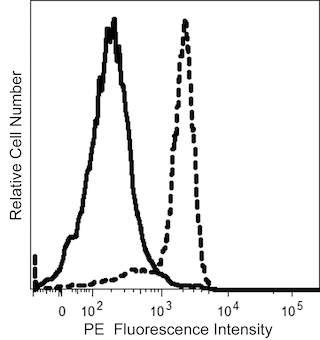
The CD1d42 monoclonal antibody recognizes CD1d. Cell surface CD1d is structurally homologous to Class I MHC molecules. It consists of a glycosylated type I transmembrane α chain (43-49 kDa) that is non-covalently associated with β2-microglobulin. CD1d is a member of the CD1 family of molecules, which belong to the immunoglobulin superfamily. Sequence homology data classifies the CD1 molecules into two groups. Group 1 includes CD1a, CD1b and CD1c molecules; group 2 includes CD1d molecules and their homologs in other species. CD1d is expressed on cortical thymocytes, B cells, dendritic cells, monocytes, and some nonlymphoid cells including intestinal epithelial cells, hepatocytes and keratinocytes. It is not expressed on resting mature T cells. Studies suggest that CD1d participates in lipid antigen presentation to CD1d-restricted NKT cells.
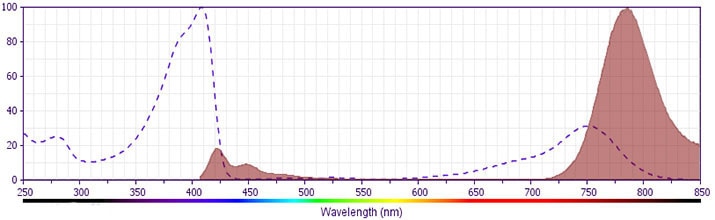
The antibody was conjugated to BD Horizon™ BV786 which is part of the BD Horizon Brilliant™ Violet family of dyes. This dye is a tandem fluorochrome of BD Horizon BV421 with an Ex Max of 405-nm and an acceptor dye with an Em Max at 786-nm. BD Horizon BV786 can be excited by the violet laser and detected in a filter used to detect Cy™7-like dyes (eg, 780/60-nm filter).
Development References (5)
-
Exley M, Garcia J, Wilson SB, et al. CD1d structure and regulation on human thymocytes, peripheral blood T cells, B cells and monocytes. Immunology. 2000; 100(1):37-47. (Immunogen: Flow cytometry, Immunohistochemistry, Immunoprecipitation). View Reference
-
Hong S, Scherer DC, Singh N. Lipid antigen presentation in the immune system: lessons learned from CD1d knockout mice. Immunol Rev. 1999; 169:31-44. (Biology). View Reference
-
Kishimoto T. Tadamitsu Kishimoto .. et al., ed. Leucocyte typing VI : white cell differentiation antigens : proceedings of the sixth international workshop and conference held in Kobe, Japan, 10-14 November 1996. New York: Garland Pub.; 1997.
-
Ronger-Savle S, Valladeau J, Claudy A, et al. TGFbeta inhibits CD1d expression on dendritic cells. J Invest Dermatol. 2005; 124(1):116-118. (Clone-specific: Flow cytometry). View Reference
-
Somnay-Wadgaonkar K, Nusrat A, Kim HS. Immunolocalization of CD1d in human intestinal epithelial cells and identification of a beta2-microglobulin-associated form. 1999; 11(3):383-392. (Biology). View Reference
Please refer to Support Documents for Quality Certificates
Global - Refer to manufacturer's instructions for use and related User Manuals and Technical data sheets before using this products as described
Comparisons, where applicable, are made against older BD Technology, manual methods or are general performance claims. Comparisons are not made against non-BD technologies, unless otherwise noted.
For Research Use Only. Not for use in diagnostic or therapeutic procedures.
Refer to manufacturer's instructions for use and related User Manuals and Technical Data Sheets before using this product as described.
Comparisons, where applicable, are made against older BD technology, manual methods or are general performance claims. Comparisons are not made against non-BD technologies, unless otherwise noted.
