The site is undergoing maintenance on
Thursday, September 10, 9:00 pm through Friday, September 11, 9:00 pm (BRT), 2026.
If you encounter problems while ordering, please contact us at BDBCustomerService@bd.com
See More
The site is undergoing maintenance on
Thursday, September 10, 9:00 pm through Friday, September 11, 9:00 pm (BRT), 2026.
If you encounter problems while ordering, please contact us at BDBCustomerService@bd.com
See MoreThe site is undergoing maintenance on
Thursday, September 10, 9:00 pm through Friday, September 11, 9:00 pm (BRT), 2026
.If you encounter problems while ordering, please contact us at BDBCustomerService@bd.com
Looks like you're visiting us from {countryName}.
Would you like to stay on the current country site or be switched to your country?
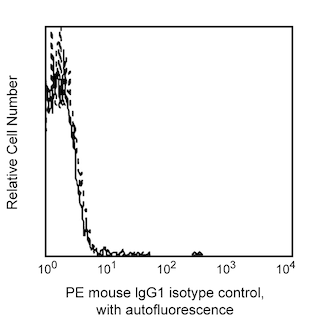
Flow cytometric analysis of CD13 expression on human peripheral blood. Human whole blood was stained with either PE Mouse IgG1, κ Isotype Control (Cat. No. 555749; dashed line histogram) or PE Mouse Anti-Human CD13 (Cat. No. 555394/560998; solid line histogram). Erythrocytes were lysed with BD FACS™ Lysing Solution (Cat. No. 349202). Fluorescence histograms depicting CD13 (or Ig isotype control) expression were derived from gated events with the side and forward light-scattering characteristics of monocytes (left figure) or granulocytes (right figure). Flow cytometry was performed on a BD FACScan™ system.
Any use of products other than the permitted use without the express written authorization of Becton, Dickinson and Company is strictly prohibited.
BD™ CompBeads can be used as surrogates to assess fluorescence spillover (Compensation). When fluorochrome conjugated antibodies are bound to CompBeads, they have spectral properties very similar to cells. However, for some fluorochromes there can be small differences in spectral emissions compared to cells, resulting in spillover values that differ when compared to biological controls. It is strongly recommended that when using a reagent for the first time, users compare the spillover on cell and CompBead to ensure that BD Comp beads are appropriate for your specific cellular application.
The WM15 monoclonal antibody specifically binds to CD13, the 150 kDa Type II integral membrane glycoprotein which is also known as aminopeptidase N. The CD13 antigen is the receptor for human coronavirus 229E, the causative agent for some cases of upper respiratory infection. This antibody binds to GM-progenitor cells, granulocytic and monocytic cells, and mast cells, but not to lymphocytes, platelets or erythrocytes. Aminopeptidase N is involved in the metabolism of many regulatory peptides.
Please refer to Support Documents for Quality Certificates
Global - Refer to manufacturer's instructions for use and related User Manuals and Technical data sheets before using this products as described
Comparisons, where applicable, are made against older BD Technology, manual methods or are general performance claims. Comparisons are not made against non-BD technologies, unless otherwise noted.
For Research Use Only. Not for use in diagnostic or therapeutic procedures.