Dear Customer, If you experience any text readability or display issues on our website, please update your web browser to the latest version
.
See More
Dear Customer, If you experience any text readability or display issues on our website, please update your web browser to the latest version
.
See MoreDear Customer, If you experience any text readability or display issues on our website, please update your web browser to the latest version
.
Looks like you're visiting us from {countryName}.
Would you like to stay on the current country site or be switched to your country?
Any use of products other than the permitted use without the express written authorization of Becton, Dickinson and Company is strictly prohibited.
BD™ CompBeads can be used as surrogates to assess fluorescence spillover (Compensation). When fluorochrome conjugated antibodies are bound to BD CompBeads, they have spectral properties very similar to cells. However, for some fluorochromes there can be small differences in spectral emissions compared to cells, resulting in spillover values that differ when compared to biological controls. It is strongly recommended that when using a reagent for the first time, users compare the spillover on cells and BD CompBead to ensure that BD CompBeads are appropriate for your specific cellular application.
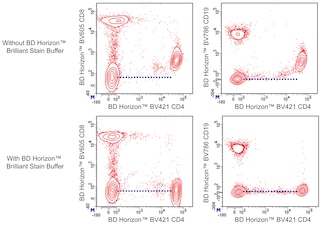
For optimal and reproducible results, BD Horizon Brilliant Stain Buffer should be used anytime two or more BD Horizon Brilliant dyes are used in the same experiment. Fluorescent dye interactions may cause staining artifacts which may affect data interpretation. The BD Horizon Brilliant Stain Buffer was designed to minimize these interactions. More information can be found in the Technical Data Sheet of the BD Horizon Brilliant Stain Buffer (Cat. No. 563794/566349) or the BD Horizon Brilliant Stain Buffer Plus (Cat. No. 566385).
Note: When using high concentrations of antibody, background binding of this dye to erythroid cell subsets (mature erythrocytes and precursors) has been observed. For researchers studying these cell populations, or in cases where light scatter gating does not adequately exclude these cells from the analysis, this background may be an important factor to consider when selecting reagents for panel(s).
The TU66 monoclonal antibody specifically recognizes human CD39 which is also known as Ectonucleoside triphosphate diphosphohydrolase 1 (NTPDase 1), Ecto-ATP diphosphohydrolase 1 (Ecto-ATPDase 1), or Ecto-apyrase. CD39 is an integral membrane glycoprotein with two transmembrane domains, N- and C-terminal cytoplasmic tails, and an extracellular region that contains the NTPDase 1 active site. CD39 is encoded by ENTPD1 which belongs to the ectoenzyme family. CD39 is variably expressed on activated T cells and B cells, regulatory T cells (Treg), dendritic cells, Langerhans cells, NK cells, monocytes, macrophages, endothelial cells, and granulocytes. CD39 acts on extracellular nucleoside triphosphates and diphosphates including ATP and ADP that are hydrolyzed into AMP. Through cell surface CD73 (Ecto-5'-nucleotidase), regulatory T cells can act on extracellular AMP to generate immunosuppressive adenosine. CD39 is involved in the control of the extracellular pool of phosphorylated nucleosides, the suppression of inflammation and immunity, and the regulation of platelet activation.
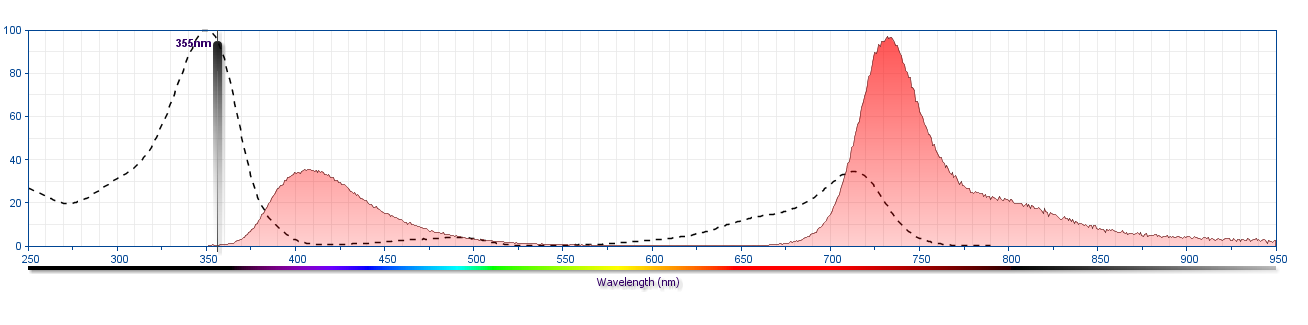
The antibody was conjugated to BD Horizon BUV737 which is part of the BD Horizon Brilliant™ Ultraviolet family of dyes. This dye is a tandem fluorochrome with an Ex Max near 350 nm and an Em Max near 737 nm. BD Horizon Brilliant BUV737 can be excited by the ultraviolet laser (355 nm) and detected with a 740/35 nm filter. Due to the excitation of the acceptor dye by the red laser line, there may be significant spillover into red laser detectors with filters in the 700-720 nm range.
Please refer to Support Documents for Quality Certificates
Global - Refer to manufacturer's instructions for use and related User Manuals and Technical data sheets before using this products as described
Comparisons, where applicable, are made against older BD Technology, manual methods or are general performance claims. Comparisons are not made against non-BD technologies, unless otherwise noted.
For Research Use Only. Not for use in diagnostic or therapeutic procedures.