







Preparation And Storage


Recommended Assay Procedures
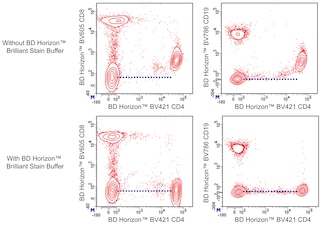
For optimal and reproducible results, BD Horizon Brilliant Stain Buffer should be used anytime two or more BD Horizon Brilliant dyes are used in the same experiment. Fluorescent dye interactions may cause staining artifacts which may affect data interpretation. The BD Horizon Brilliant Stain Buffer was designed to minimize these interactions. More information can be found in the Technical Data Sheet of the BD Horizon Brilliant Stain Buffer (Cat. No. 563794 or 566349).
When setting up compensation, it is recommended to compare spillover values obtained from cells and BD™ CompBeads to ensure that beads will provide sufficiently accurate spillover values.
For optimal results, it is recommended to perform two washes after staining with antibodies. Cells may be prepared, stained with antibodies and washed twice with wash buffer per established protocols for immunofluorescent staining prior to acquisition on a flow cytometer. Performing fewer than the recommended wash steps may lead to increased spread of the negative population.
Product Notices
- This antibody was developed for use in flow cytometry.
- The production process underwent stringent testing and validation to assure that it generates a high-quality conjugate with consistent performance and specific binding activity. However, verification testing has not been performed on all conjugate lots.
- Researchers should determine the optimal concentration of this reagent for their individual applications.
- An isotype control should be used at the same concentration as the antibody of interest.
- Caution: Sodium azide yields highly toxic hydrazoic acid under acidic conditions. Dilute azide compounds in running water before discarding to avoid accumulation of potentially explosive deposits in plumbing.
- For fluorochrome spectra and suitable instrument settings, please refer to our Multicolor Flow Cytometry web page at www.bdbiosciences.com/colors.
- Please refer to www.bdbiosciences.com/us/s/resources for technical protocols.
- BD Horizon Brilliant Stain Buffer is covered by one or more of the following US patents: 8,110,673; 8,158,444; 8,575,303; 8,354,239.
- BD Horizon Brilliant Blue 700 is covered by one or more of the following US patents: 8,455,613 and 8,575,303.
- Cy is a trademark of GE Healthcare.
Companion Products
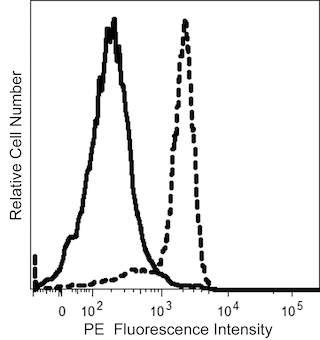
The 8D7 monoclonal antibody recognizes Asialoglycoprotein receptor 1 (ASGPR 1), also known as Hepatic lectin H1 (HL-1). ASGPR 1 is an approximately 42 kDA type II integral membrane protein that is expressed on the surface of hepatic cells. It is expressed by hepatocytes on the sinusoidal-lateral plasma membrane but not on the bile canalicular membrane. ASGPR 1 plays a role in serum glycoprotein homeostasis. It functions as a subunit of the Asialoglycoprotein receptor (ASGPR) complex that binds, internalizes, and transports various glycoproteins for lysosomal degradation. The receptor may also promote hepatic infection by the binding and uptake of various viruses. The immunogen used to generate the 8D7 hybridoma was rat liver membrane extracts. Rat ASGPR consists of three polypeptide subunits (Rat hepatic lectin 1-3 (RHL1-3). The 8D7 antibody has been shown to react with a subunit-specific epitope on RHL-1. Clone 8D7 cross-reacts with human ASGPR 1.
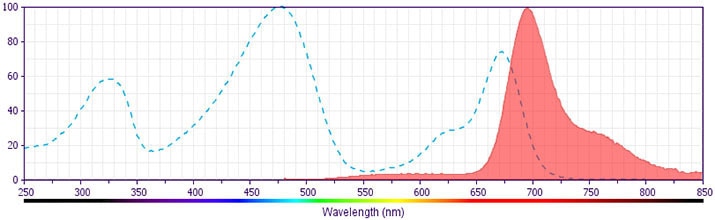
The antibody was conjugated to BD Horizon™ BB700, which is part of the BD Horizon Brilliant™ Blue family of dyes. It is a polymer-based tandem dye developed exclusively by BD Biosciences. With an excitation max of 485 nm and an emission max of 693 nm, BD Horizon BB700 can be excited by the 488 nm laser and detected in a standard PerCP-Cy™5.5 set (eg, 695/40-nm filter). This dye provides a much brighter alternative to PerCP-Cy5.5 with less cross laser excitation off the 405 nm and 355 nm lasers.
Development References (3)
-
Mizuno M, Yamada G, Nagashima H. Development of a monoclonal antibody identifying an antigen which is segregated to the sinusoidal and lateral plasma membranes of rat hepatocytes. J Gastroenterol. 1986; 21(3):238-244. (Immunogen: Electron microscopy, Immunohistochemistry). View Reference
-
Shimada M, Mizuno M, Uesu T, et al. A monoclonal antibody to rat asialoglycoprotein receptor that recognizes an epitope specific to its major subunit. Hepatol Res. 2003; 26(1):55-60. (Clone-specific: Flow cytometry, Immunofluorescence, Immunohistochemistry, Western blot). View Reference
-
Touboul T, Hannan NR, Corbineau S, et al. Generation of functional hepatocytes from human embryonic stem cells under chemically defined conditions that recapitulate liver development. Hepatology. 2010; 51(5):1754-1765. (Biology). View Reference
Please refer to Support Documents for Quality Certificates
Global - Refer to manufacturer's instructions for use and related User Manuals and Technical data sheets before using this products as described
Comparisons, where applicable, are made against older BD Technology, manual methods or are general performance claims. Comparisons are not made against non-BD technologies, unless otherwise noted.
For Research Use Only. Not for use in diagnostic or therapeutic procedures.
