





BD Horizon™ BB515 Mouse Anti-Human Integrin α1 (CD49a)
Clone TS2/7 (RUO)


Multiparameter flow cytometric analysis of Integrin α1 (CD49a) expression on Human peripheral blood leukocyte populations. Fresh whole blood was treated with BD Pharm Lyse™ Lysing Buffer (Cat. No. 555899) to lyse erythrocytes. After washing, the leukocytes were preincubated with BD Pharmingen™ Human BD Fc Block™ (Cat. No. 564219/564220) and then stained with either BD Horizon™ BB515 Mouse IgG1, κ Isotype Control (Cat. No. 564416; Left Plot) or BD Horizon™ BB515 Mouse Anti-Human Integrin α1 (CD49a) antibody (Cat. No. 570076/570157; Right Plot). The bivariate pseudocolor density plot showing the correlated expression of Integrin α1 (CD49a) [or Ig Isotype control staining] versus side light-scatter signals (SSC-A) was derived from gated events with forward and side light-scatter characteristics of viable leukocytes. Flow cytometry and data analysis were performed using a BD LSRFortessa™ X-20 Cell Analyzer System and FlowJo™ software.

Flow cytometric analysis of Integrin α1 (CD49a) expression on HeLa cells. Cells from the Human HeLa (Adenocarcinoma, ATCC® CCL-2™) cell line were stained with either BD Horizon™ BB515 Mouse IgG1, κ Isotype Control (dashed line histogram) or BD Horizon™ BB515 Mouse Anti-Human Integrin α1 (CD49a) antibody (solid line histogram). DAPI (4',6-Diamidino-2-Phenylindole, Dihydrochloride) Solution (Cat. No. 564907) was added to cells right before analysis. The fluorescence histogram showing Integrin α1 (CD49a) expression (or Ig Isotype control staining) was derived from gated events with the forward and side light-scatter characteristics of viable (DAPI-negative) cells. Flow cytometry and data analysis were performed using a BD LSRFortessa™ X-20 Cell Analyzer System and FlowJo™ software.

Multiparameter flow cytometric analysis of Integrin α1 (CD49a) expression on Human peripheral blood leukocyte populations. Fresh whole blood was treated with BD Pharm Lyse™ Lysing Buffer (Cat. No. 555899) to lyse erythrocytes. After washing, the leukocytes were preincubated with BD Pharmingen™ Human BD Fc Block™ (Cat. No. 564219/564220) and then stained with either BD Horizon™ BB515 Mouse IgG1, κ Isotype Control (Cat. No. 564416; Left Plot) or BD Horizon™ BB515 Mouse Anti-Human Integrin α1 (CD49a) antibody (Cat. No. 570076/570157; Right Plot). The bivariate pseudocolor density plot showing the correlated expression of Integrin α1 (CD49a) [or Ig Isotype control staining] versus side light-scatter signals (SSC-A) was derived from gated events with forward and side light-scatter characteristics of viable leukocytes. Flow cytometry and data analysis were performed using a BD LSRFortessa™ X-20 Cell Analyzer System and FlowJo™ software.
Flow cytometric analysis of Integrin α1 (CD49a) expression on HeLa cells. Cells from the Human HeLa (Adenocarcinoma, ATCC® CCL-2™) cell line were stained with either BD Horizon™ BB515 Mouse IgG1, κ Isotype Control (dashed line histogram) or BD Horizon™ BB515 Mouse Anti-Human Integrin α1 (CD49a) antibody (solid line histogram). DAPI (4',6-Diamidino-2-Phenylindole, Dihydrochloride) Solution (Cat. No. 564907) was added to cells right before analysis. The fluorescence histogram showing Integrin α1 (CD49a) expression (or Ig Isotype control staining) was derived from gated events with the forward and side light-scatter characteristics of viable (DAPI-negative) cells. Flow cytometry and data analysis were performed using a BD LSRFortessa™ X-20 Cell Analyzer System and FlowJo™ software.


Preparation And Storage


Recommended Assay Procedures
BD® CompBeads can be used as surrogates to assess fluorescence spillover (compensation). When fluorochrome conjugated antibodies are bound to BD® CompBeads, they have spectral properties very similar to cells. However, for some fluorochromes there can be small differences in spectral emissions compared to cells, resulting in spillover values that differ when compared to biological controls. It is strongly recommended that when using a reagent for the first time, users compare the spillover on cells and BD® CompBeads to ensure that BD® CompBeads are appropriate for your specific cellular application.
For optimal and reproducible results, BD Horizon Brilliant™ Stain Buffer should be used anytime BD Horizon Brilliant™ dyes are used in a multicolor flow cytometry panel. Fluorescent dye interactions may cause staining artifacts which may affect data interpretation. The BD Horizon Brilliant Stain Buffer was designed to minimize these interactions. When BD Horizon Brilliant Stain Buffer is used in in the multicolor panel, it should also be used in the corresponding compensation controls for all dyes to achieve the most accurate compensation. For the most accurate compensation, compensation controls created with either cells or beads should be exposed to BD Horizon Brilliant Stain Buffer for the same length of time as the corresponding multicolor panel. More information can be found in the Technical Data Sheet of the BD Horizon Brilliant Stain Buffer (Cat. No. 563794/566349) or the BD Horizon Brilliant Stain Buffer Plus (Cat. No. 566385).
For optimal results, it is recommended to perform 2 washes after staining with antibodies. Cells may be prepared, stained with antibodies and washed twice with wash buffer per established protocols for immunofluorescence staining, prior to acquisition on a flow cytometer. Performing fewer than the recommended wash steps may lead to increased spread of the negative population.
Product Notices
- Please refer to www.bdbiosciences.com/us/s/resources for technical protocols.
- Caution: Sodium azide yields highly toxic hydrazoic acid under acidic conditions. Dilute azide compounds in running water before discarding to avoid accumulation of potentially explosive deposits in plumbing.
- This reagent has been pre-diluted for use at the recommended Volume per Test. We typically use 1 × 10^6 cells in a 100-µl experimental sample (a test).
- For fluorochrome spectra and suitable instrument settings, please refer to our Multicolor Flow Cytometry web page at www.bdbiosciences.com/colors.
- An isotype control should be used at the same concentration as the antibody of interest.
- BD Horizon Brilliant Stain Buffer is covered by one or more of the following US patents: 8,110,673; 8,158,444; 8,575,303; 8,354,239.
- Please refer to http://regdocs.bd.com to access safety data sheets (SDS).
- Alexa Fluor™ is a trademark of Life Technologies Corporation.
- For U.S. patents that may apply, see bd.com/patents.
Companion Products


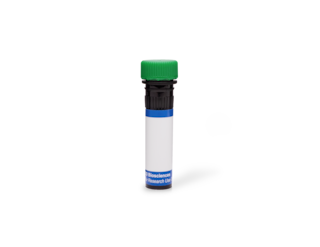
The TS2/7 monoclonal antibody specifically recognizes Integrin alpha 1 (Integrin α1) which is also known as CD49a (CD49 antigen-like family member A) and Very late antigen 1α subunit (VLA-1). Integrin α1 (CD49a) is an ~200 kDa single pass type I transmembrane glycoprotein that is encoded by ITGA1 (Integrin subunit alpha 1) which belongs to the Integrin alpha chain family. Integrin α1 (CD49a) associates with the integrin β1 chain (CD29) to form the Integrin α1β1 heterodimer (also known as CD49a/CD29 or the VLA-1 complex) that serves as a receptor for collagen and laminin-1. It is expressed on activated T cells, monocytes, neuronal cells, and smooth muscle cells. Integrin α1 (CD49a) reportedly plays a role in leucocyte migration into tissues and can costimulate T cell proliferation and cytokine production. It is also involved in cellular attachment during the development of both the central and peripheral nervous systems.

Development References (5)
-
Hemler ME, Sanchez-Madrid F, Flotte TJ, et al. Glycoproteins of 210,000 and 130,000 m.w. on activated T cells: cell distribution and antigenic relation to components on resting cells and T cell lines.. J Immunol. 1984; 132(6):3011-8. (Clone-specific: Flow cytometry, Immunohistochemistry). View Reference
-
Marquardt N, Kekäläinen E, Chen P, et al. Unique transcriptional and protein-expression signature in human lung tissue-resident NK cells.. Nat Commun. 2019; 10(1):3841. (Clone-specific: Flow cytometry). View Reference
-
Melssen MM, Olson W, Wages NA, et al. Formation and phenotypic characterization of CD49a, CD49b and CD103 expressing CD8 T cell populations in human metastatic melanoma.. Oncoimmunology. 7(10):e1490855. (Clone-specific: Flow cytometry). View Reference
-
Sanchez-Madrid F, Krensky AM, Ware CF, et al. Three distinct antigens associated with human T-lymphocyte-mediated cytolysis: LFA-1, LFA-2, and LFA-3.. Proc Natl Acad Sci U S A. 1982; 79(23):7489-93. (Immunogen: Western blot). View Reference
-
Zola H. CD49a. In: Zola H. Leukocyte and stromal cell molecules : the CD markers. Hoboken, N.J.: Wiley-Liss; 2007:122.
Please refer to Support Documents for Quality Certificates
Global - Refer to manufacturer's instructions for use and related User Manuals and Technical data sheets before using this products as described
Comparisons, where applicable, are made against older BD Technology, manual methods or are general performance claims. Comparisons are not made against non-BD technologies, unless otherwise noted.
For Research Use Only. Not for use in diagnostic or therapeutic procedures.