







Preparation And Storage


Recommended Assay Procedures
Put all BD® AbSeq Reagents to be pooled into a Latch Rack for 500 µL Tubes (Thermo Fisher Scientific Cat. No. 4900). Arrange the tubes so that they can be easily uncapped and re-capped with an 8-Channel Screw Cap Tube Capper (Thermo Fisher Scientific Cat. No. 4105MAT) and the reagents aliquoted with a multi-channel pipette.
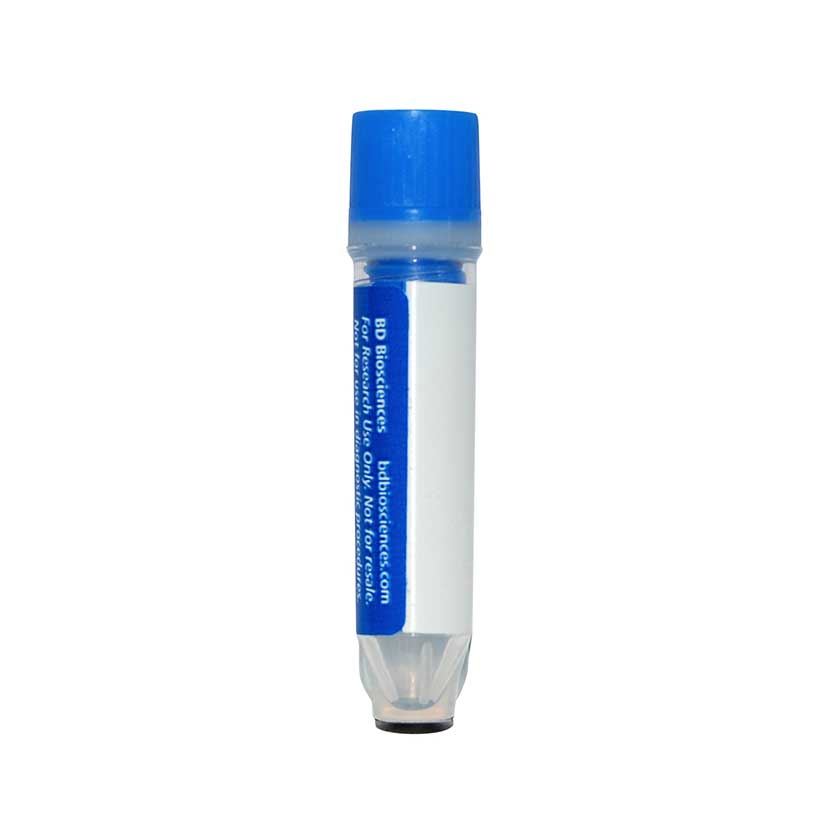
BD® AbSeq tubes should be centrifuged for ≥ 30 seconds at 400 × g to ensure removal of any content in the cap/tube threads prior to the first opening.
Product Notices
- This reagent has been pre-diluted for use at the recommended volume per test. Typical use is 2 µl for 1 × 10^6 cells in a 200-µl staining reaction.
- Source of all serum proteins is from USDA inspected abattoirs located in the United States.
- Caution: Sodium azide yields highly toxic hydrazoic acid under acidic conditions. Dilute azide compounds in running water before discarding to avoid accumulation of potentially explosive deposits in plumbing.
- The production process underwent stringent testing and validation to assure that it generates a high-quality conjugate with consistent performance and specific binding activity. However, verification testing has not been performed on all conjugate lots.
- Illumina is a trademark of Illumina, Inc.
- Please refer to http://regdocs.bd.com to access safety data sheets (SDS).
- Please refer to bd.com/genomics-resources for technical protocols.
- For U.S. patents that may apply, see bd.com/patents.
Companion Products



CD244 is a type I transmembrane glycoprotein that is also known as Natural killer cell receptor 2B4 (NKR2B4), or Signaling lymphocytic activation molecule 4 (SLAMF4). CD244 is a member of the CD2 subset of the immunoglobulin superfamily (CD2 IgSF). It is expressed on all natural killer (NK) cells, IL-2-activated NK (LAK) cells, committed progenitors of NK cells, and a subset of T lymphocytes which mediate non-MHC-restricted cytoxicity, including dendritic epidermal T cells. The 2B4 monoclonal antibody specifically binds to CD244.2, the 2B4 alloantigen which is expressed on C57BL/6 and C58/J mice, but not in most strains tested (A/J, AKR, BALB/c, CBA/J, CBA/N, C3H/He, C57BR, DBA/1, DBA/2, NZB, SJL/J, 129). At least two isoforms of CD244.2 protein, products of alternative splicing of hnRNA, are expressed on IL-2-activated C57BL/6 NK cells. They differ only in their cytoplasmic domains; with 2B4L (150-aa cytoplasmic tail) having inhibitory activity and 2B4S (93-aa tail) being stimulatory. The extracellular domain of CD244 is a ligand for another CD2 IgSF member, CD48. 2B4 antibody activates lytic and secretory functions of IL-2-cultured NK cells and CD244.2+ T cells.
Development References (13)
-
Brown MH, Boles K, van der Merwe PA, Kumar V, Mathew PA, Barclay AN. 2B4, the natural killer and T cell immunoglobulin superfamily surface protein, is a ligand for CD48. J Exp Med. 1998; 188(11):2083-2090. (Biology). View Reference
-
Davis SJ, van der Merwe PA. The structure and ligand interactions of CD2: implications for T-cell function. Immunol Today. 1996; 17(4):177-187. (Biology). View Reference
-
Garni-Wagner BA, Purohit A, Mathew PA, Bennett M, Kumar V. A novel function-associated molecule related to non-MHC-restricted cytotoxicity mediated by activated natural killer cells and T cells. J Immunol. 1993; 151(1):60-70. (Biology). View Reference
-
Kubota K, Katoh H, Muguruma K, Koyama K. Characterization of a surface membrane molecule expressed by natural killer cells in most inbred mouse strains: monoclonal antibody C9.1 identifies an allelic form of the 2B4 antigen. Immunology. 1999; 96(3):491-497. (Biology). View Reference
-
Kumaresan PR, Stepp SE, Bennett M, Kumar V, Mathew PA. Molecular cloning of transmembrane and soluble forms of a novel rat natural killer cell receptor related to 2B4. Immunogenetics. 2000; 51(4-5):306-313. (Biology). View Reference
-
Latchman Y, McKay PF, Reiser H. Identification of the 2B4 molecule as a counter-receptor for CD48. J Immunol. 1998; 161(11):5809-5812. (Biology). View Reference
-
Mathew PA, Garni-Wagner BA, Land K, et al. Cloning and characterization of the 2B4 gene encoding a molecule associated with non-MHC-restricted killing mediated by activated natural killer cells and T cells. J Immunol. 1993; 151(10):5328-5337. (Biology). View Reference
-
Rosmaraki EE, Douagi I, Roth C, Colucci F, Cumano A, Di Santo JP. Identification of committed NK cell progenitors in adult murine bone marrow. Eur J Immunol. 2001; 31(6):1900-1909. (Biology). View Reference
-
Schatzle JD, Sheu S, Stepp SE, Mathew PA, Bennett M, Kumar V. Characterization of inhibitory and stimulatory forms of the murine natural killer cell receptor 2B4. Proc Natl Acad Sci U S A. 1999; 96(7):3870-3875. (Biology). View Reference
-
Schuhmachers G, Ariizumi K, Mathew PA, Bennett M, Kumar V, Takashima A. 2B4, a new member of the immunoglobulin gene superfamily, is expressed on murine dendritic epidermal T cells and plays a functional role in their killing of skin tumors. J Invest Dermatol. 1995; 105(4):592-596. (Biology). View Reference
-
Schuhmachers G, Ariizumi K, Mathew PA, Bennett M, Kumar V, Takashima A. Activation of murine epidermal gamma delta T cells through surface 2B4. Eur J Immunol. 1995; 25(4):1117-1120. (Biology). View Reference
-
Sentman CL, Hackett J Jr, Moore TA, Tutt MM, Bennett M, Kumar V. Pan natural killer cell monoclonal antibodies and their relationship to the NK1.1 antigen. Hybridoma. 1989; 8(6):605-614. (Immunogen). View Reference
-
Stepp SE, Schatzle JD, Bennett M, Kumar V, Mathew PA. Gene structure of the murine NK cell receptor 2B4: presence of two alternatively spliced isoforms with distinct cytoplasmic domains. Eur J Immunol. 1999; 29(8):2392-2399. (Biology). View Reference
Please refer to Support Documents for Quality Certificates
Global - Refer to manufacturer's instructions for use and related User Manuals and Technical data sheets before using this products as described
Comparisons, where applicable, are made against older BD Technology, manual methods or are general performance claims. Comparisons are not made against non-BD technologies, unless otherwise noted.
For Research Use Only. Not for use in diagnostic or therapeutic procedures.