







Preparation And Storage


Product Notices
- Since applications vary, each investigator should titrate the reagent to obtain optimal results.
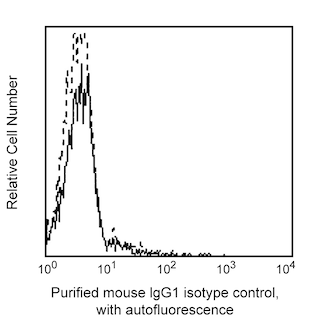
- An isotype control should be used at the same concentration as the antibody of interest.
- Caution: Sodium azide yields highly toxic hydrazoic acid under acidic conditions. Dilute azide compounds in running water before discarding to avoid accumulation of potentially explosive deposits in plumbing.
- Sodium azide is a reversible inhibitor of oxidative metabolism; therefore, antibody preparations containing this preservative agent must not be used in cell cultures nor injected into animals. Sodium azide may be removed by washing stained cells or plate-bound antibody or dialyzing soluble antibody in sodium azide-free buffer. Since endotoxin may also affect the results of functional studies, we recommend the NA/LE (No Azide/Low Endotoxin) antibody format, if available, for in vitro and in vivo use.
- Please refer to www.bdbiosciences.com/us/s/resources for technical protocols.
Companion Products
.png?imwidth=320)
The MMRI-7 monoclonal antibody specifically recognizes CD205 which is also known as DEC-205, Lymphocyte antigen 75 (Ly-75), or C-type lectin domain family 13 member B (CLEC13B). CD205 is a ~205 kDa type I transmembrane glycoprotein with C-type lectin external domains. DEC-205 is expressed on myeloid and plasmacytoid dendritic cells, thymic epithelial cells, and at lower levels on monocytes, T cells, B cells, and natural killer (NK) cells. DEC-205 likely functions as an endocytic receptor and is involved in antigen uptake and processing.
Development References (5)
-
Guo M, Gong S, Maric S, et al. A monoclonal antibody to the DEC-205 endocytosis receptor on human dendritic cells. Hum Immunol. 2000 August; 61(8):729-738. (Biology). View Reference
-
Kato M, Khan S, Gonzalez N, et al. Hodgkin's lymphoma cell lines express a fusion protein encoded by intergenically spliced mRNA for the multilectin receptor DEC-205 (CD205) and a novel C-type lectin receptor DCL-1.. J Biol Chem. 2003; 278(36):34035-41. (Clone-specific). View Reference
-
Kato M, MacDonald K, Munster D, Clark GJ, Hart DNJ. CD205 (DEC-205) Workshop Panel report. In: Mason D. David Mason .. et al., ed. Leucocyte typing VII : white cell differentiation antigens : proceedings of the Seventh International Workshop and Conference held in Harrogate, United Kingdom. Oxford: Oxford University Press; 2002:298-300.
-
Kato M, Neil TK, Clark GJ, Morris CM, Sorg RV, Hart DN. cDNA cloning of human DEC-205, a putative antigen-uptake receptor on dendritic cells. Immunogenetics. 1998; 47(6):442-450. (Biology). View Reference
-
Kato M, Neil TK, Fearnley DB, McLellan AD, Vuckovic S, Hart DN. Expression of multilectin receptors and comparative FITC-dextran uptake by human dendritic cells. Int Immunol. 2000; 12(11):1511-1519. (Biology). View Reference
Please refer to Support Documents for Quality Certificates
Global - Refer to manufacturer's instructions for use and related User Manuals and Technical data sheets before using this products as described
Comparisons, where applicable, are made against older BD Technology, manual methods or are general performance claims. Comparisons are not made against non-BD technologies, unless otherwise noted.
For Research Use Only. Not for use in diagnostic or therapeutic procedures.
