





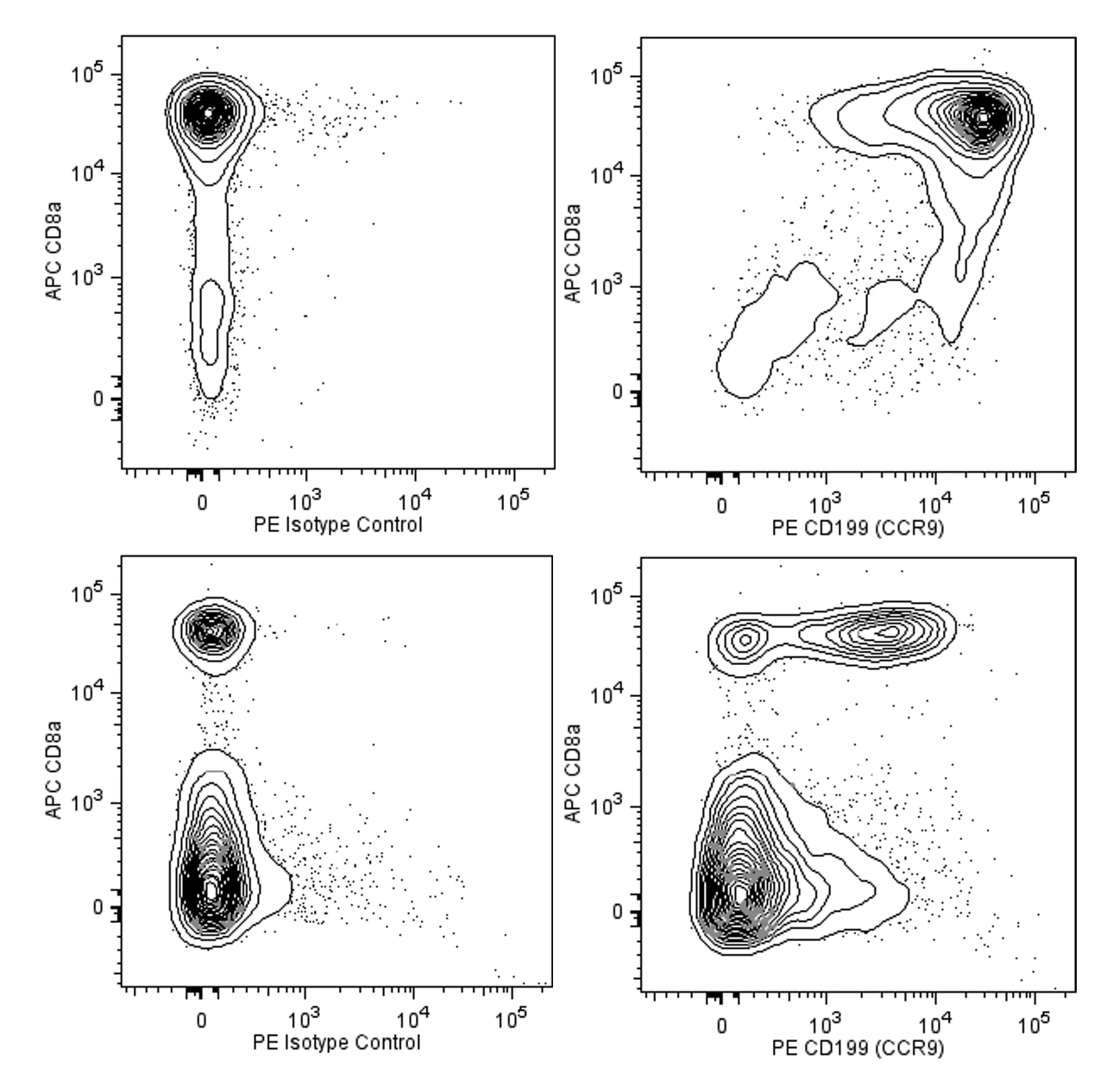
.png)


Preparation And Storage


Product Notices
- Since applications vary, each investigator should titrate the reagent to obtain optimal results.
- An isotype control should be used at the same concentration as the antibody of interest.
- Caution: Sodium azide yields highly toxic hydrazoic acid under acidic conditions. Dilute azide compounds in running water before discarding to avoid accumulation of potentially explosive deposits in plumbing.
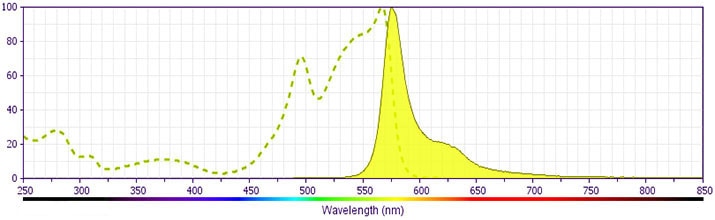
- For fluorochrome spectra and suitable instrument settings, please refer to our Multicolor Flow Cytometry web page at www.bdbiosciences.com/colors.
- Please refer to www.bdbiosciences.com/us/s/resources for technical protocols.
Companion Products
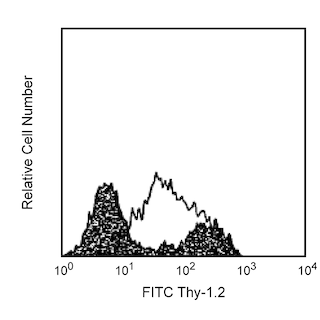
.png?imwidth=320)
The CW-1.2 monoclonal antibody specifically binds to CD199 which is also known as Chemokine (C-C motif) receptor 9 (CCR9) or C-C chemokine receptor type 9 (C-C CKR-9). CD199 is a ~42 kDa seven-transmembrane protein and member of the G protein-coupled receptor 1 family. CD199 binds to CCL25, which is likewise known as thymus-expressed chemokine (TECK) or small inducible chemokine 25 (Scya25). CCL25 is selectively and constitutively expressed in the thymic cortex and small intestinal epithelium. CD199 is highly expressed on CD4+CD8+ double-positive thymocytes, and mature naïve CD8+ T cells, but not naïve CD4+ T cells, in the peripheral lymphoid organs. CD199 is also expressed on small intestinal B cells, and on subsets of memory CD4+ T cells and CD8+ T cells, and dendritic cells. The CCR9/CCL25 pathway plays important roles in T cell development and gut-associated immune functions. It is especially involved in the recruitment of CD8αα+ intraepithelial lymphocytes (IELs) and the homing of other lymphocytes to the gut. Dysregulation of this pathway is associated with inflammatory responses, such as inflammatory bowel disease (IBD) and celiac disease.
Development References (7)
-
Drakes ML, Stiff PJ, Blanchard TG. Inverse relationship between dendritic cell CCR9 expression and maturation state. Immunology. 2009; 127(4):466-476. (Biology). View Reference
-
Feng N, Jaimes MC, Lazarus NH, et al. Redundant role of chemokines CCL25/TECK and CCL28/MEC in IgA+ plasmablast recruitment to the intestinal lamina propria after rotavirus infection. J Immunol. 2006; 176(10):5749-5759. (Biology). View Reference
-
Hadeiba H, Lahl K, Edalati A, et al. Plasmacytoid dendritic cells transport peripheral antigens to the thymus to promote central tolerance. Immunity. 2012; 36(3):438-450. (Biology). View Reference
-
McGuire HM, Vogelzang A, Ma CS, et al. A subset of interleukin-21+ chemokine receptor CCR9+ T helper cells target accessory organs of the digestive system in autoimmunity. Immunity. 2011; 34(4):602-615. (Biology). View Reference
-
Wendland M, Czeloth N, Mach N, et al. CCR9 is a homing receptor for plasmacytoid dendritic cells to the small intestine. Proc Natl Acad Sci U S A. 2007; 104(15):6347-6352. (Biology). View Reference
-
Wurbel MA, Malissen B, Campbell JJ. Complex regulation of CCR9 at multiple discrete stages of T cell development. Eur J Immunol. 2006; 36(1):73-81. (Immunogen: Flow cytometry). View Reference
-
Wurbel MA, Malissen M, Guy-Grand D, Malissen B, Campbell JJ. Impaired accumulation of antigen-specific CD8 lymphocytes in chemokine CCL25-deficient intestinal epithelium and lamina propria. J Immunol. 2007; 178(12):7598-7606. (Clone-specific: Flow cytometry). View Reference
Please refer to Support Documents for Quality Certificates
Global - Refer to manufacturer's instructions for use and related User Manuals and Technical data sheets before using this products as described
Comparisons, where applicable, are made against older BD Technology, manual methods or are general performance claims. Comparisons are not made against non-BD technologies, unless otherwise noted.
For Research Use Only. Not for use in diagnostic or therapeutic procedures.
Refer to manufacturer's instructions for use and related User Manuals and Technical Data Sheets before using this product as described.
Comparisons, where applicable, are made against older BD technology, manual methods or are general performance claims. Comparisons are not made against non-BD technologies, unless otherwise noted.
