





.png)


Preparation And Storage


Product Notices
- Please refer to www.bdbiosciences.com/us/s/resources for technical protocols.
- Caution: Sodium azide yields highly toxic hydrazoic acid under acidic conditions. Dilute azide compounds in running water before discarding to avoid accumulation of potentially explosive deposits in plumbing.
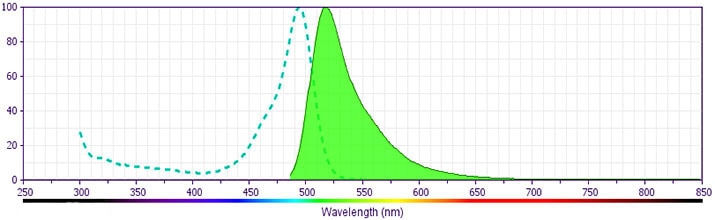
- For fluorochrome spectra and suitable instrument settings, please refer to our Multicolor Flow Cytometry web page at www.bdbiosciences.com/colors.
- Since applications vary, each investigator should titrate the reagent to obtain optimal results.
The 3C7 monoclonal antibody specifically binds to CD25, the low affinity IL-2 Receptor (IL-2Rα, p55) expressed on activated T and B lymphocytes from all mouse strains tested. IL-2Rα by itself is not a signaling receptor. However, it can combine with IL-2 Receptor β (CD122) and γc (CD132) chains to form high-affinity signaling receptor complexes for IL-2. Resting T and B lymphocytes as well as resting and activated NK cells do not express IL-2Rα. CD25 is transiently expressed at a low level during normal B-cell development in the bone marrow during the CD45R/B220low TdT- sIg- Pre-B/Pre-B-II and CD45R/B220low TdT- sIgM+ sIgD- immature B stages, but not during the CD45R/B220low TdT+ sIg- Pro-B/Pre B-I stage nor on CD45R/B220high TdTsIgM+ sIgD+ mature B cells. It is expressed at a higher level during a very early stage of T-cell development in fetal and adult thymus. Peripheral CD25+ CD4+ T lymphocytes called regulatory T (Treg) cells are involved in the maintenance of self-tolerance. It has also been reported that dendritic cells express CD25 (recognized by mAb 7D4, another CD25-specific antibody). The 3C7 antibody recognizes an epitope of CD25 which is distinct from those recognized by the other CD25-specific mAbs, 7D4 and PC61. 3C7 blocks the binding of IL-2 to CD25.
Development References (14)
-
Chen J, Ma A, Young F, Alt FW. IL-2 receptor alpha chain expression during early B lymphocyte differentiation. Int Immunol. 1994; 6(8):1265-1268. (Biology). View Reference
-
Crowley M, Inaba K, Witmer-Pack M, Steinman RM. The cell surface of mouse dendritic cells: FACS analyses of dendritic cells from different tissues including thymus. Cell Immunol. 1989; 118(1):108-125. (Biology). View Reference
-
Garni-Wagner BA, Witte PL, Tutt MM, et al. Natural killer cells in the thymus. Studies in mice with severe combined immune deficiency. J Immunol. 1990; 144(3):796-803. (Biology). View Reference
-
Godfrey DI, Kennedy J, Mombaerts P, Tonegawa S, Zlotnik A. Onset of TCR-β gene rearrangement and role of TCR-β expression during CD3-CD4-CD8- thymocyte differentiation. J Immunol. 1994; 152(10):4783-4792. (Biology). View Reference
-
Habu S, Okumura K, Diamantstein T, Shevach EM. Expression of interleukin 2 receptor on murine fetal thymocytes. Eur J Immunol. 1985; 15(5):456-460. (Biology). View Reference
-
Lorenzo F, Jaulin C, Vita N, et al. Structure-function study of the p55 subunit of murine IL-2 receptor by epitope mapping. J Immunol. 1991; 147(9):2970-2977. (Biology). View Reference
-
Malek TR, Schmidt JA, Shevach EM. The murine IL 2 receptor. III. Cellular requirements for the induction of IL 2 receptor expression on T cell subpopulations. J Immunol. 1985; 134(4):2405-2413. (Biology). View Reference
-
Moreau JL, Nabholz M, Diamantstein T, Malek T, Shevach E, Theze J. Monoclonal antibodies identify three epitope clusters on the mouse p55 subunit of the interleukin 2 receptor: relationship to the interleukin 2-binding site. Eur J Immunol. 1987; 17(7):929-935. (Clone-specific). View Reference
-
Ortega G, Robb RJ, Shevach EM, Malek TR. The murine IL 2 receptor. I. Monoclonal antibodies that define distinct functional epitopes on activated T cells and react with activated B cells. J Immunol. 1984; 133(4):1970-1975. (Clone-specific: Blocking). View Reference
-
Pollard AM, Lipscomb MF. Characterization of murine lung dendritic cells: similarities to Langerhans cells and thymic dendritic cells. J Exp Med. 1990; 172(1):159-167. (Biology). View Reference
-
Read S, Malmstrom V, Powrie F. Cytotoxic T lymphocyte-associated antigen 4 plays an essential role in the function of CD25(+)CD4(+) regulatory cells that control intestinal inflammation. J Exp Med. 2000; 192(2):295-302. (Biology). View Reference
-
Rolink A, Grawunder U, Winkler TH, Karasuyama H, Melchers F. IL-2 receptor alpha chain (CD25, TAC) expression defines a crucial stage in pre-B cell development. Int Immunol. 1994; 6(8):1257-1264. (Biology). View Reference
-
Takahashi T, Tagami T, Yamazaki S, et al. Immunologic self-tolerance maintained by CD25(+)CD4(+) regulatory T cells constitutively expressing cytotoxic T lymphocyte-associated antigen 4. J Exp Med. 2000; 192(2):303-309. (Biology). View Reference
-
Taniguchi T, Minami Y. The IL-2/IL-2 receptor system: a current overview. Cell. 1993; 73(1):5-8. (Biology). View Reference
Please refer to Support Documents for Quality Certificates
Global - Refer to manufacturer's instructions for use and related User Manuals and Technical data sheets before using this products as described
Comparisons, where applicable, are made against older BD Technology, manual methods or are general performance claims. Comparisons are not made against non-BD technologies, unless otherwise noted.
For Research Use Only. Not for use in diagnostic or therapeutic procedures.
Refer to manufacturer's instructions for use and related User Manuals and Technical Data Sheets before using this product as described.
Comparisons, where applicable, are made against older BD technology, manual methods or are general performance claims. Comparisons are not made against non-BD technologies, unless otherwise noted.
