







Preparation And Storage


Recommended Assay Procedures
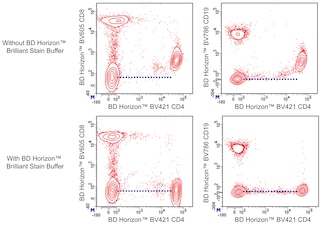
For optimal and reproducible results, BD Horizon Brilliant Stain Buffer should be used anytime two or more BD Horizon Brilliant dyes (including BD OptiBuild Brilliant reagents) are used in the same experiment. Fluorescent dye interactions may cause staining artifacts which may affect data interpretation. The BD Horizon Brilliant Stain Buffer was designed to minimize these interactions. More information can be found in the Technical Data Sheet of the BD Horizon Brilliant Stain Buffer (Cat. No. 563794).
Product Notices
- This antibody was developed for use in flow cytometry.
- The production process underwent stringent testing and validation to assure that it generates a high-quality conjugate with consistent performance and specific binding activity. However, verification testing has not been performed on all conjugate lots.
- Researchers should determine the optimal concentration of this reagent for their individual applications.
- An isotype control should be used at the same concentration as the antibody of interest.
- Caution: Sodium azide yields highly toxic hydrazoic acid under acidic conditions. Dilute azide compounds in running water before discarding to avoid accumulation of potentially explosive deposits in plumbing.
- For fluorochrome spectra and suitable instrument settings, please refer to our Multicolor Flow Cytometry web page at www.bdbiosciences.com/colors.
- Please refer to www.bdbiosciences.com/us/s/resources for technical protocols.
- BD Horizon Brilliant Stain Buffer is covered by one or more of the following US patents: 8,110,673; 8,158,444; 8,575,303; 8,354,239.
- BD Horizon Brilliant Ultraviolet 737 is covered by one or more of the following US patents: 8,110,673; 8,158,444; 8,227,187; 8,575,303; 8,354,239.
- Alexa Fluor® is a registered trademark of Life Technologies Corporation.
Companion Products
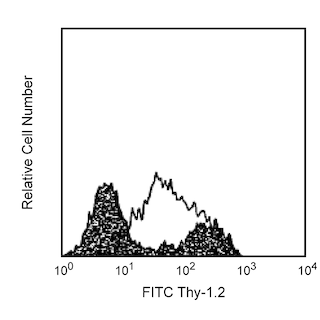
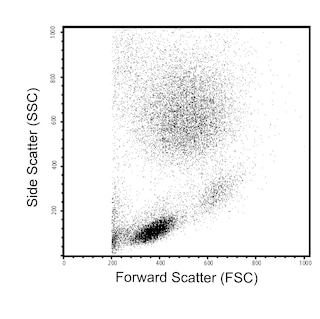
The 2PH1 monoclonal antibody specifically binds to the N-terminus of CD162 (P-selectin glycoprotein ligand-1, PSGL-1), encoded by the Selplg gene. PSGL-1 is expressed on the cell surface as a homodimer of approximately 230 kDa. In the mouse, Selpl mRNA is detected in most tissues, with high levels found in hematopoietic cells, brain, and adipose tissue. Flow cytometric analyses have revealed CD162 expression on bone marrow-derived mast and dendritic cells, splenic leukocytes, platelets, peripheral blood neutrophils, and neutrophil and T-cell lines. PSGL-1 is a ligand for P-selectin (CD62P) and is involved in leukocyte rolling, the migration of leukocytes into inflamed tissues, and responses to vascular injury. It is a sialomucin that must be specifically sialylated, fucosylated, and sulfated to bind P-selectin. There is also evidence that other ligands for PSGL-1 and CD62P may exist. The 2PH1 antibody is reported to block binding of mouse leukocytes to CD62P, but the 4RA10 antibody (Cat. No. 557787) has significantly greater blocking activity.
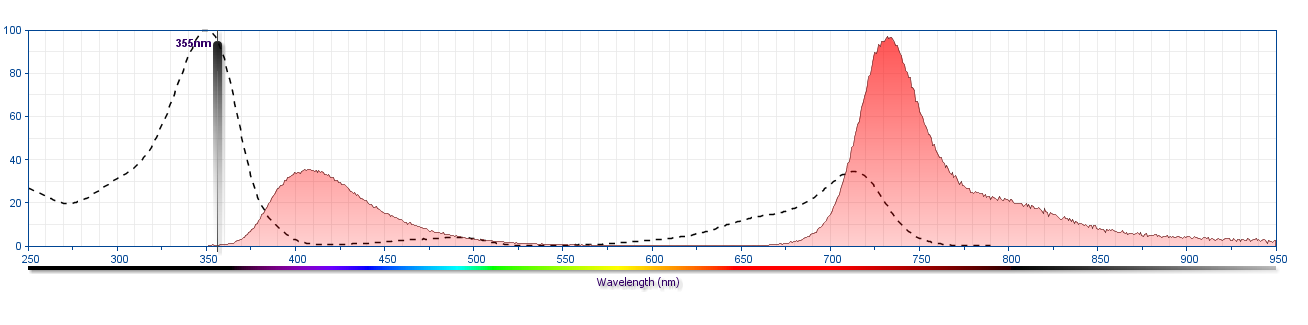
The antibody was conjugated to BD Horizon™ BUV737 which is part of the BD Horizon Brilliant™ Ultraviolet family of dyes. This dye is a tandem fluorochrome of BD Horizon BUV395 with an Ex Max of 348-nm and an acceptor dye with an Em Max at 737-nm. BD Horizon Brilliant BUV737 can be excited by the ultraviolet laser (355 nm) and detected with a 740/35 filter. Due to the excitation of the acceptor dye by other laser lines, there may be significant spillover into channels detecting Alexa Fluor® 700-like dyes (eg, 712/20-nm filter).
Due to spectral differences between labeled cells and beads, using BD™ CompBeads can result in incorrect spillover values when used with BD Horizon BUV737 reagents. Therefore, the use of BD CompBeads or BD CompBeads Plus to determine spillover values for these reagents is not recommended. Different BUV737 reagents (eg, CD4 vs. CD45) can have slightly different fluorescence spillover therefore, it may also be necessary to use clone specific compensation controls when using these reagents.
Development References (12)
-
Borges E, Eytner R, Moll T, et al. The P-selectin glycoprotein ligand-1 is important for recruitment of neutrophils into inflamed mouse peritoneum. Blood. 1997; 90(5):1934-1942. (Immunogen: Blocking, ELISA, Flow cytometry, Immunoprecipitation, Inhibition, In vivo exacerbation). View Reference
-
Borges E, Tietz W, Steegmaier M, et al. P-selectin glycoprotein ligand-1 (PSGL-1) on T helper 1 but not on T helper 2 cells binds to P-selectin and supports migration into inflamed skin. J Exp Med. 1997; 185(3):573-578. (Biology). View Reference
-
Frenette PS, Denis CV, Weiss L, et al. P-Selectin glycoprotein ligand 1 (PSGL-1) is expressed on platelets and can mediate platelet-endothelial interactions in vivo. J Exp Med. 2000; 191(8):1413-1422. (Biology). View Reference
-
Hirata T, Furie BC, Furie B. P-, E-, and L-selectin mediate migration of activated CD8+ T lymphocytes into inflamed skin. J Immunol. 2002; 169(8):4307-4313. (Clone-specific: Flow cytometry). View Reference
-
Hirata T, Merrill-Skoloff G, Aab M, Yang J, Furie BC, Furie B. P-Selectin glycoprotein ligand 1 (PSGL-1) is a physiological ligand for E-selectin in mediating T helper 1 lymphocyte migration. J Exp Med. 2000; 192(11):1669-1675. (Biology). View Reference
-
Li F, Wilkins PP, Crawley S, Weinstein J, Cummings RD, McEver RP. Post-translational modifications of recombinant P-selectin glycoprotein ligand-1 required for binding to P- and E-selectin. J Biol Chem. 1996; 271(6):3255-3264. (Biology). View Reference
-
Pendl GG, Robert C, Steinert M, et al. Immature mouse dendritic cells enter inflamed tissue, a process that requires E- and P-selectin, but not P-selectin glycoprotein ligand 1. Blood. 2002; 99(3):946-956. (Clone-specific: Blocking, Flow cytometry, Immunoprecipitation). View Reference
-
Phillips JW, Barringhaus KG, Sanders JM, et al. Single injection of P-selectin or P-selectin glycoprotein ligand-1 monoclonal antibody blocks neointima formation after arterial injury in apolipoprotein E-deficient mice. Circulation. 2003; 107(17):2244-2249. (Biology). View Reference
-
Sperandio M, Smith ML, Forlow SB, et al. P-selectin glycoprotein ligand-1 mediates L-selectin-dependent leukocyte rolling in venules. J Exp Med. 2003; 197(10):1355-1363. (Clone-specific: Flow cytometry). View Reference
-
Steegmaier M, Blanks JE, Borges E, Vestweber D. P-selectin glycoprotein ligand-1 mediates rolling of mouse bone marrow-derived mast cells on P-selectin but not efficiently on E-selectin. Eur J Immunol. 1997; 27(6):1339-1345. (Biology). View Reference
-
Xia L, Sperandio M, Yago T, et al. P-selectin glycoprotein ligand-1-deficient mice have impaired leukocyte tethering to E-selectin under flow. J Clin Invest. 2002; 109(7):939-950. (Clone-specific: Flow cytometry). View Reference
-
Yang J, Galipeau J, Kozak CA, Furie BC, Furie B. Mouse P-selectin glycoprotein ligand-1: molecular cloning, chromosomal localization, and expression of a functional P-selectin receptor. Blood. 1996; 87(10):4176-4186. (Biology). View Reference
Please refer to Support Documents for Quality Certificates
Global - Refer to manufacturer's instructions for use and related User Manuals and Technical data sheets before using this products as described
Comparisons, where applicable, are made against older BD Technology, manual methods or are general performance claims. Comparisons are not made against non-BD technologies, unless otherwise noted.
For Research Use Only. Not for use in diagnostic or therapeutic procedures.
Refer to manufacturer's instructions for use and related User Manuals and Technical Data Sheets before using this product as described.
Comparisons, where applicable, are made against older BD technology, manual methods or are general performance claims. Comparisons are not made against non-BD technologies, unless otherwise noted.
