







Preparation And Storage


Recommended Assay Procedures
BD® CompBeads can be used as surrogates to assess fluorescence spillover (compensation). When fluorochrome conjugated antibodies are bound to BD® CompBeads, they have spectral properties very similar to cells. However, for some fluorochromes there can be small differences in spectral emissions compared to cells, resulting in spillover values that differ when compared to biological controls. It is strongly recommended that when using a reagent for the first time, users compare the spillover on cells and BD® CompBeads to ensure that BD® CompBeads are appropriate for your specific cellular application.
For optimal and reproducible results, BD Horizon Brilliant Stain Buffer should be used anytime BD Horizon Brilliant dyes are used in a multicolor flow cytometry panel. Fluorescent dye interactions may cause staining artifacts which may affect data interpretation. The BD Horizon Brilliant Stain Buffer was designed to minimize these interactions. When BD Horizon Brilliant Stain Buffer is used in the multicolor panel, it should also be used in the corresponding compensation controls for all dyes to achieve the most accurate compensation. For the most accurate compensation, compensation controls created with either cells or beads should be exposed to BD Horizon Brilliant Stain Buffer for the same length of time as the corresponding multicolor panel. More information can be found in the Technical Data Sheet of the BD Horizon Brilliant Stain Buffer (Cat. No. 563794/566349) or the BD Horizon Brilliant Stain Buffer Plus (Cat. No. 566385).
Product Notices
- Please refer to www.bdbiosciences.com/us/s/resources for technical protocols.
- Since applications vary, each investigator should titrate the reagent to obtain optimal results.
- An isotype control should be used at the same concentration as the antibody of interest.
- Caution: Sodium azide yields highly toxic hydrazoic acid under acidic conditions. Dilute azide compounds in running water before discarding to avoid accumulation of potentially explosive deposits in plumbing.
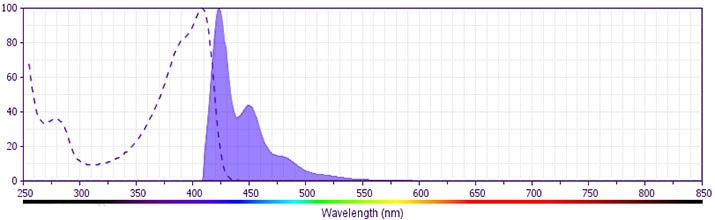
- For fluorochrome spectra and suitable instrument settings, please refer to our Multicolor Flow Cytometry web page at www.bdbiosciences.com/colors.
- Please refer to http://regdocs.bd.com to access safety data sheets (SDS).
- For U.S. patents that may apply, see bd.com/patents.
Companion Products


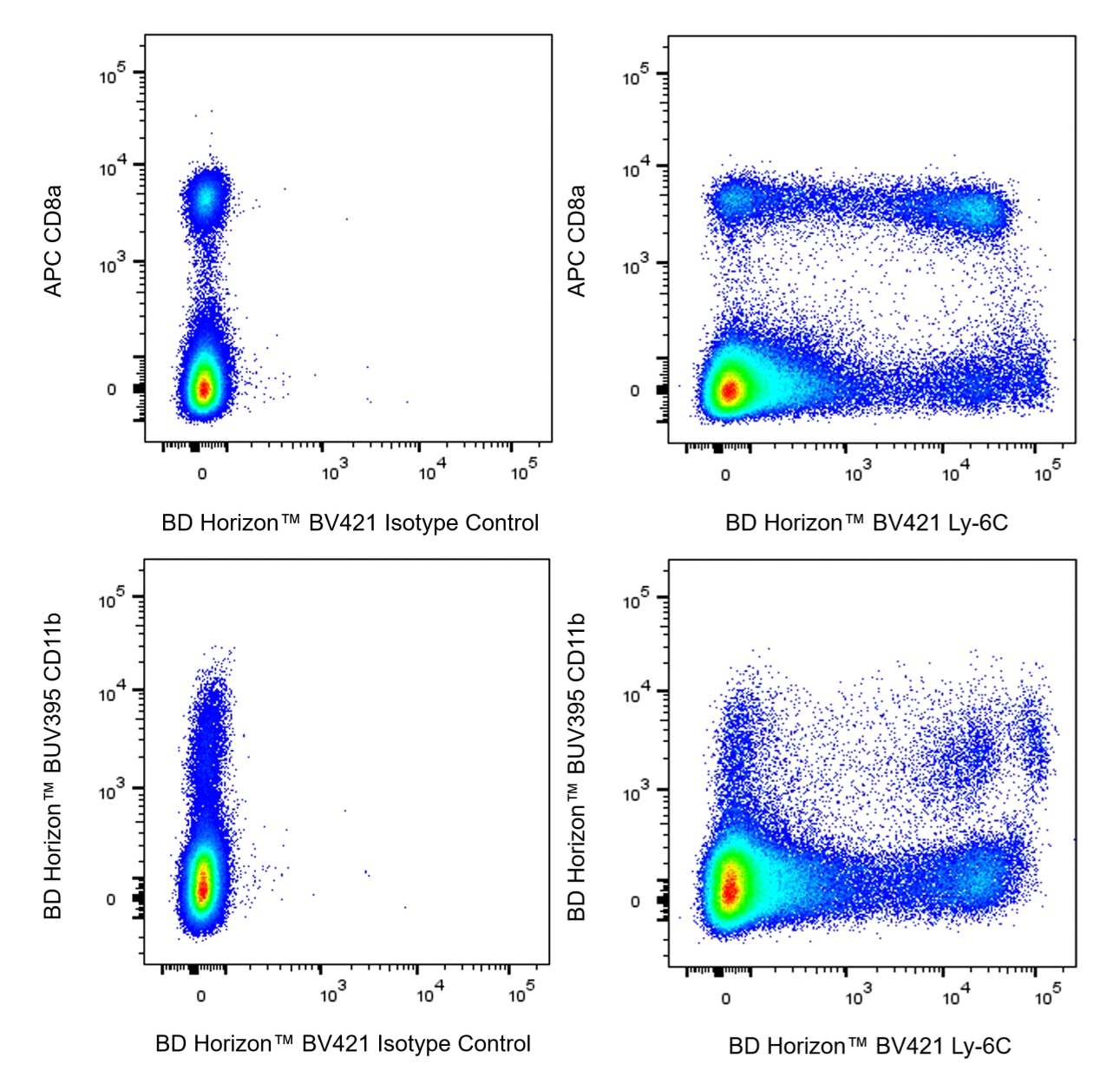
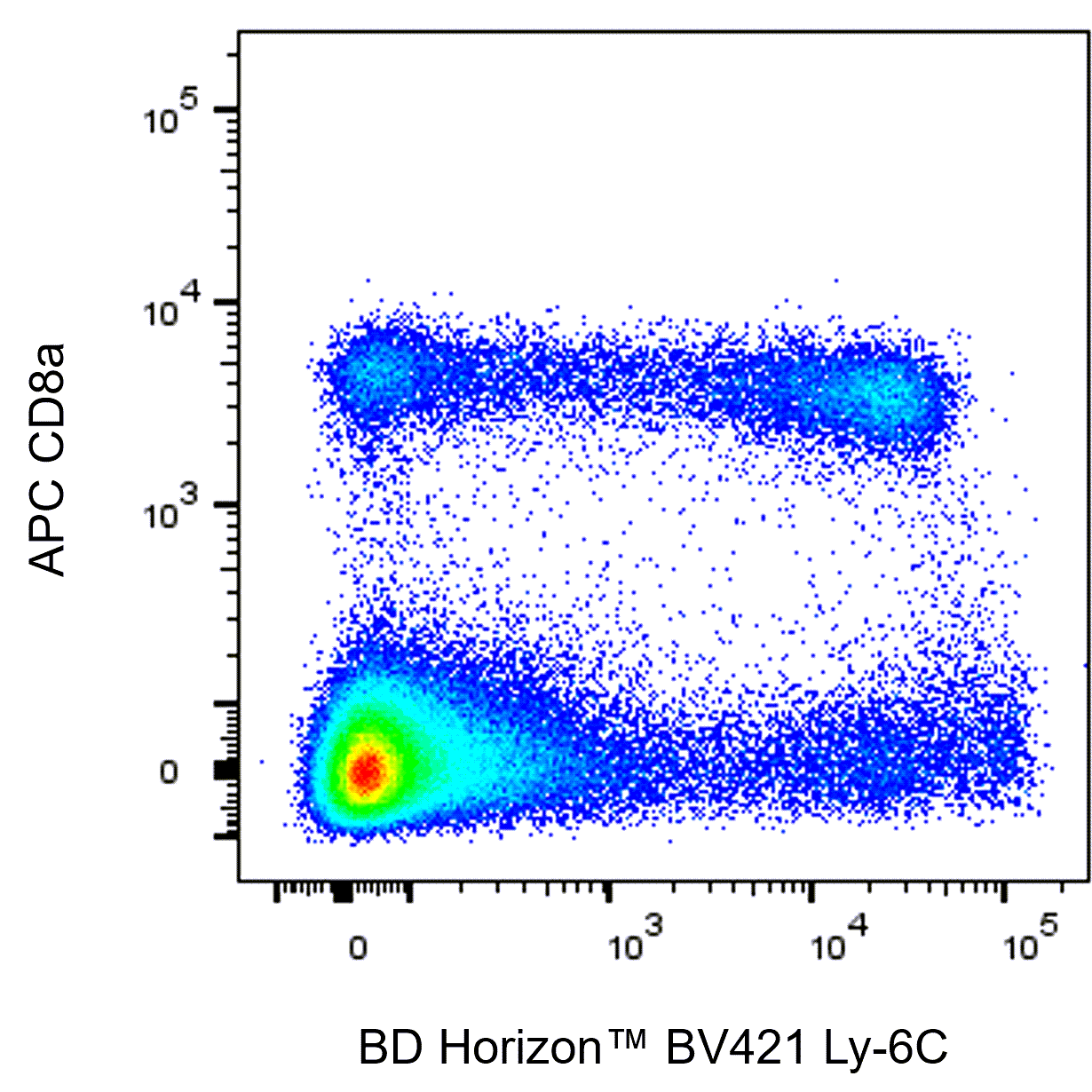
The HK1.4.rMAb monoclonal antibody is a recombinant monoclonal antibody derived from HK1.4 hybridoma cells that specifically recognizes a non-polymorphic determinant on Mouse Lymphocyte antigen Ly-6C which is also known as Ly6c. Ly-6C is an ~14-17 kDa glycosylphosphatidylinositol (GPI)-linked cell-surface antigen that is encoded by Ly6c1 (Lymphocyte antigen 6 complex, locus C1) which belongs to the Ly-6 gene family. Ly-6C is expressed on monocytes, macrophages, neutrophils, eosinophils, endothelial cells, plasma cells, thymocytes, NK cells, and some T cell subsets. Mice with the Ly-6.2 haplotype (eg, AKR, C57BL, C57BR, C57L, C58, DBA/2, PL, SJL, SWR, 129) have subsets of CD8+ and CD4+ Ly-6C+ T cells, while Ly-6.1 strains (eg, A, BALB/c, CBA, C3H/He, DBA/1, NZB) have only CD8+ Ly-6C+ T cells. Upregulation of Ly-6C expression on CD8+ T cells by interferons α and β and poly (I:C) has been described, and Ly-6C is a memory marker on CD8+ T cells. The HK1.4 antibody does not reportedly block the binding of the RB6-8C5 monoclonal antibody that specifically recognizes Mouse Ly-6G and Ly-6C.
Development References (3)
-
Havran WL, Lancki DW, Moldwin RL, Dialynas DP, Fitch FW. Characterization of an anti-Ly-6 monoclonal antibody which defines and activates cytolytic T lymphocytes.. J Immunol. 1988; 140(4):1034-42. (Immunogen: Activation, Blocking, (Co)-stimulation, Flow cytometry, Fluorescence activated cell sorting, Functional assay, Stimulation). View Reference
-
Ma C, Kapanadze T, Gamrekelashvili J, Manns MP, Korangy F, Greten TF. Anti-Gr-1 antibody depletion fails to eliminate hepatic myeloid-derived suppressor cells in tumor-bearing mice.. J Leukoc Biol. 2012; 92(6):1199-206. (Clone-specific: Flow cytometry). View Reference
-
Schlueter AJ, Malek TR, Hostetler CN, Smith PA, deVries P, Waldschmidt TJ. Distribution of Ly-6C on lymphocyte subsets: I. Influence of allotype on T lymphocyte expression.. J Immunol. 1997; 158(9):4211-22. (Biology). View Reference
Please refer to Support Documents for Quality Certificates
Global - Refer to manufacturer's instructions for use and related User Manuals and Technical data sheets before using this products as described
Comparisons, where applicable, are made against older BD Technology, manual methods or are general performance claims. Comparisons are not made against non-BD technologies, unless otherwise noted.
For Research Use Only. Not for use in diagnostic or therapeutic procedures.