The site is undergoing maintenance on
Thursday, September 10, 6:00 pm through Friday, September 11, 2:00 am (CEST), 2026.
If you encounter problems while ordering, please contact us at BDBCustomerService@bd.com
See More
The site is undergoing maintenance on
Thursday, September 10, 6:00 pm through Friday, September 11, 2:00 am (CEST), 2026.
If you encounter problems while ordering, please contact us at BDBCustomerService@bd.com
See MoreThe site is undergoing maintenance on
Thursday, September 10, 6:00 pm through Friday, September 11, 2:00 am (CEST), 2026
.If you encounter problems while ordering, please contact us at BDBCustomerService@bd.com
This page has been recently translated and is available in French now.
Looks like you're visiting us from {countryName}.
Would you like to stay on the current location site or be switched to your location?
Any use of products other than the permitted use without the express written authorization of Becton, Dickinson and Company is strictly prohibited.
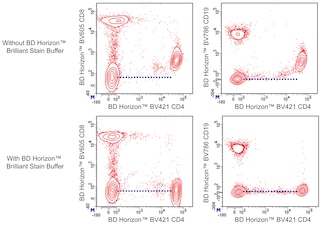
For optimal and reproducible results, BD Horizon Brilliant Stain Buffer should be used anytime two or more BD Horizon Brilliant dyes are used in the same experiment. Fluorescent dye interactions may cause staining artifacts which may affect data interpretation. The BD Horizon Brilliant Stain Buffer was designed to minimize these interactions. More information can be found in the Technical Data Sheet of the BD Horizon Brilliant Stain Buffer (Cat. No. 563794 or 566349).
When setting up compensation, it is recommended to compare spillover values obtained from cells and BD™ CompBeads to ensure that beads will provide sufficiently accurate spillover values.
For optimal results, it is recommended to perform two washes after staining with antibodies. Cells may be prepared, stained with antibodies and washed twice with wash buffer per established protocols for immunofluorescent staining prior to acquisition on a flow cytometer. Performing fewer than the recommended wash steps may lead to increased spread of the negative population.
The TY25 monoclonal antibody specifically binds to CD273, also known as B7-DC or PD-L2. CD273 is a 42-kDa type I membrane glycoprotein encoded by the Pdcd1lg2 gene of the B7 family of the Ig superfamily. Pdcd1lg2 mRNA is expressed selectively in dendritic cells (DC), liver, and a few transformed cell lines (hepatic, neuroblastoma, and myeloid), but not in lymphoid tissues or macrophages. The protein has not been detected on resting peripheral T and B lymphocytes, macrophages, or DC, but it is upregulated upon activation of T cells, macrophages, and DC by a variety of stimulatory factors. B7-DC's receptor, PD-1, contains an ITIM (Immunoreceptor Tyrosine-based Inhibitory Motif) on its intracytoplasmic region and is expressed on activated B and T lymphocytes, suggesting that B7-DC-PD-1 interaction may be involved in the negative regulation of immune responses. The second PD-1 ligand, B7-H1 (PD-L1), is also a member of the B7 family of the Ig superfamily. B7-DC may also participate in positive immunoregulation, or costimulation of T cells, through an additional receptor, which is not PD-1 and distinct from the alternate receptor for B7-H1. Moreover, B7-DC is the first B7 ligand that has been found to participate in bi-directional communication; ligation of B7-DC on DC stimulates those DC. The TY25 antibody blocks the binding of B7-DC to PD-1, but not to its alternate ligand.
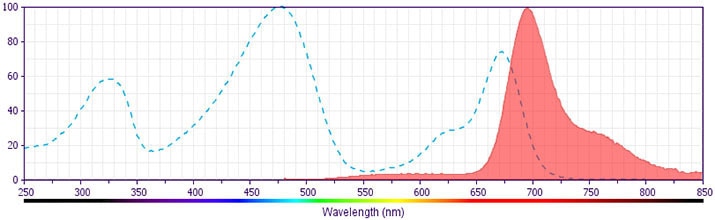
The antibody was conjugated to BD Horizon™ BB700, which is part of the BD Horizon Brilliant™ Blue family of dyes. It is a polymer-based tandem dye developed exclusively by BD Biosciences. With an excitation max of 485 nm and an emission max of 693 nm, BD Horizon BB700 can be excited by the 488 nm laser and detected in a standard PerCP-Cy™5.5 set (eg, 695/40-nm filter). This dye provides a much brighter alternative to PerCP-Cy5.5 with less cross laser excitation off the 405 nm and 355 nm lasers.
Please refer to Support Documents for Quality Certificates
Global - Refer to manufacturer's instructions for use and related User Manuals and Technical data sheets before using this products as described
Comparisons, where applicable, are made against older BD Technology, manual methods or are general performance claims. Comparisons are not made against non-BD technologies, unless otherwise noted.
For Research Use Only. Not for use in diagnostic or therapeutic procedures.