





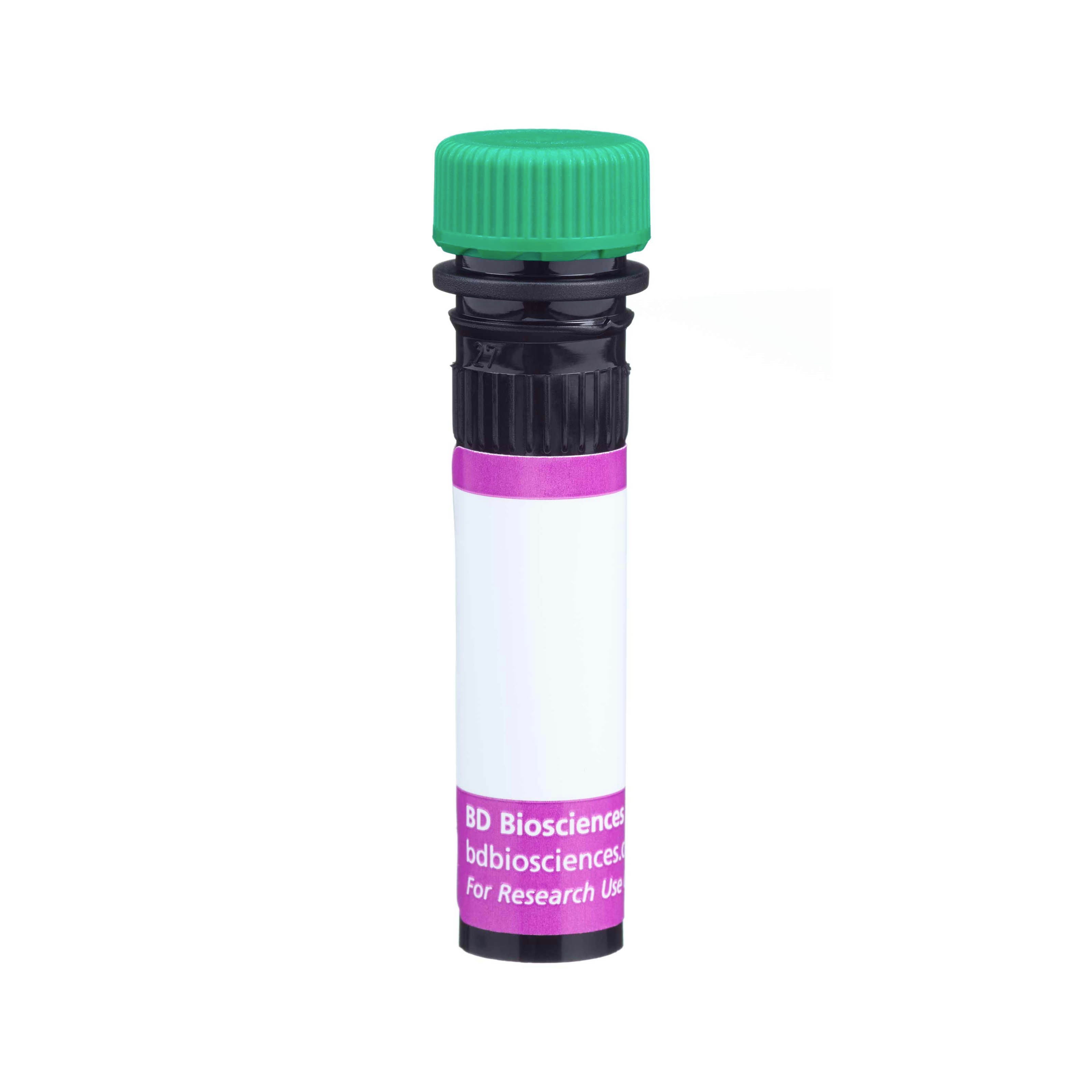


Preparation And Storage


Recommended Assay Procedures
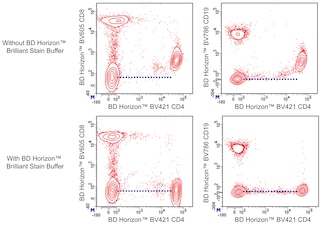
For optimal and reproducible results, BD Horizon Brilliant Stain Buffer should be used anytime two or more BD Horizon Brilliant dyes (including BD OptiBuild Brilliant reagents) are used in the same experiment. Fluorescent dye interactions may cause staining artifacts which may affect data interpretation. The BD Horizon Brilliant Stain Buffer was designed to minimize these interactions. More information can be found in the Technical Data Sheet of the BD Horizon Brilliant Stain Buffer (Cat. No. 563794).
Product Notices
- This antibody was developed for use in flow cytometry.
- The production process underwent stringent testing and validation to assure that it generates a high-quality conjugate with consistent performance and specific binding activity. However, verification testing has not been performed on all conjugate lots.
- Researchers should determine the optimal concentration of this reagent for their individual applications.
- An isotype control should be used at the same concentration as the antibody of interest.
- Caution: Sodium azide yields highly toxic hydrazoic acid under acidic conditions. Dilute azide compounds in running water before discarding to avoid accumulation of potentially explosive deposits in plumbing.
- For fluorochrome spectra and suitable instrument settings, please refer to our Multicolor Flow Cytometry web page at www.bdbiosciences.com/colors.
- Please refer to www.bdbiosciences.com/us/s/resources for technical protocols.
- BD Horizon Brilliant Stain Buffer is covered by one or more of the following US patents: 8,110,673; 8,158,444; 8,575,303; 8,354,239.
- BD Horizon Brilliant Violet 480 is covered by one or more of the following US patents: 8,575,303; 8,354,239.
Companion Products
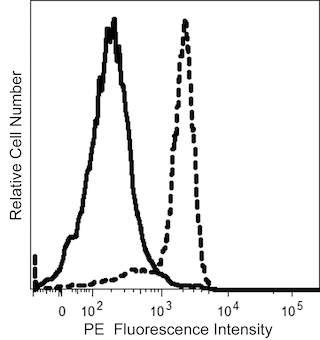
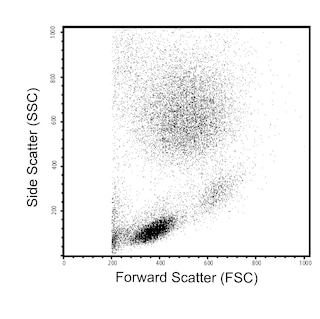
The CH-L monoclonal antibody specifically binds to CD158b proteins. These proteins are 50-58 kDa type I glycoproteins that belong to the Killer cell immunoglobulin-like receptor (KIR) family: (KIR2DL2/L3/S2). They are also known as CD158b1 (KIR2DL2; NKAT-6; p58.2), CD158b2 (KIR2DL3; NKAT-2; p58.2), or CD158j (KIR2DS2; NKAT-5; p50.2). The CD158b molecules are composed of two extracellular Ig-like domains, and a transmembrane region. CD158b1 and CD158b2 also possess long (84 or 76 amino acids, respectively) cytoplasmic tails with two immunoreceptor tyrosine-based inhibition motifs (ITIM) whereas CD158j has a short (39 amino acid) cytoplasmic tail that lacks the ITIM motif. CD158b molecules are expressed on NK cells and subsets of TCR αβ+ cells or TCR γδ+ cells. Ligand- or CH-L antibody-bound CD158b1 or CD158b2 can reportedly inhibit cytolytic NK and T cell responses to various stimuli including certain target cells expressing MHC class I ligands encoded by HLA-C alleles (Cw 1, 3, 7 and 8). CD158j reportedly can enhance some cellular cytolytic responses.
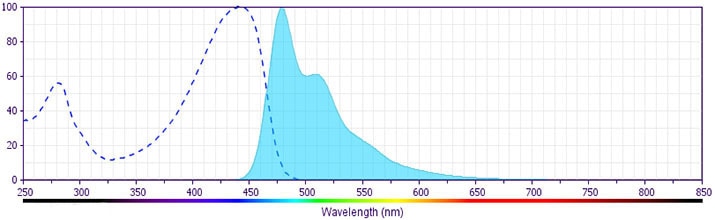
The antibody was conjugated to BD Horizon™ BV480 which is part of the BD Horizon Brilliant™ Violet family of dyes. With an Ex Max of 436-nm and Em Max at 478-nm, BD Horizon BV480 can be excited by the violet laser and detected in the BD Horizon BV510 (525/40-nm) filter set. BV480 has less spillover into the BV605 detector and, in general, is brighter than BV510.
Development References (8)
-
Cambiaggi A, Orengo AM, Meazza R, et al. The natural killer-related receptor for HLA-C expressed on T cells from CD3+ lymphoproliferative disease of granular lymphocytes displays either inhibitory or stimulatory function. Blood. 1996; 87(6):2369-2375. (Biology). View Reference
-
Colonna M, Samaridis J. Cloning of immunoglobulin-superfamily members associated with HLA-C and HLA-B recognition by human natural killer cells. Science. 1995; 268(5209):405-408. (Biology). View Reference
-
Ferrini S, Cambiaggi A, Meazza R, et al. T cell clones expressing the natural killer cell-related p58 receptor molecule display heterogeneity in phenotypic properties and p58 function. Eur J Immunol. 1994; 24(10):2294-2298. (Clone-specific: Blocking, Cell separation, Flow cytometry, Functional assay, Inhibition, Radioimmunoassay, Western blot). View Reference
-
Kim J, Chwae YJ, Kim MY, Choi IH, Park JH, Kim SJ. Molecular basis of HLA-C recognition by p58 natural killer cell inhibitory receptors. J Immunol. 1997; 159(8):3875-3882. (Biology). View Reference
-
Moretta A, Bottino C, Biassoni R. CD158a (p58.1/p50.1) and CD158b (p58.2/p50.2) natural killer receptors for HLA-C alleles: Workshop Report. In: Kishimoto T. Tadamitsu Kishimoto .. et al., ed. Leucocyte typing VI : white cell differentiation antigens : proceedings of the sixth international workshop and conference held in Kobe, Japan, 10-14 November 1996. New York: Garland Pub.; 1997:290-292.
-
Pascal V, Vivier E, Andre P. CD158 (killer immunoglobulin-like receptors family) report. In: Mason D. David Mason .. et al., ed. Leucocyte typing VII : white cell differentiation antigens : proceedings of the Seventh International Workshop and Conference held in Harrogate, United Kingdom. Oxford: Oxford University Press; 2002:412-413.
-
Warren HS, Kinnear BF. CD158a and b Workshop: Killer-inhibitory receptors and natural killer cell proliferation. In: Kishimoto T. Tadamitsu Kishimoto .. et al., ed. Leucocyte typing VI : white cell differentiation antigens : proceedings of the sixth international workshop and conference held in Kobe, Japan, 10-14 November 1996. New York: Garland Pub.; 1997:292-294.
-
van Bergen J, Thompson A, van der Slik A, Ottenhoff TH, Gussekloo J, Koning F. Phenotypic and functional characterization of CD4 T cells expressing killer Ig-like receptors. J Immunol. 2004; 173(11):6719-6726. (Clone-specific: Flow cytometry). View Reference
Please refer to Support Documents for Quality Certificates
Global - Refer to manufacturer's instructions for use and related User Manuals and Technical data sheets before using this products as described
Comparisons, where applicable, are made against older BD Technology, manual methods or are general performance claims. Comparisons are not made against non-BD technologies, unless otherwise noted.
For Research Use Only. Not for use in diagnostic or therapeutic procedures.
