The monoclonal antibody 4B12/CCR7 reacts with the mouse C-C chemokine receptor type 7 (CCR7). CCR7 is also known as CD197 (previously known as EBI1, Ebi1h and CMKBR7) and plays a central role in mediating homeostatic B and T lymphocyte trafficking to and within secondary lymphoid tissues. CD197 is a seven-transmembrane, G-protein-coupled, 43 kDa glycoprotein receptor that is specific for the CC chemokines, MIP3ß/Exodus-3/ELC/CKb11/Scya19/CCL19 and 6Ckine/Exodus-2/SLC/TCA4/CKb9/Scya21/CCL21. The mouse Ccr7 gene is located on chromosome 11. CD197 (CCR7) is differentially expressed by subsets of thymocytes. Positive CD197 expression appears to be involved in the cortex-to-medulla migration of positively-selected thymocytes wherein they complete functional maturation including the establishment of central tolerance. It is most highly expressed by some mature medullary single-positive thymocytes. CD197 is also expressed by subsets of mature peripheral CD4+ and CD8+ T lymphocytes including naïve and regulatory T cells and central memory T cells. In addition, it is differentially expressed by subsets of B lymphocytes, dendritic cells, and Langerhans cells. CD197 serves as a homing receptor that helps guide these various cell types to and within lymphoid tissues. In this way, CCR7 supports protective immunity while safeguarding self tolerance. Reportedly, the 4B12/CCR7 antibody is not agonistic, is not blocked by CCL21 nor by physiologic levels of CCL19, nor does the antibody block the binding of CCL21 to CCR7. The immunogen used to generate the 4B12 hybridoma was a mouse CCR7-transfected rat cell line.
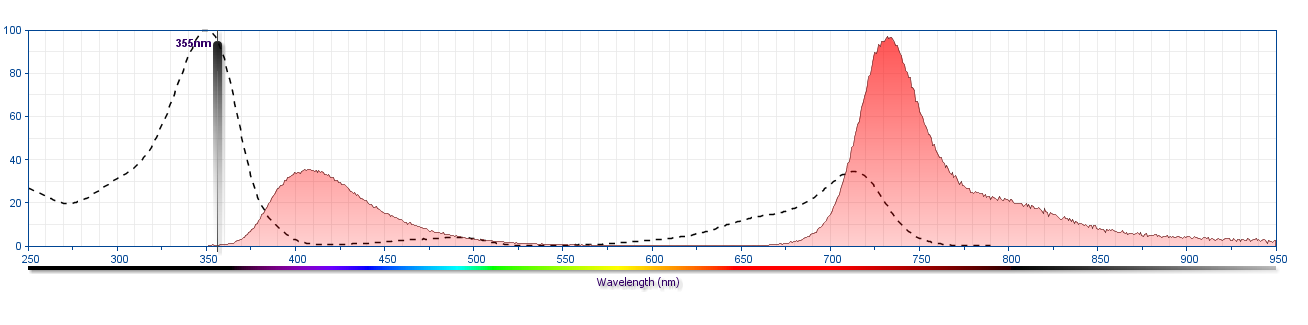
The antibody was conjugated to BD Horizon™ BUV737 which is part of the BD Horizon Brilliant™ Ultraviolet family of dyes. This dye is a tandem fluorochrome of BD Horizon BUV395 with an Ex Max of 348-nm and an acceptor dye with an Em Max at 737-nm. BD Horizon Brilliant BUV737 can be excited by the ultraviolet laser (355 nm) and detected with a 740/35 filter. Due to the excitation of the acceptor dye by other laser lines, there may be significant spillover into channels detecting Alexa Fluor® 700-like dyes (eg, 712/20-nm filter).
Due to spectral differences between labeled cells and beads, using BD™ CompBeads can result in incorrect spillover values when used with BD Horizon BUV737 reagents. Therefore, the use of BD CompBeads or BD CompBeads Plus to determine spillover values for these reagents is not recommended. Different BUV737 reagents (eg, CD4 vs. CD45) can have slightly different fluorescence spillover therefore, it may also be necessary to use clone specific compensation controls when using these reagents.