


The BD FACSDiscover™ platform with FACSTruQ™ Technology introduces a paradigm shift in spectral flow cytometry standardization, setting a new benchmark for data reproducibility with zero friction.
Overview
Flow cytometry measurements have always depended on detector settings. Because signal intensity reflects both the biology and the detector settings used to measure it, comparing data across time, instruments, and sites has traditionally required manual harmonization – adjusting detector settings until reference beads hit predefined target values, and repeating that work whenever anything changes.
FACSTruQ™ Technology takes an innovative approach to flow cytometer standardization. By characterizing the measurement system itself through an onboard LED pulser and lot-calibrated BD FACSDiscover™ Setup Beads, it builds standardization into the instrument architecture rather than layering it on as a separate workflow. Detector Setting Independent (DSI) scaling then ensures that your data stays comparable even if/when the biology forces a gain change.
Explore the BD FACSDiscover™ A7 Cell Analyzer>
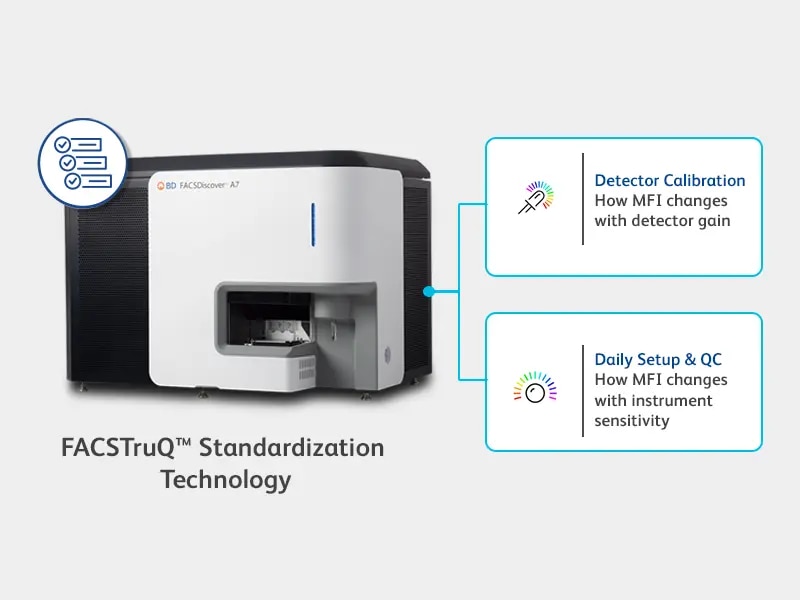

Why Flow Cytometry Can be Difficult to Standardize
The same sample can generate different signal intensities across time, instruments, and laboratories, even when the underlying biology is unchanged. Fluorescence intensity depends on how signals are acquired, detected, and scaled – so detector settings, instrument performance, and setup practices all contribute to the measurements you analyze.
These setup‑driven shifts make it hard to know whether a change in MFI or population frequency reflects a real difference between samples or simply a difference in the measurement. That ambiguity is costly in multicenter trials, longitudinal studies, and any quantitative analysis.
For over two decades, conventional standardization methods were based on manually adjusting detector settings so reference beads or controls reach predefined target values on an arbitrary fluorescence scale. It could work, but it is operator-dependent, requires ongoing maintenance, and locks the assay to a fixed set of conditions. FACSTruQ™ Technology on the BD FACSDiscover™ Platform changes that by making standardization an everyday, integrated part of the instrument and by keeping data comparable independent of detector settings.
FACSTruQ™ Technology
How Does FACSTruQ™ Technology Work?
FACSTruQ™ Technology is an integrated instrument-characterization and calibration framework built into the BD FACSDiscover™ Platform. It delivers standardization through five interconnected capabilities: automated characterization, system calibration, DSI scaling, daily quality monitoring, and guided workflows.
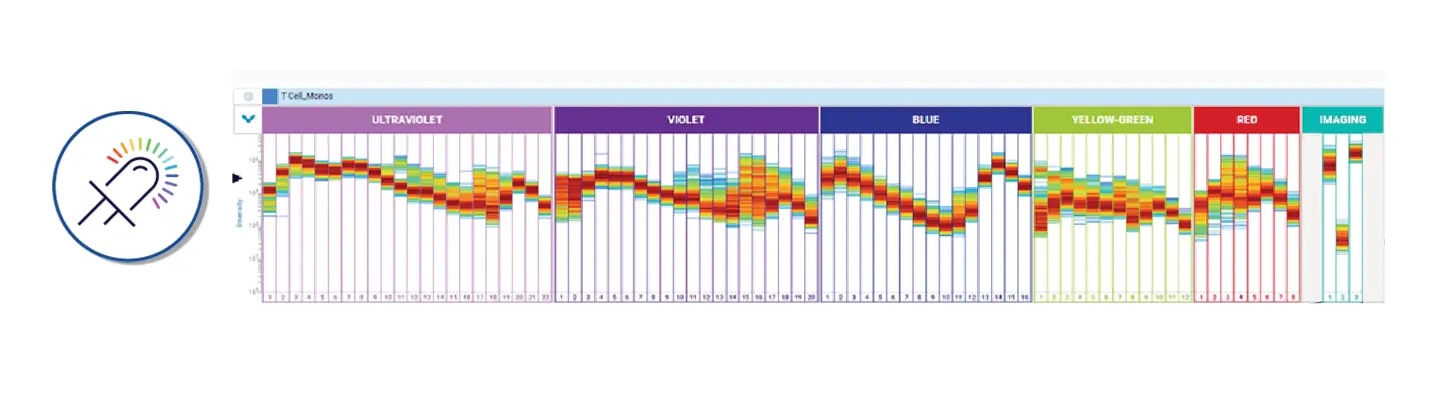
Automated Detector Characterization
An onboard LED calibration system tracks detector sensitivity, noise, and response daily to achieve consistent day-to-day MFI scaling.
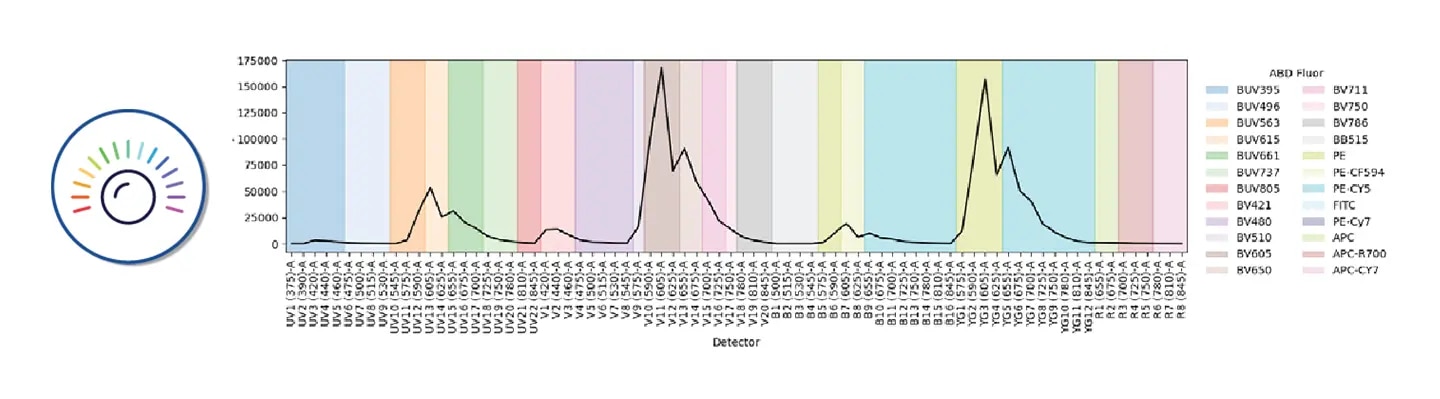
Comprehensive System Calibration
FACSTruQ™ Technology calibrates the entire measurement chain, including excitation, collection, detection, and fluidics. The system calibration is enabled by BD FACSDiscover™ Setup Beads, which are calibrated lot-to-lot and for every spectral channel, providing robust longitudinal and inter-instrument comparisons.
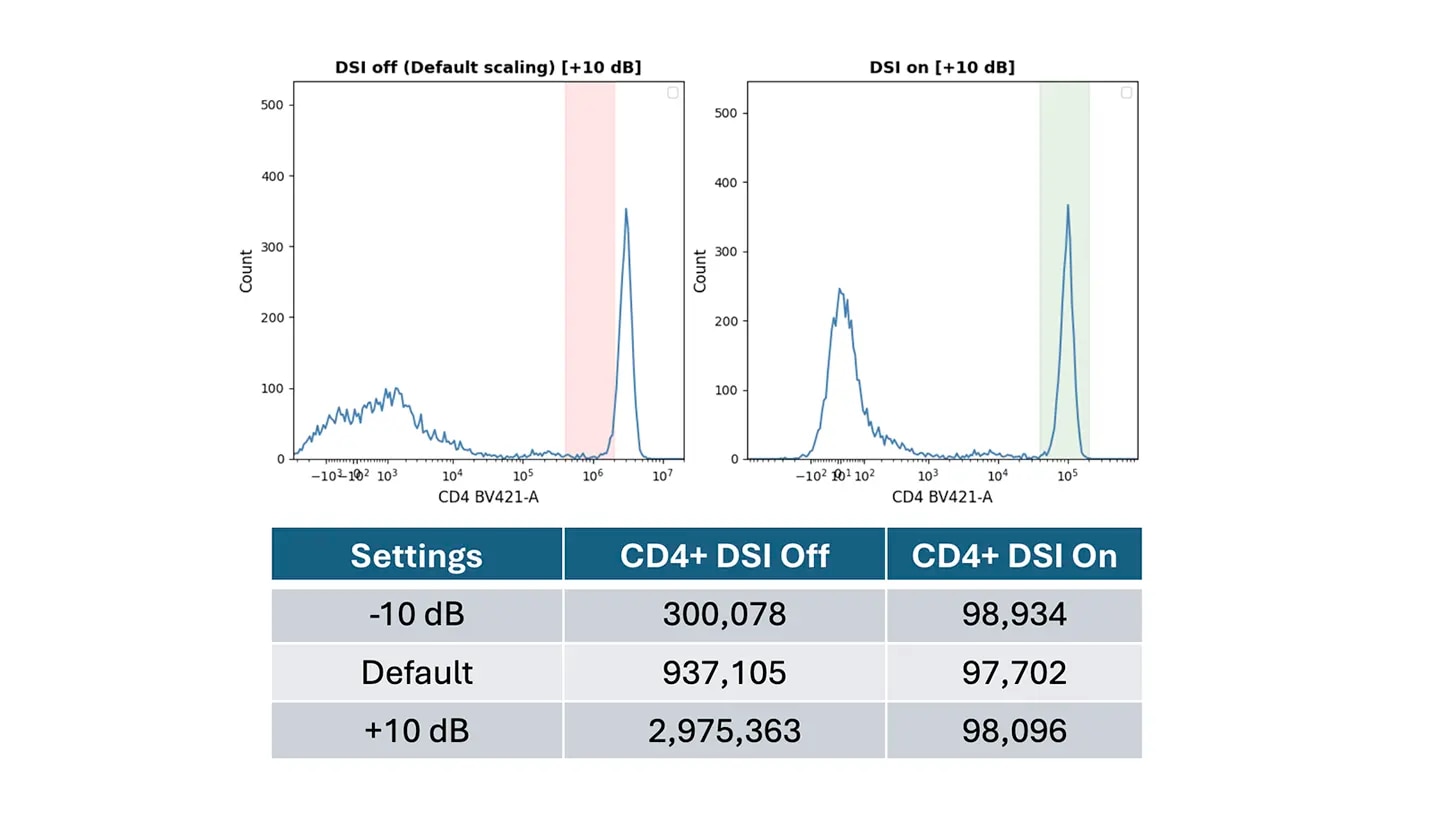
Detector Setting Independent (DSI) Scaling
Under status quo, changing detector settings in cytometer change reported fluorescence intensity, breaking comparability with data already collected. Keeping them fixed may not always be optimal for the biology. DSI removes the trade-off: the FACSTruQ™ Technology makes MFI scaling independent of detector settings, so your data remains comparable.
Daily Quality Monitoring
Daily Setup and Quality Control combine LED pulser and Setup Bead measurements to monitor instrument stability and performance over time to enable standardization.
Guided User Experience
BD FACSChorus™ Software guides you through setup, QC and acquisition step by step, so standardized data is the default outcome, not something you configure.
Performance
Trust Your Data Across Instruments, Users, Sites, and Time, with FACSTruQ™ Technology
20 colors. 12 instruments. Same populations.
The same 20-color dried panel was acquired on PBMC across 12 BD FACSDiscover™ A7 Cell Analyzers. Resolution held across all 12. A deeper analysis of the CVs of MFI for prominent lineage markers showed that sample preparation was the main driver of the residual variation; the data clustered by acquisition day across the three days of the run.
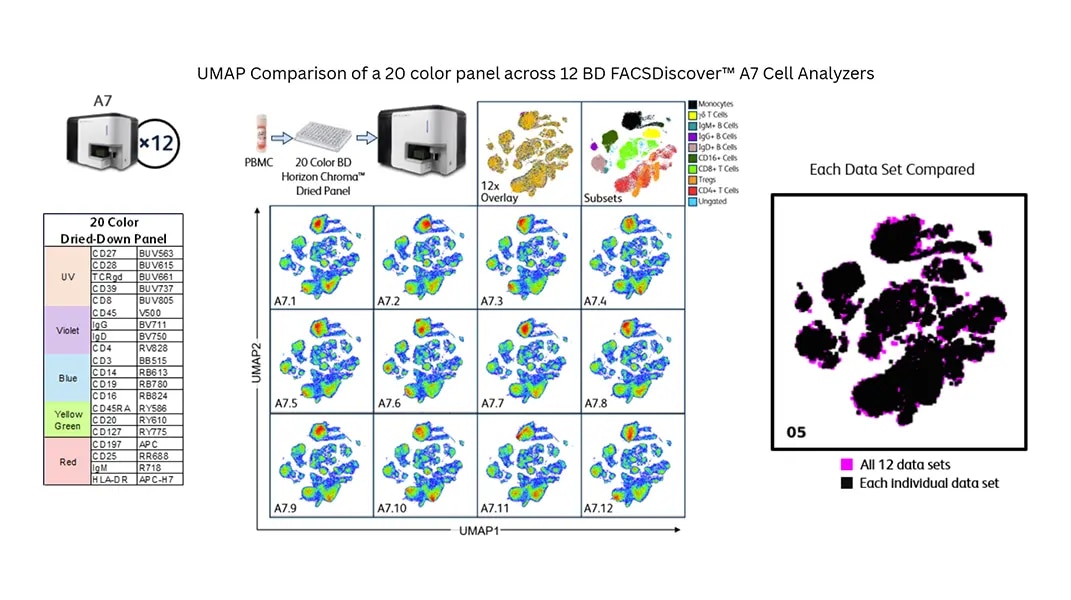
A fleet that performs consistently out of the box means new sites come online without a per-instrument optimization project, and sponsors get comparable data across every site in the study.
56 fluorochromes. 12 instruments. Default settings.
CD4 single-stains were acquired across 12 BD FACSDiscover™ A7 Cell Analyzers at default pre-optimized settings. The %CV of unmixed CD4 MFI remained consistently below 10% across all 56 fluorochromes tested.
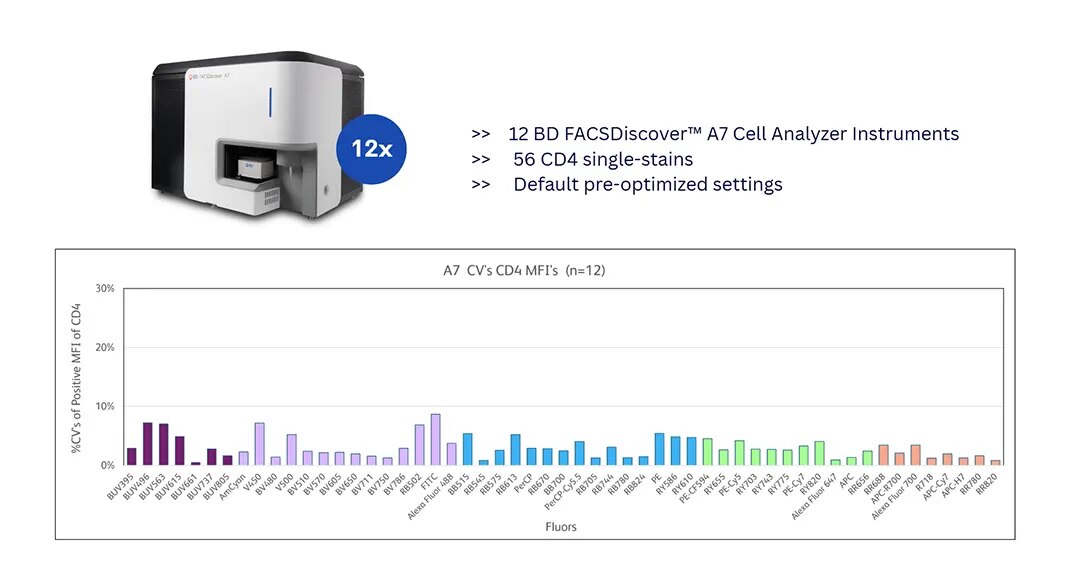
Consistent performance dye by dye, instrument to instrument so you can choose dyes for the biology and trust the panel to behave the same on any A7.
50 colors. Three instruments. One afternoon.
OMIP-102, the published 50-color human immune phenotyping panel, was acquired on three BD FACSDiscover™ A7 Cell Analyzers using the same sample on the same day. Population patterns across the major lineages: B cells, T cells, NK cells, innate lymphoid cells, DCs and APCs remained consistent across all three instruments.
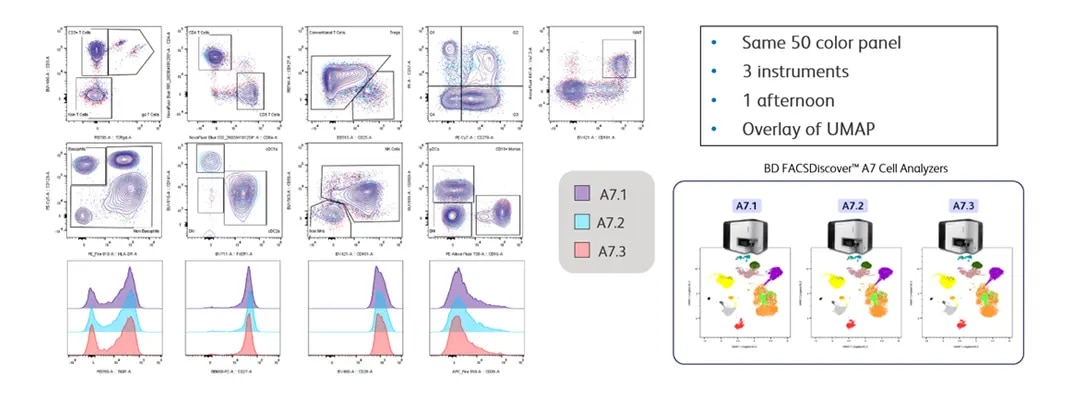
If a 50-color panel behaves consistently across instruments, a 20- to 30-color panel has real headroom. Reproducibility does not have to be traded against panel depth.
Multiple timepoints. Consistent resolution.
A 20-color BD Horizon Chroma™ dried panel was run on cryopreserved PBMC from a single donor at Days 1, 14, 30 and 45. Resolution remained consistent across all four timepoints; the variation observed reflects biological change rather than instrument variation.
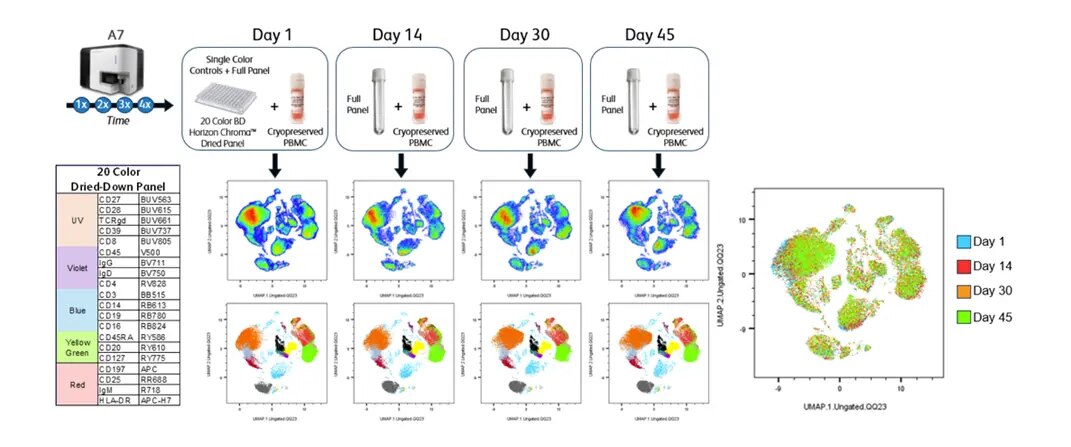
For multi-year cohort and longitudinal studies: reviewers see biology, not instrument drift.
Uncovering the true magnitude of a biological response
An 8-color stimulation panel was run on PBMC at unstimulated, 24-hour and 48-hour timepoints, with detector settings adjusted across the series to keep the brightening population on scale. Under default scaling the apparent CD25/CD69 response was understated; with DSI scaling applied to the same acquisitions, the true fold-change was revealed.
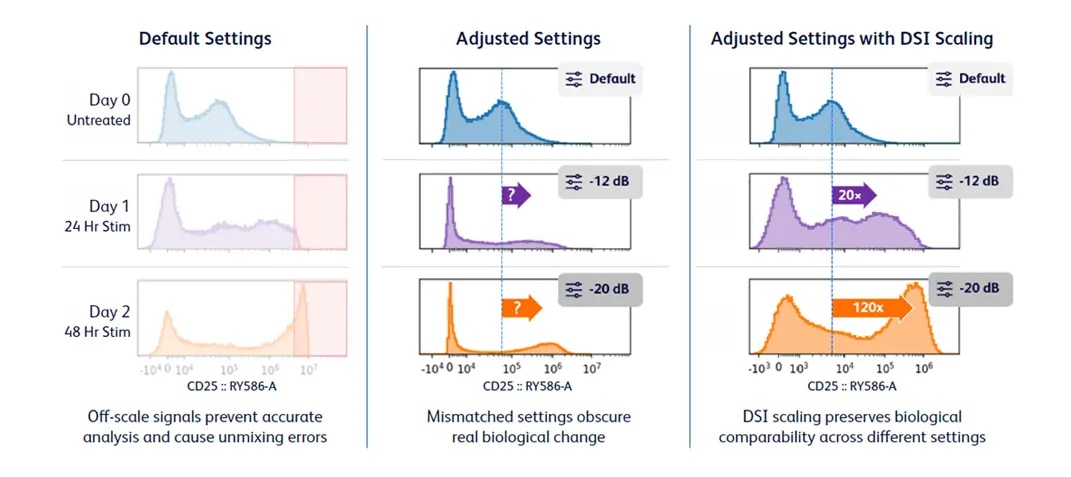
Differences in the data reflect biology, not the gains used to collect it. A setting change part-way through a study no longer forces re-acquisition, post-hoc normalization or a separate analysis template.
Applications
Where FACSTruQ™ Technology makes the biggest difference
FACSTruQ™ Technology on the BD FACSDiscover™ Platform matters most when your work spans multiple timepoints, instruments or study sites – the situations where data comparability is hardest to maintain and most expensive to lose.
- Longitudinal studies
Time‑course analyses where samples collected months or years apart remain comparable with FACSTruQ™ Technology without needing to re-establish the experimental baseline every time settings or instrument performance changes.
- Biomarker discovery and validation
Robust quantification, reproducibility, and comparison across cohorts, where DSI scaling helps you separate true biological differences from instrument and setup variation.
- Assay development and method transfer
Reduced instrument-to-instrument variation, lowering the time and risk associated with assay development and method transfer between labs and partners.
- Multicenter research programs
Data from multiple research centers worldwide remains comparable and consistent automatically by FACSTruQ™ Technology without tying every site to a master instrument’s template settings.
- Instrument fleet management in core labs and CROs
A fleet of BD FACSDiscover™ Instruments fully aligned to a common measurement scale, simplifying QC, data integration, analysis pipelines, and reports.
The BD FACSDiscover™ Platform:
Standardization and spectral performance in one system
The BD FACSDiscover™ A7 Cell Analyzer is the newest spectral flow cytometer in the BD FACSDiscover™ Platform. It's a 5-laser, full-spectrum benchtop system built for multicolor panels in a wide range of applications from immunology research to small particle analysis. With FACSTruQ™ Technology and BD SpectralFX™ Technology, it delivers high-quality reproducible data across instruments and over time. That means researchers in academia and industry spend less time on the instrument and more time on science, generating data they can trust for publications, drug discovery, and clinical research.
- State-of-the-art spectral flow cytometry with BD SpectralFX™ Technology
Explore full-spectrum optics, optimized hardware, and system-aware unmixing algorithms designed to support a wide range of flow cytometry applications, from routine to high-parameter panels.
- BD FACSDiscover™ A7 Cell Analyzer
Explore the analyzer where both technologies work as one system. See configurations, specifications, and capabilities.
FAQs
- What is FACSTruQ™ Technology?
FACSTruQ™ Technology is a standardization architecture built directly into the BD FACSDiscover™ Platform. It’s an integrated technology based on five capabilities: automated detector characterization, system calibration, Detector Setting Independent (DSI) scaling, daily QC monitoring, and guided workflows. Built into the BD FACSDiscover™ Platform, FACSTruQ™ Technology makes data comparable across instruments, experiments, and time, to help researchers discern true biological variation from changes in instrument settings.
- What is Detector Setting Independent (DSI) scaling?
Detector Setting Independent (DSI) scaling is a mathematical standardization approach that makes MFI scaling independent of detector settings. DSI is implemented in BD FACSChorus™ Software and gives researchers greater flexibility when tuning acquisition parameters for different sample types, dynamic ranges, or assay requirements without compromising data comparability.
- How does FACSTruQ™ Technology support multicenter and longitudinal studies?
FACSTruQ™ Technology makes data comparable across instruments, sites, and time points without a manual harmonization program. Automated system calibration and DSI scaling reduce the need for manual cross-site and cross-instrument harmonization. This matters most in biomarker discovery, assay development/transfer, and longitudinal translational/clinical research.
- How is FACSTruQ™ Technology different from traditional flow cytometry standardization approaches?
FACSTruQ™ Technology provides comparable fluorescence scaling regardless of detector settings. In contrast, conventional standardization methods depend on manually adjusting detector settings to reach predefined reference values. This approach limits setting flexibility and introduces operator-dependent variability. FACSTruQ™ Technology combines DSI scaling, automated detector characterization, and continuous QC, making standardization autonomous and reliable, leaving room for you to adapt acquisition parameters to your experimental conditions.
More Information
Learn more about FACSTruQ™ Technology and the BD FACSDiscover™ Platform
Explore the BD FACSDiscover™ A7 Cell Analyzer, BD SpectralFX™ Technology, BD FACSChorus™ Software, and the scientific applications of the FACSTruQ™ Technology in the standardization whitepaper.
- BD FACSDiscover™ A7 Cell Analyzer
Explore the BD FACSDiscover™ A7 Cell Analyzer, combining FACSTruQ™ Technology with BD SpectralFX™ Technology to deliver standardized high-parameter spectral flow cytometry performance in a single system. See configurations, specifications, and capabilities.
- BD SpectralFX™ Technology
Learn how BD SpectralFX™ Technology enables high-parameter spectral flow cytometry through full-spectrum optics, optimized hardware, and advanced unmixing capabilities.
- BD FACSChorus™ Software
Discover the software tools and environment enabling FACSTruQ™ Technology standardization and guided acquisition on the BD FACSDiscover™ Platform.
- FACSTruQ™ Technology Standardization Whitepaper
Access a detailed scientific applications overview of FACSTruQ™ Technology, including the underlying principles, technical considerations, use cases, and frequently asked questions.
Contact us about this technology
*Required fields
BD flow cytometers are Class 1 Laser Products.
For Research Use Only. Not for use in diagnostic or therapeutic procedures.