

Skip to main content Skip to navigation
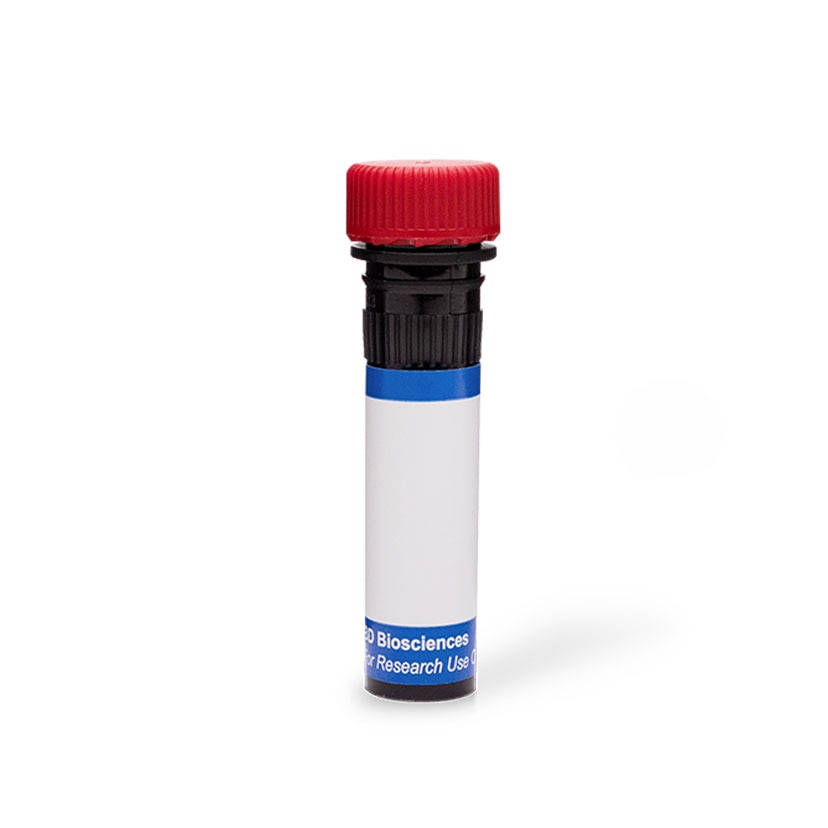
PE Rat Anti-Mouse I-A/I-E
Product Details
Down Arrow Up Arrow


BD Pharmingen™
H-2I; I-Ab, I-Ad, I-Aq, I-Ed, and I-Ek MHC class II alloAgs; Ia Ag; M5/114; MHC II
Mouse (QC Testing)
Rat BN x LEW IgG2b, κ
Activated C57BL/6 Mouse Spleen Cells
Flow cytometry (Routinely Tested)
0.2 mg/ml
111861
AB_396546
Aqueous buffered solution containing ≤0.09% sodium azide.
RUO


Preparation And Storage

The monoclonal antibody was purified from tissue culture supernatant or ascites by affinity chromatography. The antibody was conjugated to the dye under optimum conditions and unconjugated antibody and free dye were removed. Store undiluted at 4°C and protected from prolonged exposure to light. Do not freeze.

Recommended Assay Procedures

BD® CompBeads can be used as surrogates to assess fluorescence spillover (compensation).  When fluorochrome conjugated antibodies are bound to BD® CompBeads, they have spectral properties very similar to cells.  However, for some fluorochromes there can be small differences in spectral emissions compared to cells, resulting in spillover values that differ when compared to biological controls.  It is strongly recommended that when using a reagent for the first time, users compare the spillover on cell and BD® CompBeads to ensure that BD® CompBeads are appropriate for your specific cellular application.

Product Notices

  1. Please refer to www.bdbiosciences.com/us/s/resources for technical protocols.
  2. Since applications vary, each investigator should titrate the reagent to obtain optimal results.
  3. An isotype control should be used at the same concentration as the antibody of interest.
  4. For fluorochrome spectra and suitable instrument settings, please refer to our Multicolor Flow Cytometry web page at www.bdbiosciences.com/colors.
  5. Caution: Sodium azide yields highly toxic hydrazoic acid under acidic conditions. Dilute azide compounds in running water before discarding to avoid accumulation of potentially explosive deposits in plumbing.
  6. Please refer to http://regdocs.bd.com to access safety data sheets (SDS).
  7. For U.S. patents that may apply, see bd.com/patents.
557000 Rev. 9
Antibody Details
Down Arrow Up Arrow
M5/114.15.2

The M5/114.15.2 monoclonal antibody recognizes a polymorphic determinant shared by the I-A[b], I-A[d], I-A[q], I-E[d], and I-E[k] (but not I-A[f], I-A[k], or I-A[s]) MHC class II alloantigens that can be expressed by B cells, dendritic cells, monocytes, macrophages and activated T cells. It also reacts with cells from mice of the H-2[p] and H-2[r] haplotypes, and it is non-reactive with cells from NOD (H-2[g7]) mice. Flow cytometric analysis indicates that the M5/114.15.2 and 2G9 monoclonal antibodies have comparable reactivity on cells from mice with I-A[b], I-A[d], I-A[g7], I-A[q], I-E[d], and I-E[k] alloantigens.

557000 Rev. 9
Format Details
Down Arrow Up Arrow
PE
R-Phycoerythrin (PE), is part of the BD family of Phycobiliprotein dyes. This fluorochrome is a multimeric fluorescent phycobiliprotein with excitation maximum (Ex Max) of 496 nm and 566 nm and an emission maximum (Em Max) at 576 nm. PE is designed to be excited by the Blue (488 nm), Green (532 nm) and Yellow-Green (561 nm) lasers and detected using an optical filter centered near 575 nm (e.g., a 575/26-nm bandpass filter). As PE is excited by multiple lasers, this can result in cross-laser excitation and fluorescence spillover on instruments with various combinations of Blue, Green, and Yellow-Green lasers. Please ensure that your instrument’s configurations (lasers and optical filters) are appropriate for this dye.
altImg
PE
496 nm, 566 nm
576 nm
557000 Rev.9
Citations & References
Down Arrow Up Arrow
View product citations for antibody "557000" on CiteAb

Development References (7)

  1. Bhattacharya A, Dorf ME, Springer TA. A shared alloantigenic determinant on Ia antigens encoded by the I-A and I-E subregions: evidence for I region gene duplication. J Immunol. 1981; 127(6):2488-2495. (Immunogen: Immunoprecipitation). View Reference
  2. Ernst DN, McQuitty DN, Weigle WO, Hobbs MV. Expression of membrane activation antigens on murine B lymphocytes stimulated with lipopolysaccharide. Cell Immunol. 1988; 114(1):161-173. (Clone-specific: Flow cytometry). View Reference
  3. Guo MW, Watanabe T, Mori E, Mori T. Molecular structure and function of CD4 on murine egg plasma membrane. Zygote. 1995; 3(1):65-73. (Clone-specific: Blocking). View Reference
  4. Hattori M, Buse JB, Jackson RA, et al. The NOD mouse: recessive diabetogenic gene in the major histocompatibility complex. Science. 1986; 231(4739):733-735. (Clone-specific). View Reference
  5. Nelson AJ, Hosier S, Brady W, Linsley PS, Farr AG. Medullary thymic epithelium expresses a ligand for CTLA4 in situ and in vitro. J Immunol. 1998; 151(5):2453-2461. (Clone-specific: Blocking, Immunofluorescence, Immunohistochemistry). View Reference
  6. Viville S, Neefjes J, Lotteau V, et al. Mice lacking the MHC class II-associated invariant chain. Cell. 1993; 72(4):635-648. (Clone-specific: Flow cytometry, Immunofluorescence). View Reference
  7. Yamashita I, Nagata T, Tada T, Nakayama T. CD69 cell surface expression identifies developing thymocytes which audition for T cell antigen receptor-mediated positive selection. Int Immunol. 1993; 5(9):1139-1150. (Clone-specific: Blocking). View Reference
View All (7) View Less
557000 Rev. 9


Please refer to Support Documents for Quality Certificates


Global - Refer to manufacturer's instructions for use and related User Manuals and Technical data sheets before using this products as described


Comparisons, where applicable, are made against older BD Technology, manual methods or are general performance claims.  Comparisons are not made against non-BD technologies, unless otherwise noted.

Please refer to Support Documents for Quality Certificates


Global - Refer to manufacturer's instructions for use and related User Manuals and Technical data sheets before using this products as described


Comparisons, where applicable, are made against older BD Technology, manual methods or are general performance claims.  Comparisons are not made against non-BD technologies, unless otherwise noted.

For Research Use Only. Not for use in diagnostic or therapeutic procedures.