Skip to main content Skip to navigation
PE Rat Anti-Mouse CD326
Product Details
Down Arrow Up Arrow


BD Pharmingen™
Ep-CAM; EGP; EGP-2; Egp314; GA733-2; TROP1; Tacsd1; Tacstd1; Ly74; gp40
Mouse (QC Testing)
Rat SD, also known as Sprague-Dawley (outbred) IgG2a, κ
Glycoconjugates from BALB/c mouse-derived TE-71 medullary thymic epithelial cell line
Flow cytometry (Routinely Tested)
0.2 mg/ml
AB_2738233
Aqueous buffered solution containing ≤0.09% sodium azide.
RUO


Preparation And Storage

Store undiluted at 4°C and protected from prolonged exposure to light. Do not freeze. The monoclonal antibody was purified from tissue culture supernatant or ascites by affinity chromatography. The antibody was conjugated with R-PE under optimum conditions, and unconjugated antibody and free PE were removed.

Product Notices

  1. Since applications vary, each investigator should titrate the reagent to obtain optimal results.
  2. An isotype control should be used at the same concentration as the antibody of interest.
  3. Please refer to www.bdbiosciences.com/us/s/resources for technical protocols.
  4. Caution: Sodium azide yields highly toxic hydrazoic acid under acidic conditions. Dilute azide compounds in running water before discarding to avoid accumulation of potentially explosive deposits in plumbing.
  5. For fluorochrome spectra and suitable instrument settings, please refer to our Multicolor Flow Cytometry web page at www.bdbiosciences.com/colors.
563477 Rev. 1
Antibody Details
Down Arrow Up Arrow
G8.8

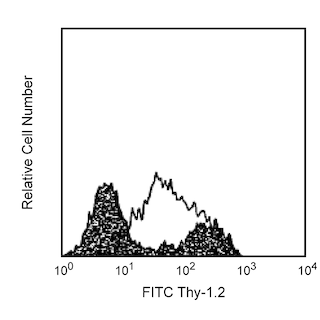
The G8.8 monoclonal antibody recognizes CD326/Ep-CAM (Epithelial Cell Adhesion Molecule), also known as gp40 in the mouse and by a variety of names (including GA733-2, CO17-1A, and EGP) in the human.  In the mouse, Ep-CAM is a 40-42 kDa cell-surface type 1 transmembrane glycoprotein expressed on thymic epithelial cells, thymic dendritic cells, immature thymocytes, a small subset of peripheral T lymphocytes, intestinal epithelium, kidney-collecting tubule epithelium, keratinocytes, Langerhans cells and lymph node and splenic dendritic cells. Profiles of Ep-CAM expression on fetal thymocytes and on the CD4[-] CD8[-], CD4[+] CD8[+], CD4[-] CD8[+], and CD4[+] CD8[-] subsets of adult thymocytes have been published.  In unrelated studies, mouse Ep-CAM mRNA was detected in tissues containing epithelial cells (kidney, stomach, intestine, lung, and thymus) and in plasma cells and plasmacytomas, but not in heart, muscle, liver, brain, spleen, B lymphomas, or pre-B lymphomas.  Ep-CAM is a Ca[2+] independent homophilic adhesion molecule that is proposed to play roles in the development and normal function of epithelial tissues and in the progression of carcinomas.

563477 Rev. 1
Format Details
Down Arrow Up Arrow
PE
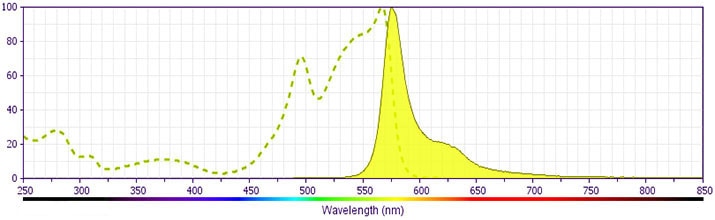
R-Phycoerythrin (PE), is part of the BD family of Phycobiliprotein dyes. This fluorochrome is a multimeric fluorescent phycobiliprotein with excitation maximum (Ex Max) of 496 nm and 566 nm and an emission maximum (Em Max) at 576 nm. PE is designed to be excited by the Blue (488 nm), Green (532 nm) and Yellow-Green (561 nm) lasers and detected using an optical filter centered near 575 nm (e.g., a 575/26-nm bandpass filter). As PE is excited by multiple lasers, this can result in cross-laser excitation and fluorescence spillover on instruments with various combinations of Blue, Green, and Yellow-Green lasers. Please ensure that your instrument’s configurations (lasers and optical filters) are appropriate for this dye.
altImg
PE
496 nm, 566 nm
576 nm
563477 Rev.1
Citations & References
Down Arrow Up Arrow
View product citations for antibody "563477" on CiteAb

Development References (9)

  1. Basak S, Speicher D, Eck S, Wunner W. Colorectal carcinoma invasion inhibition by CO17-1A/GA733 antigen and its murine homologue. J Natl Cancer Inst. 1998; 90(9):691-697. (Biology). View Reference
  2. Bergsagel PL, Victor-Kobrin C, Timblin CR, Trepel J, Kuehl WM. A murine cDNA encodes a pan-epithelial glycoprotein that is also expressed on plasma cells. J Immunol. 1992; 148(2):590-596. (Biology). View Reference
  3. Birebent B, Somasundaram R, Purev E. Anti-idiotypic antibody and recombinant antigen vaccines in colorectal cancer patients. Crit Rev Oncol Hematol. 2001; 39((1-2)):107-113. (Biology). View Reference
  4. Borkowski TA, Nelson AJ, Farr AG, Udey MC. Expression of gp40, the murine homologue of human epithelial cell adhesion molecule (Ep-CAM), by murine dendritic cells. Eur J Immunol. 1996; 26(1):110-114. (Clone-specific: Immunohistochemistry). View Reference
  5. Farr A, Nelson A, Truex J, Hosier S. Epithelial heterogeneity in the murine thymus: a cell surface glycoprotein expressed by subcapsular and medullary epithelium. J Histochem Cytochem. 1991; 39(5):345-353. (Immunogen: Electron microscopy, Immunohistochemistry, Immunoprecipitation). View Reference
  6. Litvinov SV, Balzar M, Winter MJ. Epithelial cell adhesion molecule (Ep-CAM) modulates cell-cell interactions mediated by classic cadherins. J Biol Chem. 1997; 139(5):1337-1348. (Biology). View Reference
  7. Nelson AJ, Dunn RJ, Peach R, Aruffo A, Farr AG. The murine homolog of human Ep-CAM, a homotypic adhesion molecule, is expressed by thymocytes and thymic epithelial cells. Eur J Immunol. 1996; 26(2):401-408. (Clone-specific: Electron microscopy, Immunohistochemistry, Immunoprecipitation). View Reference
  8. Taguchi N, Hashimoto Y, Naiki M. Abnormal thymic expression of epithelial cell adhesion molecule (EP-CAM) in New Zealand Black (NZB) mice. J Autoimmun. 1999; 13(4):393-400. (Clone-specific: Electron microscopy). View Reference
  9. Zutter MM. Gastrointestinal carcinoma antigen GA733: target for immunodestruction and potential modifier of invasiveness and chemoresponsiveness. J Natl Cancer Inst. 1998; 90(9):642-644. (Biology). View Reference
View All (9) View Less
563477 Rev. 1


Please refer to Support Documents for Quality Certificates


Global - Refer to manufacturer's instructions for use and related User Manuals and Technical data sheets before using this products as described


Comparisons, where applicable, are made against older BD Technology, manual methods or are general performance claims.  Comparisons are not made against non-BD technologies, unless otherwise noted.

Please refer to Support Documents for Quality Certificates


Global - Refer to manufacturer's instructions for use and related User Manuals and Technical data sheets before using this products as described


Comparisons, where applicable, are made against older BD Technology, manual methods or are general performance claims.  Comparisons are not made against non-BD technologies, unless otherwise noted.

For Research Use Only. Not for use in diagnostic or therapeutic procedures.