







Preparation And Storage


Recommended Assay Procedures
Put all BD® AbSeq Reagents to be pooled into a Latch Rack for 500 µL Tubes (Thermo Fisher Scientific Cat. No. 4900). Arrange the tubes so that they can be easily uncapped and re-capped with an 8-Channel Screw Cap Tube Capper (Thermo Fisher Scientific Cat. No. 4105MAT) and the reagents aliquoted with a multi-channel pipette.
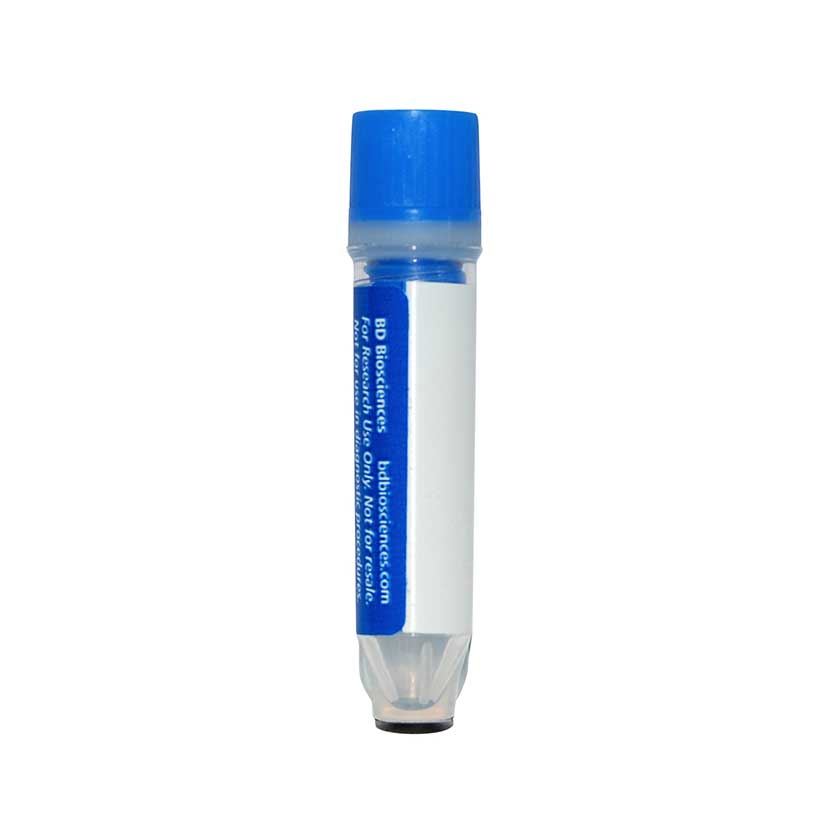
BD® AbSeq tubes should be centrifuged for ≥ 30 seconds at 400 × g to ensure removal of any content in the cap/tube threads prior to the first opening.
Product Notices
- Source of all serum proteins is from USDA inspected abattoirs located in the United States.
- Caution: Sodium azide yields highly toxic hydrazoic acid under acidic conditions. Dilute azide compounds in running water before discarding to avoid accumulation of potentially explosive deposits in plumbing.
- The production process underwent stringent testing and validation to assure that it generates a high-quality conjugate with consistent performance and specific binding activity. However, verification testing has not been performed on all conjugate lots.
- Illumina is a trademark of Illumina, Inc.
- Please refer to bd.com/genomics-resources for technical protocols.
- This reagent has been pre-diluted for use at the recommended volume per test. Typical use is 2 µl for 1 × 10^6 cells in a 200-µl staining reaction.
- Please refer to http://regdocs.bd.com to access safety data sheets (SDS).
- For U.S. patents that may apply, see bd.com/patents.
Companion Products



The 15D3 monoclonal antibody specifically recognizes P-glycoprotein which is also known as CD243, ATP-binding cassette subfamily B member 1 (ABCB1) or Multidrug resistance protein 1 (MDR1). P-glycoprotein is a ~170 kDa transmembrane glycoprotein protein that spans the membrane 12 times. P-glycoprotein acts as an ATP-dependent efflux pump for a large variety of drugs. It may be expressed at high levels by multidrug resistant (MDR) tumor cells. This efflux activity may lead to cellular resistance to the drugs used in chemotherapy. P-glycoprotein is present in many normal cell types including endothelial, epithelial, or secretory cells, and might protect them from naturally occurring xenobiotics.
Development References (9)
-
Beck WT, Grogan TM, Willman CL, et al. Methods to detect P-glycoprotein-associated multidrug resistance in patients' tumors: consensus recommendations.. Cancer Res. 1996; 56(13):3010-20. (Biology). View Reference
-
Chan HS, Haddad G, Zheng L, Bradley G, Dalton WS, Ling V. Sensitive immunofluorescence detection of the expression of P-glycoprotein in malignant cells.. Cytometry. 1997; 29(1):65-75. (Biology). View Reference
-
Chaudhary PM, Mechetner EB, Roninson IB. Expression and activity of the multidrug resistance P-glycoprotein in human peripheral blood lymphocytes.. Blood. 1992; 80(11):2735-9. (Biology). View Reference
-
Dalton WS, Durie BG, Alberts DS, Gerlach JH, Cress AE. Characterization of a new drug-resistant human myeloma cell line that expresses P-glycoprotein.. Cancer Res. 1986; 46(10):5125-30. (Biology). View Reference
-
Drach D, Zhao S, Drach J, et al. Subpopulations of normal peripheral blood and bone marrow cells express a functional multidrug resistant phenotype.. Blood. 1992; 80(11):2729-34. (Biology). View Reference
-
Filipits M, Suchomel RW, Dekan G, et al. MRP and MDR1 gene expression in primary breast carcinomas.. Clin Cancer Res. 1996; 2(7):1231-7. (Biology). View Reference
-
Klimecki WT, Futscher BW, Grogan TM, Dalton WS. P-glycoprotein expression and function in circulating blood cells from normal volunteers.. Blood. 1994; 83(9):2451-8. (Biology). View Reference
-
List AF. Role of multidrug resistance and its pharmacological modulation in acute myeloid leukemia.. Leukemia. 1996; 10(6):937-42. (Biology). View Reference
-
Shi T, Wrin J, Reeder J, Liu D, Ring DB. High-affinity monoclonal antibodies against P-glycoprotein. Clin Immunol Immunopathol. 1995; 76(1):44-51. (Immunogen: ELISA, Flow cytometry, Immunoprecipitation). View Reference
Please refer to Support Documents for Quality Certificates
Global - Refer to manufacturer's instructions for use and related User Manuals and Technical data sheets before using this products as described
Comparisons, where applicable, are made against older BD Technology, manual methods or are general performance claims. Comparisons are not made against non-BD technologies, unless otherwise noted.
For Research Use Only. Not for use in diagnostic or therapeutic procedures.