







Preparation And Storage


Product Notices
- This reagent has been pre-diluted for use at the recommended Volume per Test. We typically use 1 × 10^6 cells in a 100-µl experimental sample (a test).
- An isotype control should be used at the same concentration as the antibody of interest.
- Caution: Sodium azide yields highly toxic hydrazoic acid under acidic conditions. Dilute azide compounds in running water before discarding to avoid accumulation of potentially explosive deposits in plumbing.
- Source of all serum proteins is from USDA inspected abattoirs located in the United States.
- Alexa Fluor® is a registered trademark of Molecular Probes, Inc., Eugene, OR.
- Brilliant Violet™ 650 is a trademark of Sirigen.
- For fluorochrome spectra and suitable instrument settings, please refer to our Multicolor Flow Cytometry web page at www.bdbiosciences.com/colors.
- Please refer to www.bdbiosciences.com/us/s/resources for technical protocols.
Companion Products
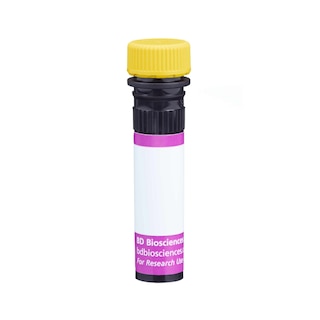
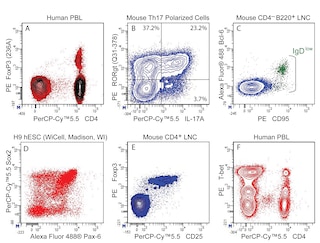
The Q21-559 monoclonal antibody recognizes ROR gamma t (RORγt), an isoform of ROR gamma (RORγ). RORγt is a DNA-binding transcription factor that is encoded by the RORC (RAR-related orphan receptor C) gene. It belongs to the ROR/RZR orphan nuclear receptor family. Two protein isoforms are produced from the RORC gene by alternative splicing: RORγ or RORγt. The RORγ isoform is expressed in many tissues, including thymus, lung, liver, kidney, muscle, and brown fat. However the tissue distribution of the second isoform RORγt is highly restricted to the thymus where it is expressed exclusively in immature CD4+CD8+ thymocytes and in peripheral Th17 and LTi cells. RORγt reportedly functions as an essential transcription factor for the development of secondary lymphoid tissues. It also plays an important regulatory role in thymopoiesis and effector T cell differentiation, especially for Th17 cells.
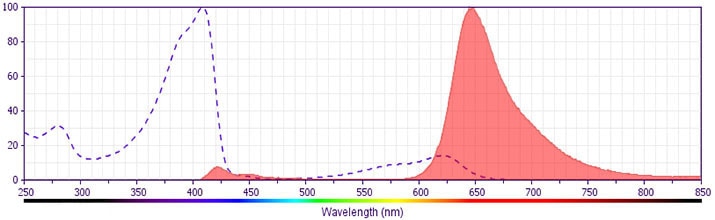
The antibody was conjugated to BD Horizon™ BV650 which is part of the BD Horizon™ Brilliant Violet™ family of dyes. This dye is a tandem fluorochrome of BD Horizon™ BV421 with an Ex Max of 405-nm and an acceptor dye with an Em Max at 650-nm. BD Horizon™ BV650 can be excited by the violet laser and detected in a filter used to detect APC-like dyes (eg, 660/20-nm filter). Due to the excitation and emission characteristics of the acceptor dye, there will be spillover into the APC and Alexa Fluor® 700 detectors. However, the spillover can be corrected through compensation as with any other dye combination.
Development References (6)
-
Acosta-Rodriguez EV, Rivino L, Geginat J, et al. Surface phenotype and antigenic specificity of human interleukin 17-producing T helper memory cells. Nat Immunol. 2007; 8(6):639-646. (Biology). View Reference
-
Bechtel S, Rosenfelder H, Duda A, et al. The full-ORF clone resource of the German cDNA Consortium. BMC Biochem. 2007; 8:399-410. (Biology). View Reference
-
Crellin NK, Trifari S, Kaplan CD, Cupedo T, Spits H. Human NKp44+IL-22+ cells and LTi-like cells constitute a stable RORC+ lineage distinct from conventional natural killer cells. J Exp Med. 2010; 207(2):281-290. (Biology). View Reference
-
Hirose T, Smith RJ, Jetten AM. ROR gamma: the third member of ROR/RZR orphan receptor subfamily that is highly expressed in skeletal muscle. Biochim Biophys Acta. 1994; 205(3):1976-1983. (Biology). View Reference
-
Jetten AM. Retinoid-related orphan receptors (RORs): critical roles in development, immunity, circadian rhythm, and cellular metabolism. Nucl Recept Signal. 2009; 7:1-32. (Biology). View Reference
-
Zielinski CE, Mele F, Aschenbrenner D, et al. Pathogen-induced human TH17 cells produce IFN-gamma or IL-10 and are regulated by IL-1beta. Nature. 2012; 484(7395):514-518. (Biology). View Reference
Please refer to Support Documents for Quality Certificates
Global - Refer to manufacturer's instructions for use and related User Manuals and Technical data sheets before using this products as described
Comparisons, where applicable, are made against older BD Technology, manual methods or are general performance claims. Comparisons are not made against non-BD technologies, unless otherwise noted.
For Research Use Only. Not for use in diagnostic or therapeutic procedures.