





.png)


Preparation And Storage


Product Notices
- Since applications vary, each investigator should titrate the reagent to obtain optimal results.
- Caution: Sodium azide yields highly toxic hydrazoic acid under acidic conditions. Dilute azide compounds in running water before discarding to avoid accumulation of potentially explosive deposits in plumbing.
- For fluorochrome spectra and suitable instrument settings, please refer to our Multicolor Flow Cytometry web page at www.bdbiosciences.com/colors.
- Please refer to www.bdbiosciences.com/us/s/resources for technical protocols.
- An isotype control should be used at the same concentration as the antibody of interest.
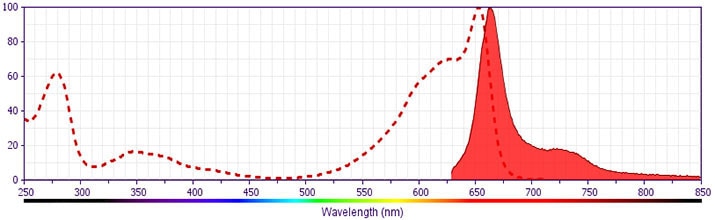
- This APC-conjugated reagent can be used in any flow cytometer equipped with a dye, HeNe, or red diode laser.
The 104 monoclonal antibody recognizes the CD45 (Leukocyte Common Antigen) present on all leucocytes of most mouse strains (eg, A, AKR, BALB/c, CBA/Ca, CBA/J, C3H/He, C57BL, C57BR, C57L, C58, DBA/1, DBA/2, NZB, SWR, 129). This alloantigen was originally named Ly-5.1, and this was the designation at the time that the antibody was characterized. The designation was later changed from Ly-5.1 to Ly-5.2 to conform with the convention that the .2 alloantigen designations be assigned to the C57BL/6 strain. mAb 104 has been reported not to react with leucocytes of the mouse strains expressing the CD45.1 alloantigen (eg, RIII, SJL/J, STS/A, and DA). CD45 is a member of the Protein Tyrosine Phosphatase (PTP) family: its intracellular (COOH-terminal) region contains two PTP catalytic domains, and the extracellular region is highly variable due to alternative splicing of exons 4, 5, and 6 (designated A, B, and C, respectively), plus differing levels of glycosylation. The CD45 isoforms detected in the mouse are cell type-, maturation-, and activation state-specific. The CD45 isoforms play complex roles in T-cell and B-cell antigen receptor signal transduction. The 104 antibody has been reported to inhibit some responses of B cells, from mice expressing the CD45.2 alloantigen, to certain antigens and LPS. In addition, reduction of serum IgG levels and amelioration of autoimmune renal pathology were reported in mAb 104-treated systemic lupus erythematosus-prone mice.
Development References (12)
-
Greimers R, Trebak M, Moutschen M, Jacobs N, Boniver J. Improved four-color flow cytometry method using fluo-3 and triple immunofluorescence for analysis of intracellular calcium ion ([Ca2+]i) fluxes among mouse lymph node B- and T-lymphocyte subsets. Cytometry. 1996; 23(3):205-217. (Methodology: Flow cytometry). View Reference
-
Johnson P, Greenbaum L, Bottomly K, Trowbridge IS. Identification of the alternatively spliced exons of murine CD45 (T200) required for reactivity with B220 and other T200-restricted antibodies. J Exp Med. 1989; 169(3):1179-1184. (Biology). View Reference
-
Morse HC 3rd, Shen FW, Hammerling U. Genetic nomenclature for loci controlling mouse lymphocyte antigens. Immunogenetics. 1987; 25(2):71-78. (Biology). View Reference
-
Ogimoto M, Mizuno K, Tate G, et al. Regulation of lipopolysaccharide- and IL-4-induced immunoglobulin heavy chain gene activation: differential roles for CD45 and Lyb-2. Int Immunol. 1992; 4(6):651-659. (Biology). View Reference
-
Shapiro HM. Practical Flow Cytometry, 3rd Edition. New York: Wiley-Liss, Inc; 1995:280-281.
-
Shen FW, Tung JS, Boyse EA. Further definition of the Ly-5 system. Immunogenetics. 1986; 24(3):146-149. (Biology). View Reference
-
Shen FW. Monoclonal antibodies to mouse lymphocyte differentiation alloantigens. In: Hammerling GJ, Hammerling U, Kearney JF, ed. Monoclonal Antibodies and T-cell Hybridomas; Perspectives and Technical Advances. 1981:25-31.
-
Suzuki K, Oida T, Hamada H, et al. Gut cryptopatches: direct evidence of extrathymic anatomical sites for intestinal T lymphopoiesis. Immunity. 2000; 13(5):691-702. (Biology). View Reference
-
Yakura H, Ashida T, Kawabata I, Katagiri M. Alleviation of autoimmunity in BXSB mice by monoclonal alloantibody to Ly-5 (CD45). Eur J Immunol. 1989; 19(8):1505-1508. (Biology). View Reference
-
Yakura H, Kawabata I, Ashida T, Katagiri M. Differential regulation by Ly-5 and Lyb-2 of IgG production induced by lipopolysaccharide and B cell stimulatory factor-1 (IL-4). J Immunol. 1988; 141(3):875-880. (Biology). View Reference
-
Yakura H, Kawabata I, Shen FW, Katagiri M. Selective inhibition of lipopolysaccharide-induced polyclonal IgG response by monoclonal Ly-5 antibody. J Immunol. 1986; 136(8):2729-2733. (Biology). View Reference
-
Yakura H, Shen FW, Bourcet E, Boyse EA. On the function of Ly-5 in the regulation of antigen-driven B cell differentiation. Comparison and contrast with Lyb-2. J Exp Med. 1983; 157(4):1077-1088. (Biology). View Reference
Please refer to Support Documents for Quality Certificates
Global - Refer to manufacturer's instructions for use and related User Manuals and Technical data sheets before using this products as described
Comparisons, where applicable, are made against older BD Technology, manual methods or are general performance claims. Comparisons are not made against non-BD technologies, unless otherwise noted.
For Research Use Only. Not for use in diagnostic or therapeutic procedures.
