







Preparation And Storage


Recommended Assay Procedures
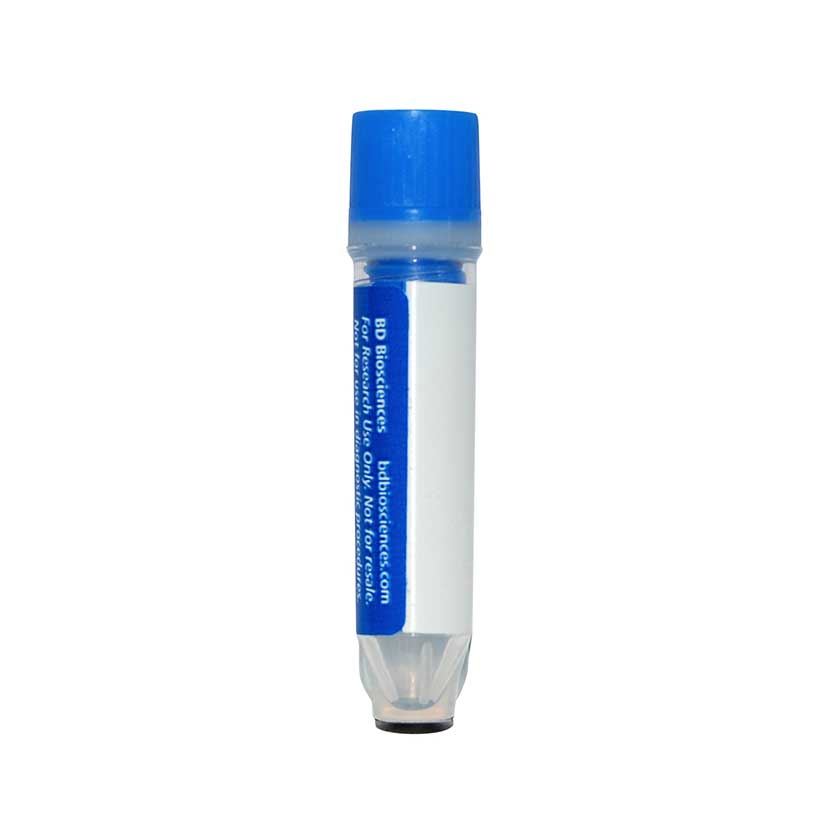
Put all BD® AbSeq Reagents to be pooled into a Latch Rack for 500 µL Tubes (Thermo Fisher Scientific Cat. No. 4900). Arrange the tubes so that they can be easily uncapped and re-capped with an 8-Channel Screw Cap Tube Capper (Thermo Fisher Scientific Cat. No. 4105MAT) and the reagents aliquoted with a multi-channel pipette.
BD® AbSeq tubes should be centrifuged for ≥ 30 seconds at 400 × g to ensure removal of any content in the cap/tube threads prior to the first opening.
Product Notices
- This reagent has been pre-diluted for use at the recommended volume per test. Typical use is 2 µl for 1 × 10^6 cells in a 200-µl staining reaction.
- The production process underwent stringent testing and validation to assure that it generates a high-quality conjugate with consistent performance and specific binding activity. However, verification testing has not been performed on all conjugate lots.
- Please refer to bd.com/genomics-resources for technical protocols.
- Caution: Sodium azide yields highly toxic hydrazoic acid under acidic conditions. Dilute azide compounds in running water before discarding to avoid accumulation of potentially explosive deposits in plumbing.
- Source of all serum proteins is from USDA inspected abattoirs located in the United States.
- Illumina is a trademark of Illumina, Inc.
- Please refer to http://regdocs.bd.com to access safety data sheets (SDS).
- For U.S. patents that may apply, see bd.com/patents.
Companion Products




The p44-8 monoclonal antibody specifically binds to the natural killer (NK) cell receptor, NKp44, which is also known as CD336, Natural cytotoxicity triggering receptor 2 (NCR2), or Lymphocyte antigen 95 homolog (Ly95). NKp44 is a ~44 kDa type I transmembrane protein that belongs to the natural cytotoxicity receptor (NCR) family within the immunoglobulin superfamily. NKp44 is expressed by activated NK cells. NKp44 serves as an activating receptor that can enhance NK cell mediated lysis of target cells including tumor cells and virus-infected cells. Killer activating receptor associated protein (KARAP), which is also known as DAP12, is an intracellular adaptor protein that can associate with the intracellular region of NKp44. DAP12 can then function to help transmit activating signals through its immunoreceptor tyrosine-based activation motif (ITAM).
Development References (4)
-
Byrd A, Hoffmann SC, Jarahian M, Momburg F, Watzl C. Expression analysis of the ligands for the Natural Killer cell receptors NKp30 and NKp44. PLoS ONE. 2007; 2(12):e1339. (Immunogen: ELISA, Flow cytometry). View Reference
-
Lanier LL. Natural killer cell receptor signaling. Curr Opin Immunol. 2003; 15:308-314. (Biology). View Reference
-
Moretta L, Moretta A. Unravelling natural killer cell function: triggering and inhibitory human NK receptors. EMBO J. 2004; 23(2):255-259. (Biology). View Reference
-
Vitale M, Bottino C, Sivori S, et al. NKp44, a novel triggering surface molecule specifically expressed by activated natural killer cells, is involved in non-major histocompatibility complex-restricted tumor cell lysis.. J Exp Med. 187(12):2065-2072. (Biology). View Reference
Please refer to Support Documents for Quality Certificates
Global - Refer to manufacturer's instructions for use and related User Manuals and Technical data sheets before using this products as described
Comparisons, where applicable, are made against older BD Technology, manual methods or are general performance claims. Comparisons are not made against non-BD technologies, unless otherwise noted.
For Research Use Only. Not for use in diagnostic or therapeutic procedures.