The site is undergoing maintenance on
Thursday, September 10, 6:00 pm through Friday, September 11, 2:00 am (CEST), 2026.
If you encounter problems while ordering, please contact us at BDBCustomerService@bd.com
See More
The site is undergoing maintenance on
Thursday, September 10, 6:00 pm through Friday, September 11, 2:00 am (CEST), 2026.
If you encounter problems while ordering, please contact us at BDBCustomerService@bd.com
See MoreThe site is undergoing maintenance on
Thursday, September 10, 6:00 pm through Friday, September 11, 2:00 am (CEST), 2026
.If you encounter problems while ordering, please contact us at BDBCustomerService@bd.com
This page has been recently translated and is available in French now.
Looks like you're visiting us from {countryName}.
Would you like to stay on the current location site or be switched to your location?
Any use of products other than the permitted use without the express written authorization of Becton, Dickinson and Company is strictly prohibited.
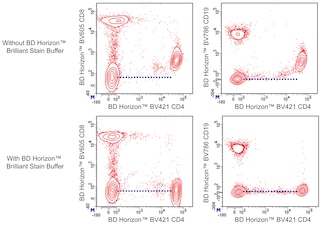
For optimal and reproducible results, BD Horizon Brilliant Stain Buffer should be used anytime two or more BD Horizon Brilliant dyes (including BD OptiBuild Brilliant reagents) are used in the same experiment. Fluorescent dye interactions may cause staining artifacts which may affect data interpretation. The BD Horizon Brilliant Stain Buffer was designed to minimize these interactions. More information can be found in the Technical Data Sheet of the BD Horizon Brilliant Stain Buffer (Cat. No. 563794).
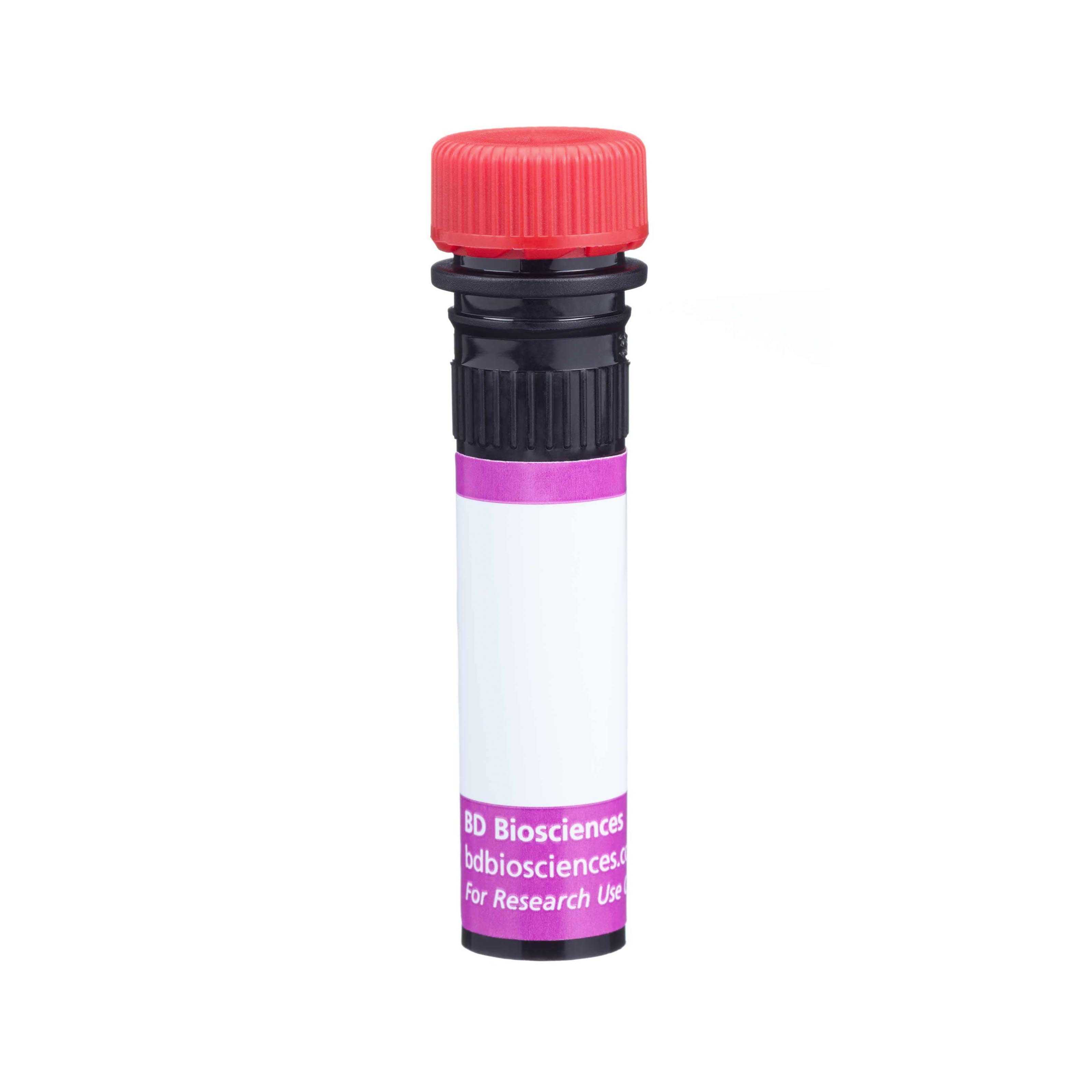
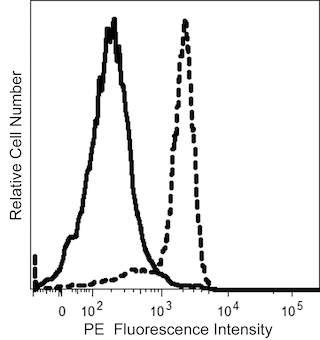
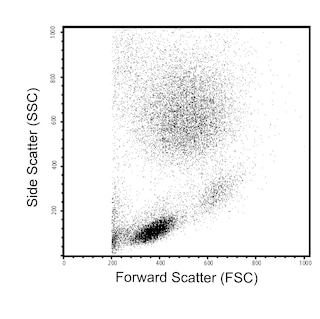
The monoclonal antibody specifically recognizes CD33, a human myelomonocytic antigen which is also known as Sialic acid-binding Ig-like lectin 3 (Siglec-3 or SIGLEC3). CD33 is a 67 kDa type I transmembrane glycoprotein that belongs to the Ig supergene family. The CD33 antigen is present on monocytes (bright) and granulocytes (dim). Granulocytes can be further subdivided into neutrophil, eosinophil, and basophil populations based on CD33 staining in combination with other cell-surface antigens. The CD33 antigen is also found on CFU-Mix, CFU-GM, CFU-Meg, a portion of BFU-E, myeloblasts, promyelocytes, myelocytes, and metamyelocytes, but not on earlier precursors. The CD33 antigen is expressed on blast cells in greater than 85% of acute myeloid leukemias (AML), and it can be aberrantly expressed in acute lymphoblastic leukemias (ALL). Normal lymphocytes, platelets, and erythrocytes do not express the CD33 antigen. CD33 can reportedly function as a sialic acid-dependent cell adhesion molecule and this function can be modulated by endogenous sialoglycoconjugates when CD33 is expressed on the membrane.
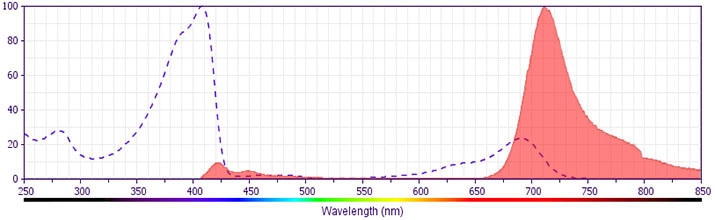
The antibody was conjugated to BD Horizon™ BV711 which is part of the BD Horizon Brilliant™ Violet family of dyes. This dye is a tandem fluorochrome of BD Horizon BV421 with an Ex Max of 405-nm and an acceptor dye with an Em Max at 711-nm. BD Horizon BV711 can be excited by the violet laser and detected in a filter used to detect Cy™5.5 / Alexa Fluor® 700-like dyes (eg, 712/20-nm filter). Due to the excitation and emission characteristics of the acceptor dye, there may be moderate spillover into the Alexa Fluor® 700 and PerCP-Cy5.5 detectors. However, the spillover can be corrected through compensation as with any other dye combination.
Please refer to Support Documents for Quality Certificates
Global - Refer to manufacturer's instructions for use and related User Manuals and Technical data sheets before using this products as described
Comparisons, where applicable, are made against older BD Technology, manual methods or are general performance claims. Comparisons are not made against non-BD technologies, unless otherwise noted.
For Research Use Only. Not for use in diagnostic or therapeutic procedures.