





BD™ Cytometric Bead Array (CBA) Human Soluble TNFRI Flex Set


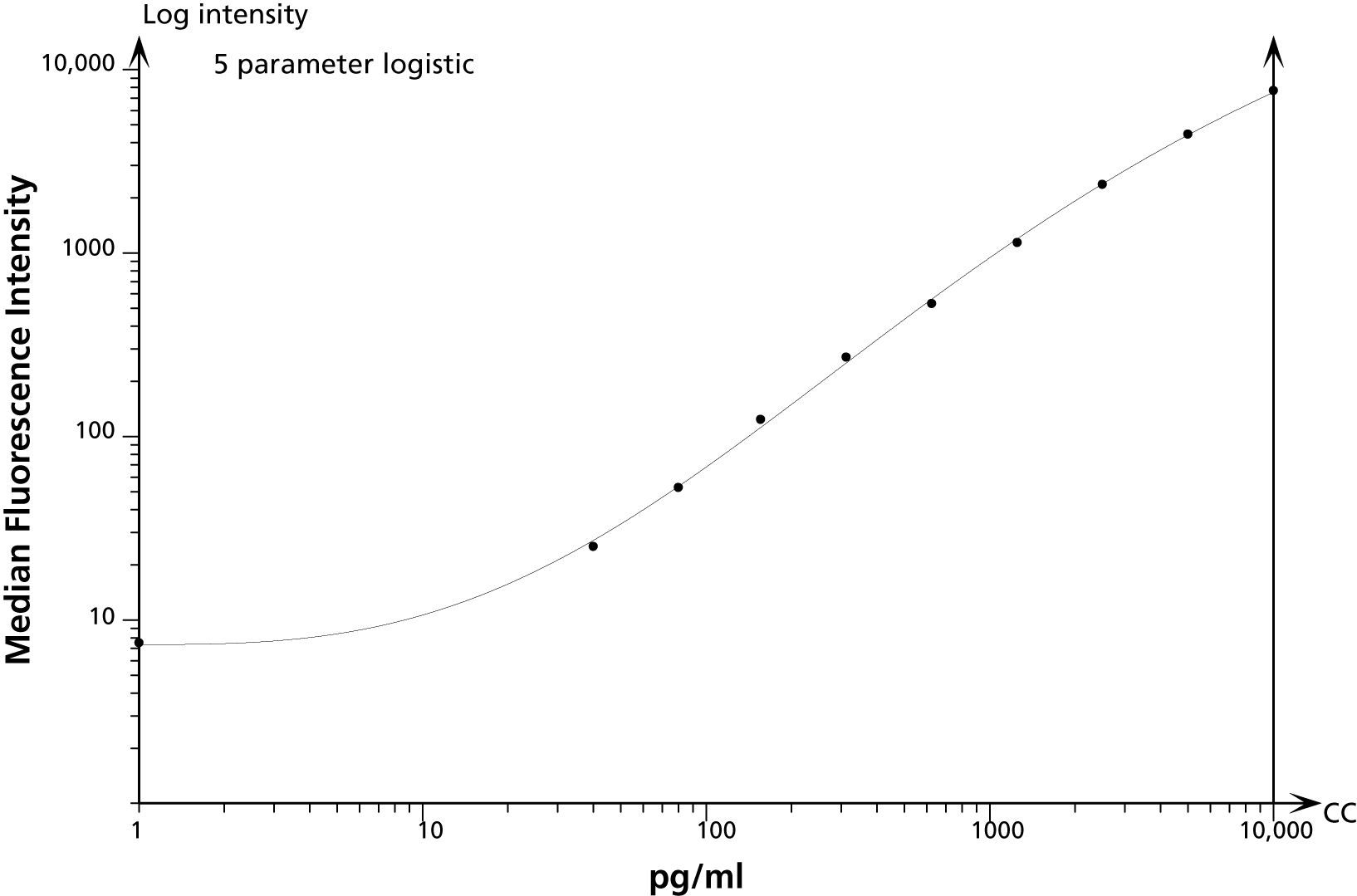
Figure 1. Example BD CBA Human Soluble TNFRI Flex Set standard curve. Data acquired on a BD FACSArray bioanalyzer and analyzed using FCAP Array Software.

Recovery: Cell culture supernatant, serum, or EDTA-treated plasma were spiked with three different levels of protein. The spiked samples were assayed and the results were compared with expected values. Serum and plasma samples were diluted 1:4 before the protein was spiked into each. Serum is a pool of 800 - 1000 donors and the plasma was pooled from at least 20 donors.
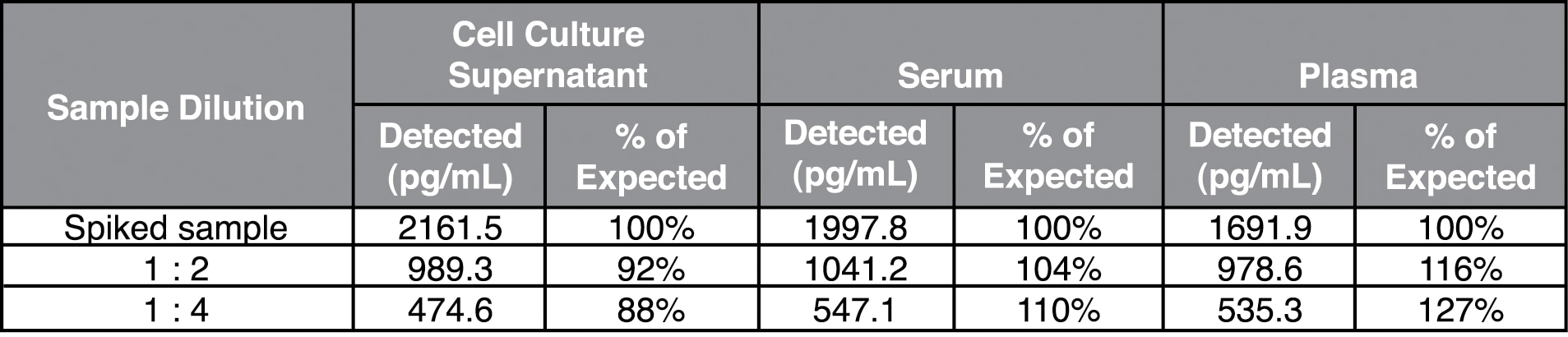
Linearity: Cell culture supernatant, 1:4 diluted serum, or 1:4 diluted EDTA-treated plasma were spiked with protein and serially diluted. The diluted samples were assayed and the results were compared with the original spiked sample.

Reproducibility: The intra-assay and inter-assay reproducibility were determined for the BD CBA Human Soluble TNFRI Flex Set by evaluating ten replicates of three different sample levels (intra-assay) and three replicates of three different sample levels from four separate experiments (inter-assay).
Figure 1. Example BD CBA Human Soluble TNFRI Flex Set standard curve. Data acquired on a BD FACSArray bioanalyzer and analyzed using FCAP Array Software.
Recovery: Cell culture supernatant, serum, or EDTA-treated plasma were spiked with three different levels of protein. The spiked samples were assayed and the results were compared with expected values. Serum and plasma samples were diluted 1:4 before the protein was spiked into each. Serum is a pool of 800 - 1000 donors and the plasma was pooled from at least 20 donors.
Linearity: Cell culture supernatant, 1:4 diluted serum, or 1:4 diluted EDTA-treated plasma were spiked with protein and serially diluted. The diluted samples were assayed and the results were compared with the original spiked sample.
Reproducibility: The intra-assay and inter-assay reproducibility were determined for the BD CBA Human Soluble TNFRI Flex Set by evaluating ten replicates of three different sample levels (intra-assay) and three replicates of three different sample levels from four separate experiments (inter-assay).


Description
The BD™ CBA Human TNFRI Flex Set is a bead-based immunoassay capable of measuring soluble human type 1 tumor necrosis factor receptor (TNFRI), also known as CD120a, in serum, plasma, and cell culture supernatant samples. Human reactivity was determined by testing samples with the BD CBA Human TNFRI Flex Set. The biology and function of TNFRI has been extensively reviewed in the literature. For more information on bead-based immunoassays, refer to the product insert for the BD CBA Human Soluble Protein Master Buffer Kit.
Preparation And Storage


Recommended Assay Procedures
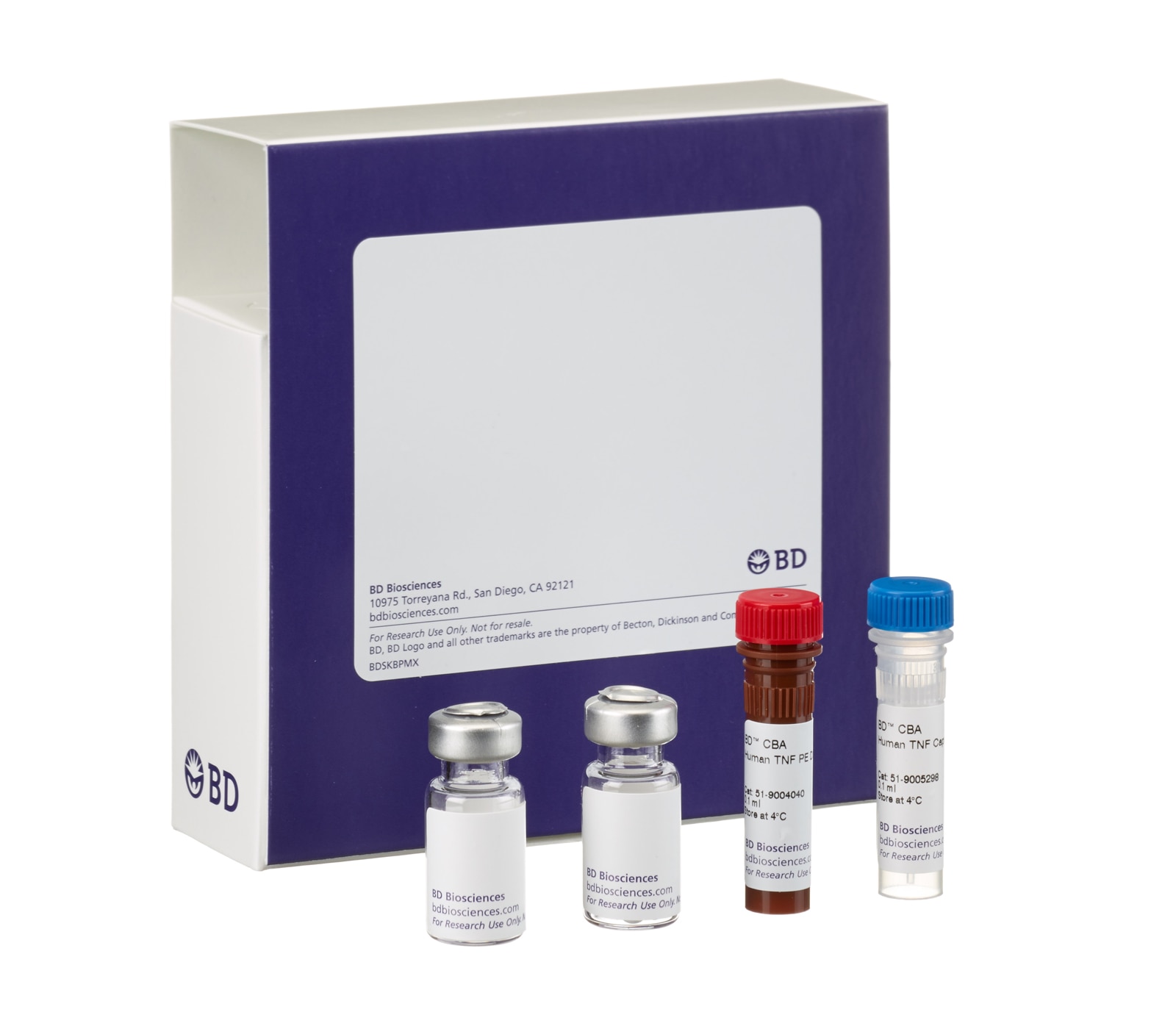
The BD CBA Human TNFRI Flex Set must be used in conjunction with a BD CBA Human Soluble Protein Master Buffer Kit (Cat. No. 558264, 100 tests, or 558265, 500 tests), a flow cytometer, and FCAP Array™ Software. Detailed instructions on the use of this product can be found in the manual for the BD CBA Human Soluble Protein Master Buffer Kit. When following the directions in the Master Buffer Kit, the top standard point for the BD CBA Human TNFRI Flex Set will be 10,000 pg/mL. An example standard curve is shown in Figure 1.
The BD CBA Human TNFRI Flex Set should not be used in the same assay well with any non-BD CBA Human Soluble Receport or CD Marker Flex Set reagents (such as BD CBA Mouse Soluble Protein or Cell Signaling Flex Sets) nor with any BD CBA Human Soluble Protein Flex Set reagents. For an updated assay compatibility chart for the BD CBA Human Soluble Protein Flex Sets, please refer to the BD CBA Flex Set System homepage at http://www.bdbiosciences.com/cbasetup.
Performance
Limit of Detection: The theoretical limit of detection is 5.2 pg/mL and was determined by evaluating the estimated result of the average MFI of the negative control (0 pg/mL, n=30) + 2 standard deviations.
Product Notices
- ProClin is a trademark of Rohm and Haas Company.
- Source of all serum proteins is from USDA inspected abattoirs located in the United States.
- Caution: Sodium azide yields highly toxic hydrazoic acid under acidic conditions. Dilute azide compounds in running water before discarding to avoid accumulation of potentially explosive deposits in plumbing.
- Warning: CBA lyophilized standard contains 0.02% (w/w) of a CMIT/MIT mixture (3:1), which is a mixture of:5-chloro-2-methyl-4-isothiazolin-3-one [EC No 247-500-7] and 2-methyl-4-isothiazolin-3-one [EC No 220-239-6] (3:1).Hazard statement: May cause an allergic skin reaction.Precautionary statements: Contaminated work clothing should not be allowed out of the workplace. Wear protective gloves/eye/face protection. Wear protective clothing. Avoid breathing mist/vapours/spray. If skin irritation or rash occurs: Get medical advice/attention. IF ON SKIN: Wash with plenty of water. Take off contaminated clothing and wash it before reuse. Dispose of contents/container in accordance with local/regional/national/international regulations.
| Description | Quantity/Size | Part Number | EntrezGene ID |
|---|---|---|---|
| N/A | 100.0 | N/A | N/A |
Please refer to Support Documents for Quality Certificates
Global - Refer to manufacturer's instructions for use and related User Manuals and Technical data sheets before using this products as described
Comparisons, where applicable, are made against older BD Technology, manual methods or are general performance claims. Comparisons are not made against non-BD technologies, unless otherwise noted.
For Research Use Only. Not for use in diagnostic or therapeutic procedures.