







Preparation And Storage


Recommended Assay Procedures
Other reported applications include immunoprecipitation and in vitro inhibition (in combination with a mAb to mouse CD11a) of T-cell proliferative responses to anti-CD3e mAb 145-2C11 (Cat. no. 553057) and allogeneic cells. For in vitro blocking of adhesion of mouse or rat CD29-expressing cells to extracellular matrix proteins, we recommend the No Azide/Low Endotoxin (NA/LE™) format of mAb Ha2/5 (Cat. no. 555002). We recommend our immunohistochemistry formulation of purified HMß1-1 mAb, Cat. no. 550530, for immunohistochemical staining (IHC) of rat tissues. For IHC of mouse tissues, we recommend the use of purified anti-mouse CD29 mAb 9EG7 in our special formulation for immunohistochemistry, Cat. no. 550531.
Product Notices
- Since applications vary, each investigator should titrate the reagent to obtain optimal results.
- Please refer to www.bdbiosciences.com/us/s/resources for technical protocols.
- Although hamster immunoglobulin isotypes have not been well defined, BD Biosciences Pharmingen has grouped Armenian and Syrian hamster IgG monoclonal antibodies according to their reactivity with a panel of mouse anti-hamster IgG mAbs. A table of the hamster IgG groups, Reactivity of Mouse Anti-Hamster Ig mAbs, may be viewed at http://www.bdbiosciences.com/documents/hamster_chart_11x17.pdf.
- Sodium azide is a reversible inhibitor of oxidative metabolism; therefore, antibody preparations containing this preservative agent must not be used in cell cultures nor injected into animals. Sodium azide may be removed by washing stained cells or plate-bound antibody or dialyzing soluble antibody in sodium azide-free buffer. Since endotoxin may also affect the results of functional studies, we recommend the NA/LE (No Azide/Low Endotoxin) antibody format, if available, for in vitro and in vivo use.
- Caution: Sodium azide yields highly toxic hydrazoic acid under acidic conditions. Dilute azide compounds in running water before discarding to avoid accumulation of potentially explosive deposits in plumbing.
Companion Products

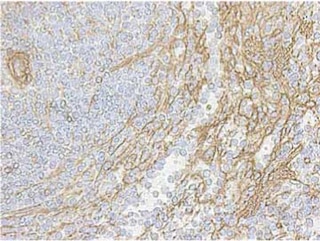
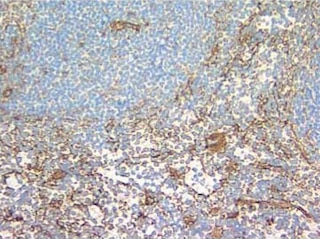
The HM β1-1 monoclonal antibody specifically binds to the 130-kDa integrin β1 chain (CD29). CD29 is expressed on the cell surface as a heterodimer with one of the distinct integrin-α chains. With α1 through α6 (CD49a through CD49f), it forms the VLA-1 through VLA-6 complexes, respectively, and with αv (CD51), it forms αvβ1 integrin. It also associates with the integrin α7 α8, and α9 chains in non-lymphoid tissues. As a result, CD29 has a broad tissue distribution, including lymphocytes, endothelia, smooth muscle, epithelia, and oocytes. This hamster mAb to a mouse leukocyte antigen has been observed to crossreact with similar populations of rat leukocytes. Source of the immunogen was purified mouse VLA-4 (α4β1, CD49d/CD29).
Development References (4)
-
Jackson Laboratory. Mouse Genome Database. Available: http://www.informatics.jax.org/ 1998, Sept. 17.
-
Mendrick DL, Kelly DM. Temporal expression of VLA-2 and modulation of its ligand specificity by rat glomerular epithelial cells in vitro. Lab Invest. 1993; 69(6):690-702. (Clone-specific: Blocking). View Reference
-
Noto K, Kato K, Okumura K, Yagita H. Identification and functional characterization of mouse CD29 with a mAb. Int Immunol. 1995; 7(5):835-842. (Immunogen: Immunoprecipitation, Inhibition). View Reference
-
Springer TA. Adhesion receptors of the immune system. Nature. 1990; 346(6283):425-434. (Biology). View Reference
Please refer to Support Documents for Quality Certificates
Global - Refer to manufacturer's instructions for use and related User Manuals and Technical data sheets before using this products as described
Comparisons, where applicable, are made against older BD Technology, manual methods or are general performance claims. Comparisons are not made against non-BD technologies, unless otherwise noted.
For Research Use Only. Not for use in diagnostic or therapeutic procedures.
