







Preparation And Storage


Product Notices
- This reagent has been pre-diluted for use at the recommended Volume per Test. We typically use 1 × 10^6 cells in a 100-µl experimental sample (a test).
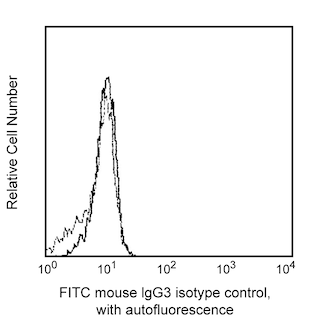
- An isotype control should be used at the same concentration as the antibody of interest.
- Source of all serum proteins is from USDA inspected abattoirs located in the United States.
- Caution: Sodium azide yields highly toxic hydrazoic acid under acidic conditions. Dilute azide compounds in running water before discarding to avoid accumulation of potentially explosive deposits in plumbing.
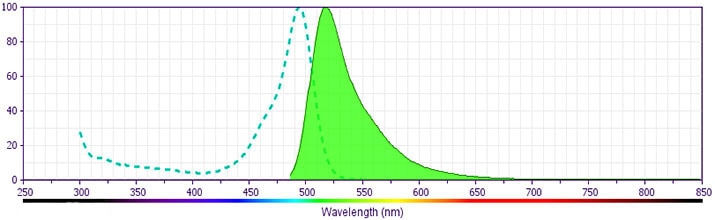
- For fluorochrome spectra and suitable instrument settings, please refer to our Multicolor Flow Cytometry web page at www.bdbiosciences.com/colors.
- Please refer to www.bdbiosciences.com/us/s/resources for technical protocols.
The Ki-24 monoclonal antibody specifically binds to human CD70. CD70 is a type II transmembrane glycoprotein and member of the TNF Superfamily. CD70 is also known as Tumor necrosis factor ligand superfamily member 7 (TNFSF7), CD27 ligand (CD27-L, CD27L, CD27LG), and KI-24 antigen. The CD70 antigen immunoprecipitates as five bands (50, 70, 90, 100 and 160 kDa) under non-reducing conditions. CD70 is strongly expressed on Reed-Sternberg cells, some activated T or B cells and Epstein Barr Virus (EBV)-positive lymphoblastoid cell lines. CD70 plays roles in the activation, proliferation and differentiation of B cells and T cells including the enhanced production of cytotoxic T cells.
Development References (6)
-
Knapp W. W. Knapp .. et al., ed. Leucocyte typing IV : white cell differentiation antigens. Oxford New York: Oxford University Press; 1989:1-1182.
-
Schlossman SF. Stuart F. Schlossman .. et al., ed. Leucocyte typing V : white cell differentiation antigens : proceedings of the fifth international workshop and conference held in Boston, USA, 3-7 November, 1993. Oxford: Oxford University Press; 1995.
-
Stein H, Ferszt A, Dallenbach F, et al. CDw70 mAb A109 (Ki-24): expression by reactive and neoplastic lymphoid cells. In: Knapp W. W. Knapp .. et al., ed. Leucocyte typing IV : white cell differentiation antigens. Oxford New York: Oxford University Press; 1989:449-451.
-
Stein H, Gerdes J, Schwab U, et al. Evidence for the detection of the normal counterpart of Hodgkin and Sternberg-Reed cells.. Hematol Oncol. 1(1):21-9. (Clone-specific). View Reference
-
Stein H, Gerdes J, Schwarting R, Froese P, Lemke H. Three new lymphoid activation antigens. In: McMichael AJ. A.J. McMichael .. et al., ed. Leucocyte typing III : white cell differentiation antigens. Oxford New York: Oxford University Press; 1987:574.
-
Stein H, Schwarting R, Niedobitek G, Dallenbach F. Cluster report: CDw70. In: Knapp W. W. Knapp .. et al., ed. Leucocyte typing IV : white cell differentiation antigens. Oxford New York: Oxford University Press; 1989:446-449.
Please refer to Support Documents for Quality Certificates
Global - Refer to manufacturer's instructions for use and related User Manuals and Technical data sheets before using this products as described
Comparisons, where applicable, are made against older BD Technology, manual methods or are general performance claims. Comparisons are not made against non-BD technologies, unless otherwise noted.
For Research Use Only. Not for use in diagnostic or therapeutic procedures.
