The 8C12 antibody recognizes an epitope present on the 190-kDa complement receptor protein, originally designated CR1 (CD35), but not the 145-150-kDa CR2 (CD21) molecule. Unlike the human system, in which these proteins are products of independent genes, both of these mouse receptors are membrane proteins resulting from the alternative splicing of mRNA transcribed from the Cr2 gene. Therefore, an alternative nomenclature has been proposed, designating the proteins Cr2-190 (CD21b) and Cr2-145 (CD21a), respectively. The epitope recognized by 8C12 mAb is only present on CD35/CD21b. Moreover, it has also been proposed that Crry is the true mouse genetic homologue of human CR1 (CD35). In the mouse, CD35 is expressed on the majority of peripheral B cells, on the majority of resident peritoneal macrophages, on peripheral blood granulocytes after treatment with N-formyl-Met-Leu-Phe, and on follicular dendritic cells, but not on thymocytes, T cells, erythrocytes, or platelets. In addition, it has not been detected, at the protein or mRNA level, in the macrophage cell line J774, bone marrow-derived macrophages, or thioglycollate-elicited peritoneal macrophages. The 8C12 mAb has been reported to inhibit rosette formation by C3bbearing sheep erythrocytes, to block the complement-dependent trapping of immune complexes by follicular dendritic cells, and to down-regulate mouse CD35 expression upon in vivo application, inhibiting only some primary antibody responses to immunization. B lymphocytes of Cr2[null] mice display impaired humoral immune responses in vivo. The 8C12 mAb recognizes an epitope on mouse CD35 distinct from the epitope recognized by anti-mouse CD21/CD35 mAb 7G6, and it does not block binding by 7G6 mAb to CD35.
*Please note that the isotype of 8C12 mAb was originally reported to be Rat IgG2c. Further investigations have demonstrated that the isotype of 8C12 mAb is Rat IgG2a.
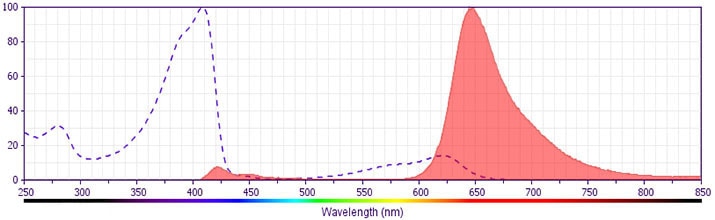
The antibody was conjugated to BD Horizon™ BV650 which is part of the BD Horizon Brilliant™ Violet family of dyes. This dye is a tandem fluorochrome of BD Horizon BV421 with an Ex Max of 405-nm and an acceptor dye with an Em Max at 650-nm. BD Horizon BV650 can be excited by the violet laser and detected in a filter used to detect APC-like dyes (eg, 660/20-nm filter). Due to the excitation and emission characteristics of the acceptor dye, there will be spillover into the APC and Alexa Fluor® 700 detectors. However, the spillover can be corrected through compensation as with any other dye combination.