







Preparation And Storage


Product Notices
- This reagent has been pre-diluted for use at the recommended Volume per Test. We typically use 1 × 10^6 cells in a 100-µl experimental sample (a test).
- An isotype control should be used at the same concentration as the antibody of interest.
- Caution: Sodium azide yields highly toxic hydrazoic acid under acidic conditions. Dilute azide compounds in running water before discarding to avoid accumulation of potentially explosive deposits in plumbing.
- Source of all serum proteins is from USDA inspected abattoirs located in the United States.
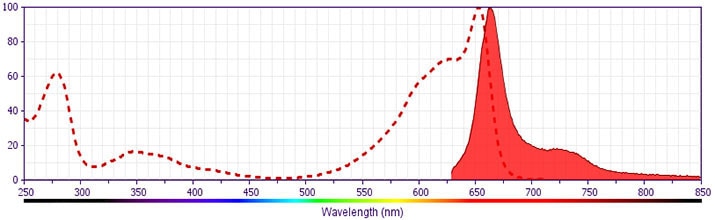
- This APC-conjugated reagent can be used in any flow cytometer equipped with a dye, HeNe, or red diode laser.
- For fluorochrome spectra and suitable instrument settings, please refer to our Multicolor Flow Cytometry web page at www.bdbiosciences.com/colors.
- Please refer to www.bdbiosciences.com/us/s/resources for technical protocols.
Companion Products
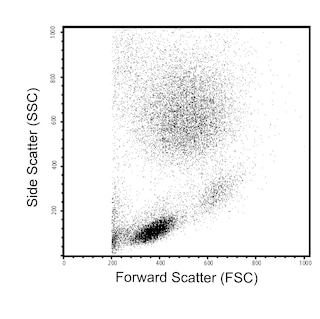

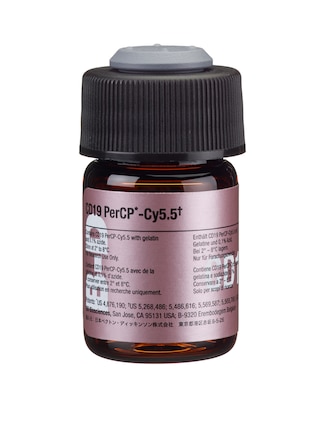
The 17A12 monoclonal antibody specifically binds to the IL-21 Receptor (IL-21R). The IL-21R, also known as CD360, is a 538 amino acid cytokine receptor with an extracellular domain consisting of one copy of the conserved WSXWS -containing cytokine-binding domain. The IL-21 receptor combines with the common cytokine-receptor γ-chain to form a functional receptor complex for IL-21. IL-21 is mainly produced by activated CD4+ T cells including T follicular helper (Tfh) cells. IL-21R is preferentially expressed by B cells, T cells, NK cells, some populations of myeloid cells, keratinocytes, and dendritic cells. Binding of its ligand, IL-21, in these cells results in the activation of the Jak/Stat signal transduction pathway. The effects IL-21 ligand binding has pleiotropic actions such as augmenting the proliferation of T cells, driving of B cells into memory cells, terminally differentiating plasma cells and augmenting the activity of natural killer cells. IL-21 receptor has anti-tumor activity and might have a role in the development of autoimmunity; it has been reported that the IL-21 receptor affects the homeostasis of regulatory T cells and it could enhance T cell-activated responses in human immune-inflammatory diseases.
Development References (8)
-
Asao H, Okuyama C, Kumaki S et al. Cutting edge: the common gamma-chain is an indispensable subunit of the IL-21 receptor complex. J Immunol. 2001; 167(1):1-5. (Biology). View Reference
-
Leonard WJ and Spolski R. Interleukin-21: A modulator of lymphoid proliferation, apoptosis and differentiation. Nat Rev Immunol. 2005; 5(9):688-698. (Biology). View Reference
-
Parrish-Novak J, Dillon SR, Nelson A, et al. Interleukin 21 and its receptor are involved in NK cell expansion and regulation of lymphocyte function. Nature. 2000; 408(6808):57-63. (Biology). View Reference
-
Parrish-Novak J, Foster DC, Holly RD, Clegg CH. Interleukin-21 and the IL-21 receptor: novel effectors of NK and T cell responses. J Leukoc Biol. 2002; 72(5):856-863. (Biology). View Reference
-
Peluso I, Fantini MC, Fina D et al. IL-21 counteracts the regulatory T cell-mediated suppression of human CD4+ T lymphocytes. J Immunol. 2007; 178(2):732-739. (Biology). View Reference
-
Piao WH, Jee YH, Liu RL et al. IL-21 modulates CD4+ CD25+ regulatory T-cell homeostasis in experimental autoimmune encephalomyelitis. Scand J Immunol. 2008; 67(1):37-46. (Biology). View Reference
-
Rahman M, Nara H, Onoda T et al. Cloning and characterization of an isoform of interleukin-21. FEBS Lett. 2007; 581(21):4001-4009. (Biology). View Reference
-
Wu Z, Kim HP, Xue HH, Liu H, Zhao K, Leonard WJ. Interleukin-21 receptor gene induction in human T cells is mediated by T-cell receptor-induced Sp1 activity. Mol Cell Biol. 2005; 25(22):9741-9752. (Biology). View Reference
Please refer to Support Documents for Quality Certificates
Global - Refer to manufacturer's instructions for use and related User Manuals and Technical data sheets before using this products as described
Comparisons, where applicable, are made against older BD Technology, manual methods or are general performance claims. Comparisons are not made against non-BD technologies, unless otherwise noted.
For Research Use Only. Not for use in diagnostic or therapeutic procedures.
