





.png)


Preparation And Storage


Product Notices
- Since applications vary, each investigator should titrate the reagent to obtain optimal results.
- Please refer to www.bdbiosciences.com/us/s/resources for technical protocols.
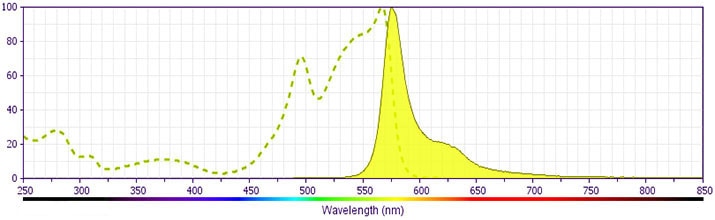
- For fluorochrome spectra and suitable instrument settings, please refer to our Multicolor Flow Cytometry web page at www.bdbiosciences.com/colors.
- Caution: Sodium azide yields highly toxic hydrazoic acid under acidic conditions. Dilute azide compounds in running water before discarding to avoid accumulation of potentially explosive deposits in plumbing.
Companion Products
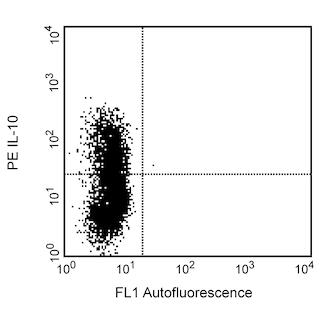
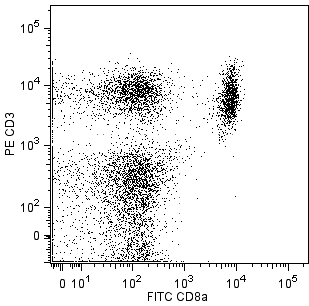
The 7E.17G9 monoclonal antibody specifically binds to CD278, the Inducible Costimulatory molecule (ICOS), a 47-57 kDa homodimeric glycoprotein of the CD28 family of costimulatory molecules. ICOS is expressed on subpopulations of CD4-CD8- and CD4+CD8- (but not CD4-CD8+ or CD4+CD8+) thymocytes, on some T-cell lines, and on small numbers of peripheral leukocytes. It is upregulated on T lymphocytes following activation via the T-cell receptor. The T-cell activation marker H4 is the same molecule as ICOS. ICOS is a costimulatory receptor, and its ligand on antigen-presenting cells has been called B7RP-1, GL50, B7h, B7-H2, or LICOS. There is considerable evidence that the interaction of ICOS with its ligand is involved in the regulation of many, but not all, T-cell-mediated immune responses.
Development References (9)
-
Buonfiglio D, Bragardo M, Redoglia V, et al. The T cell activation molecule H4 and the CD28-like molecule ICOS are identical. Eur J Immunol. 2000; 30(12):3463-3467. (Biology). View Reference
-
Chambers CA. The expanding world of co-stimulation: the two-signal model revisited. Trends Immunol. 2001; 22(4):217-223. (Biology). View Reference
-
Dong C, Temann UA, Flavell RA. Cutting edge: critical role of inducible costimulator in germinal center reactions. J Immunol. 2001; 166(6):3659-3662. (Biology). View Reference
-
Gonzalo JA, Delaney T, Corcoran J, Goodearl A, Gutierrez-Ramos JC, Coyle AJ. Cutting edge: the related molecules CD28 and inducible costimulator deliver both unique and complementary signals required for optimal T cell activation. J Immunol. 2001; 166(1):1-5. (Biology). View Reference
-
Mages HW, Hutloff A, Heuck C, et al. Molecular cloning and characterization of murine ICOS and identification of B7h as ICOS ligand. Eur J Immunol. 2000; 30(4):1040-1047. (Biology). View Reference
-
McAdam AJ, Chang TT, Lumelsky AE, et al. Mouse inducible costimulatory molecule (ICOS) expression is enhanced by CD28 costimulation and regulates differentiation of CD4+ T cells.. J Immunol. 2000; 165(9):5035-40. (Immunogen). View Reference
-
Schwartz RH. Immunology. It takes more than two to tango. Nature. 2001; 409(6816):31-32. (Biology). View Reference
-
Sperling AI, Bluestone JA. ICOS costimulation: It's not just for TH2 cells anymore. Nat Immunol. 2001; 2(7):573-574. (Biology). View Reference
-
Wallin JJ, Liang L, Bakardjiev A, Sha WC. Enhancement of CD8+ T cell responses by ICOS/B7h costimulation. J Immunol. 2001; 167(1):132-139. (Biology). View Reference
Please refer to Support Documents for Quality Certificates
Global - Refer to manufacturer's instructions for use and related User Manuals and Technical data sheets before using this products as described
Comparisons, where applicable, are made against older BD Technology, manual methods or are general performance claims. Comparisons are not made against non-BD technologies, unless otherwise noted.
For Research Use Only. Not for use in diagnostic or therapeutic procedures.
