







Preparation And Storage


Product Notices
- This reagent has been pre-diluted for use at the recommended Volume per Test. We typically use 1 × 10^6 cells in a 100-µl experimental sample (a test).
- An isotype control should be used at the same concentration as the antibody of interest.
- Source of all serum proteins is from USDA inspected abattoirs located in the United States.
- Please refer to www.bdbiosciences.com/us/s/resources for technical protocols.
- Caution: Sodium azide yields highly toxic hydrazoic acid under acidic conditions. Dilute azide compounds in running water before discarding to avoid accumulation of potentially explosive deposits in plumbing.
- For fluorochrome spectra and suitable instrument settings, please refer to our Multicolor Flow Cytometry web page at www.bdbiosciences.com/colors.
- Pacific Blue™ is a trademark of Molecular Probes, Inc., Eugene, OR.
- Brilliant Violet™ 421 is a trademark of Sirigen.
- Alexa Fluor® is a registered trademark of Molecular Probes, Inc., Eugene, OR.
Companion Products
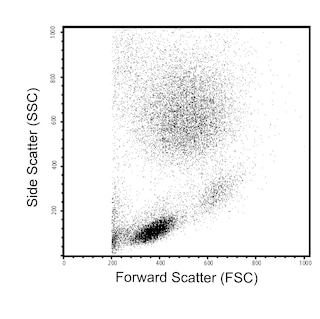
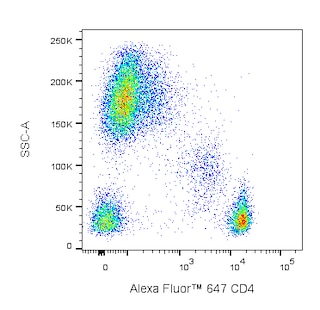
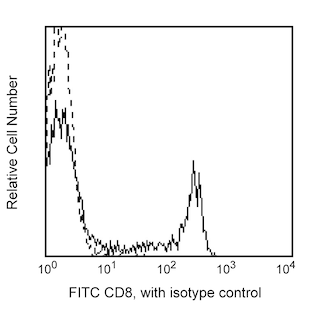
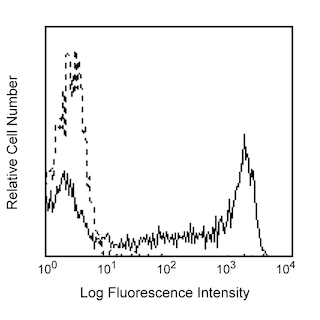
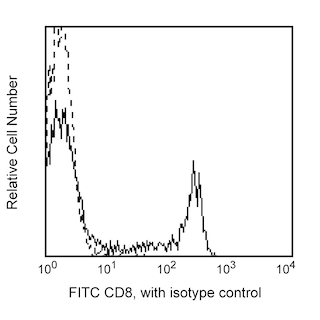
The 1G1 monoclonal antibody specifically binds to CD194, also known as the human CC Chemokine Receptor type 4 (CCR4). CCR4 is expressed on activated Th2 cells, regulatory T cells, activated NK cells, basophils, monocytes and platelets. CCR4 is a seven-transmembrane, G-protein-coupled receptor, and is the specific receptor for CC chemokines, CCL22/MDC/Macrophage-Derived Chemokine and CCL17/TARC/Thymus and Activation-Regulated Chemokine. It has been reported that CCR4 mRNA is expressed mainly in the thymus and spleen. The human CCR4 gene has been mapped to chromosome 3p24. The purified form of this antibody has been reported not to be a neutralizing antibody. The immunogen used to generate the 1G1 hybridoma has been reported to be human CCR4 transfected L1.2 mouse lymphoma cells.
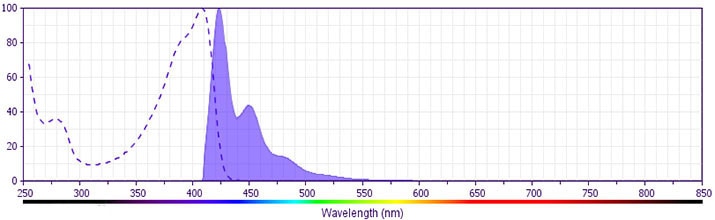
The antibody was conjugated to BD Horizon™ BV421 which is part of the BD Horizon™ Brilliant Violet™ family of dyes. With an Ex Max of 407-nm and Em Max at 421-nm, BD Horizon™ BV421 can be excited by the violet laser and detected in the standard Pacific Blue™ filter set (eg, 450/50-nm filter). BD Horizon™ BV421 conjugates are very bright, often exhibiting a 10 fold improvement in brightness compared to Pacific Blue™ conjugates.
Development References (11)
-
Andrew DP, Ruffing N, Kim CH, et al. C-C chemokine receptor 4 expression defines a major subset of circulating nonintestinal memory T cells of both Th1 and Th2 potential. J Immunol. 2000; 166(1):103-111. (Immunogen: Blocking, Flow cytometry, Functional assay, Inhibition). View Reference
-
Bonecchi R, Bianchi G, Bordignon PP, et al. Differential expression of chemokine receptors and chemotactic responsiveness of type 1 T helper cells (Th1s) and Th2s. J Exp Med. 1998; 187(1):129-134. (Biology). View Reference
-
Campbell JJ, Haraldsen G, Pan J, et al. The chemokine receptor CCR4 in vascular recognition by cutaneous but not intestinal memory T cells. Nature. 1999; 400(6746):776-780. (Biology). View Reference
-
D'Ambrosio D, Iellem A, Bonecchi R, et al. Selective up-regulation of chemokine receptors CCR4 and CCR8 upon activation of polarized human type 2 Th cells.. J Immunol. 1998; 161(10):5111-5. (Biology). View Reference
-
Imai T, Baba M, Nishimura M, Kakizaki M, Takagi S, Yoshie O. The T cell-directed CC chemokine TARC is a highly specific biological ligand for CC chemokine receptor 4. J Biol Chem. 1997; 272(23):15036-15042. (Biology). View Reference
-
Imai T, Chantry D, Raport CJ, et al. Macrophage-derived chemokine is a functional ligand for the CC chemokine receptor 4. J Biol Chem. 1998; 273(3):1764-1768. (Biology). View Reference
-
Imai T, Nagira M, Takagi S, et al. Selective recruitment of CCR4-bearing Th2 cells toward antigen-presenting cells by the CC chemokines thymus and activation-regulated chemokine and macrophage-derived chemokine. Int Immunol. 1999; 11(1):81-88. (Biology). View Reference
-
Power CA, Meyer A, Nemeth K, et al. Molecular cloning and functional expression of a novel CC chemokine receptor cDNA from a human basophilic cell line. J Biol Chem. 1995; 270(33):19495-19500. (Biology). View Reference
-
Sallusto F, Lenig D, Mackay CR, Lanzavecchia A. Flexible programs of chemokine receptor expression on human polarized T helper 1 and 2 lymphocytes. J Exp Med. 1998; 187(6):875-883. (Biology). View Reference
-
Samson M, Soularue P, Vassart G, Parmentier M. The genes encoding the human CC-chemokine receptors CC-CKR1 to CC-CKR5 (CMKBR1-CMKBR5) are clustered in the p21.3-p24 region of chromosome 3. Genomics. 1996; 36(3):522-526. (Biology). View Reference
-
Zola H, Swart B, Banham A, et al. CD molecules 2006--human cell differentiation molecules.. J Immunol Methods. 2007; 319(1-2):1-5. (Clone-specific). View Reference
Please refer to Support Documents for Quality Certificates
Global - Refer to manufacturer's instructions for use and related User Manuals and Technical data sheets before using this products as described
Comparisons, where applicable, are made against older BD Technology, manual methods or are general performance claims. Comparisons are not made against non-BD technologies, unless otherwise noted.
For Research Use Only. Not for use in diagnostic or therapeutic procedures.
