





.png)


Preparation And Storage


Product Notices
- Since applications vary, each investigator should titrate the reagent to obtain optimal results.
- An isotype control should be used at the same concentration as the antibody of interest.
- Caution: Sodium azide yields highly toxic hydrazoic acid under acidic conditions. Dilute azide compounds in running water before discarding to avoid accumulation of potentially explosive deposits in plumbing.
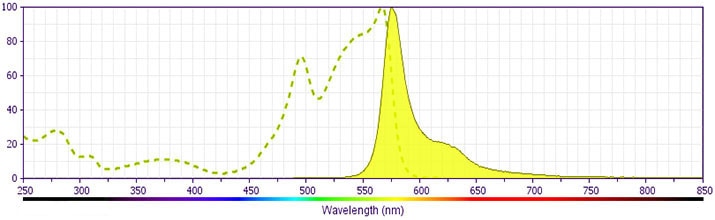
- For fluorochrome spectra and suitable instrument settings, please refer to our Multicolor Flow Cytometry web page at www.bdbiosciences.com/colors.
- Please refer to www.bdbiosciences.com/us/s/resources for technical protocols.
Companion Products
.png?imwidth=320)
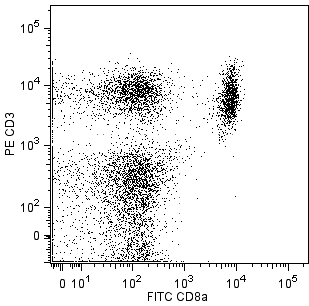
The AL-21 monoclonal antibody specifically binds to a non-polymorphic determinant of Ly-6C, a 14-17 kDa GPI-linked cell-surface antigen found on some monocyte/macrophage populations, granulocytes, endothelial cells, plasma cells, and thymocyte, NK-cell, and T-subsets. Mice with the Ly-6.2 alloantigen (eg, AKR, C57BL, C57BR, C57L, C58, DBA/2, PL, SJL, SWR, 129) have subsets of CD8+ and CD4+ Ly-6C+ T cells, while Ly-6.1 strains (eg, A, BALB/c, CBA, C3H/He, DBA/1, NZB) have only CD8+ Ly-6C+ T cells. Upregulation of Ly-6C expression on CD8+ T cells by interferons α and β and poly (I:C) has been described, and Ly-6C is a memory marker on CD8+ T cells.
Development References (7)
-
Cerwenka A, Carter LL, Reome JB, Swain SL, Dutton RW. In vivo persistence of CD8 polarized T cell subsets producing type 1 or type 2 cytokines. J Immunol. 1998; 161(1):97-105. (Biology). View Reference
-
Jutila DB, Kurk S, Jutila MA.. Differences in the expression of Ly-6C on neutrophils and monocytes following PI-PLC hydrolysis and cellular activation.. Immunol Lett. 1994 ; 41(1):49-57. (Biology). View Reference
-
Jutila MA, Kroese FG, Jutila KL, et al. Ly-6C is a monocyte/macrophage and endothelial cell differentiation antigen regulated by interferon-gamma. Eur J Immunol. 1988; 18(11):1819-1826. (Biology). View Reference
-
Sato N, Yahata T, Santa K. Functional characterization of NK1.1 + Ly-6C+ cells. Immunol Lett. 1996; 1(54):1-5-9. (Biology). View Reference
-
Takahama Y, Sharrow SO, Singer A. Expression of an unusual T cell receptor (TCR)-V beta repertoire by Ly-6C+ subpopulations of CD4+ and/or CD8+ thymocytes. Evidence for a developmental relationship between Ly-6C+ thymocytes and CD4-CD8-TCR-alpha beta+ thymocytes. J Immunol. 1991; 147(9):2883-2891. (Biology). View Reference
-
Tough DF, Borrow P, Sprent J. Induction of bystander T cell proliferation by viruses and type I interferon in vivo. Science. 1996; 272(5270):1947-1950. (Biology). View Reference
-
Wrammert J, Källberg E, Agace WW, Leanderson T. Ly6C expression differentiates plasma cells from other B cell subsets in mice. Eur J Immunol. 2002; 32(1):97-103. (Biology). View Reference
Please refer to Support Documents for Quality Certificates
Global - Refer to manufacturer's instructions for use and related User Manuals and Technical data sheets before using this products as described
Comparisons, where applicable, are made against older BD Technology, manual methods or are general performance claims. Comparisons are not made against non-BD technologies, unless otherwise noted.
For Research Use Only. Not for use in diagnostic or therapeutic procedures.
