The site is undergoing maintenance on
Friday, September 11, 2:00 am through Saturday, September 12, 2:00 am (CEST), 2026.
If you encounter problems while ordering, please contact us at BDBCustomerService@bd.com
See More
The site is undergoing maintenance on
Friday, September 11, 2:00 am through Saturday, September 12, 2:00 am (CEST), 2026.
If you encounter problems while ordering, please contact us at BDBCustomerService@bd.com
See MoreThe site is undergoing maintenance on
Friday, September 11, 2:00 am through Saturday, September 12, 2:00 am (CEST), 2026
.If you encounter problems while ordering, please contact us at BDBCustomerService@bd.com
This page has been recently translated and is available in French now.
Looks like you're visiting us from {countryName}.
Would you like to stay on the current location site or be switched to your location?
Any use of products other than the permitted use without the express written authorization of Becton, Dickinson and Company is strictly prohibited.
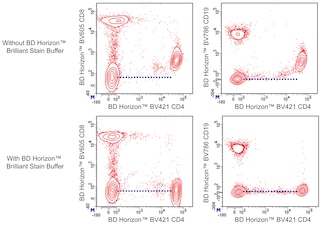
For optimal and reproducible results, BD Horizon Brilliant Stain Buffer should be used anytime two or more BD Horizon Brilliant dyes (including BD OptiBuild Brilliant reagents) are used in the same experiment. Fluorescent dye interactions may cause staining artifacts which may affect data interpretation. The BD Horizon Brilliant Stain Buffer was designed to minimize these interactions. More information can be found in the Technical Data Sheet of the BD Horizon Brilliant Stain Buffer (Cat. No. 563794).
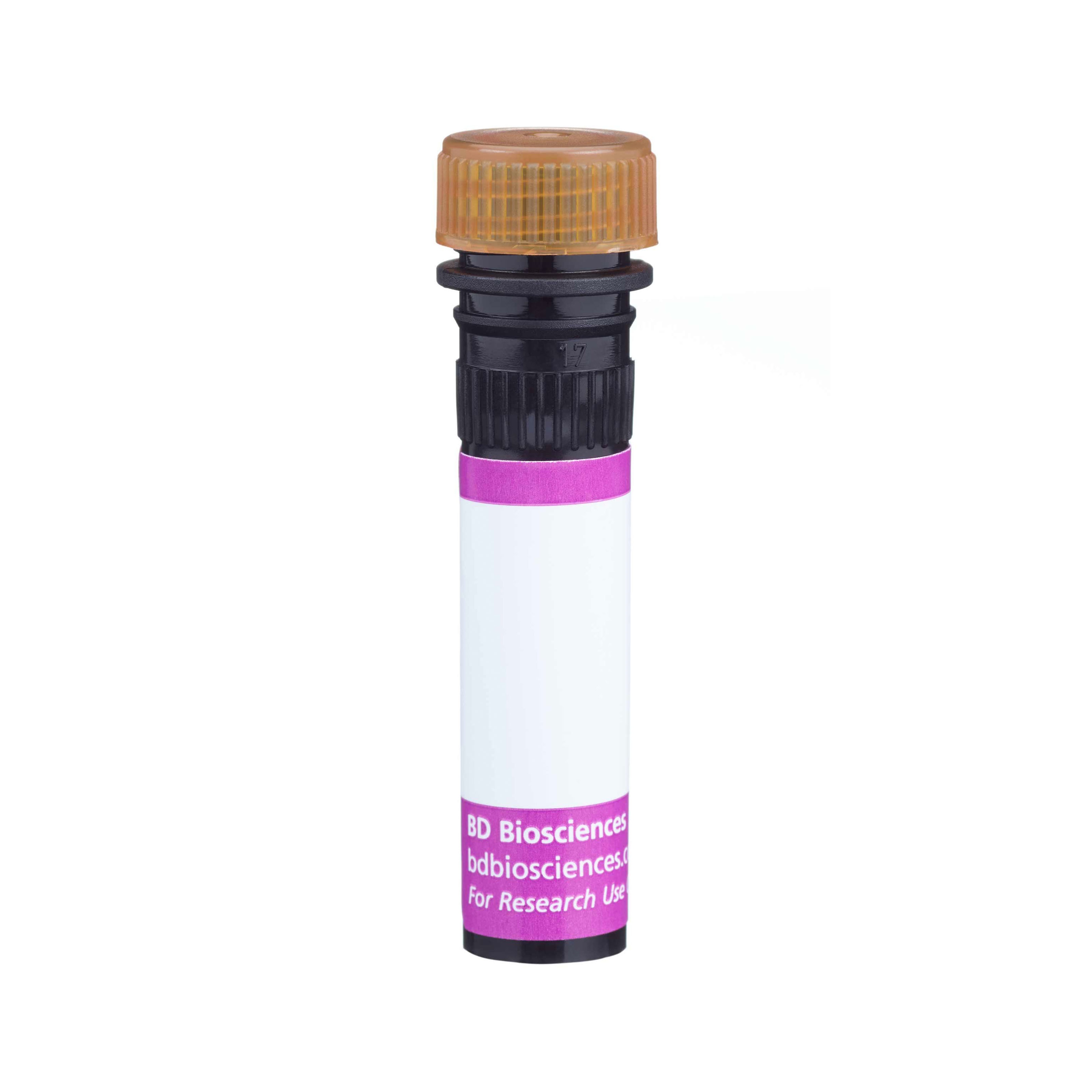
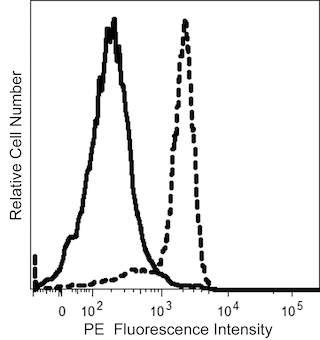
The 8C11 monoclonal antibody recognizes the extracellular domain of human N-Cadherin (CD325). Cadherins are a family of Ca2+ -dependent intercellular adhesion molecules that play a central role in controlling morphogenetic movements during development. Their function is regulated by association with the actin cytoskeleton by a complex of cytoplasmic proteins called the catenins (α, β, γ). Members of the cadherin family include P-cadherin , E-cadherin (uvomorulin), N-cadherin (neural cadherin), R-cadherin, cadherin 5, L-CAM, and EP-cadherin. N-cadherin mRNA is found at elevated levels in brain and heart and at a much lower level in liver. Mechanisms such as mRNA expression, cytokine modulation, and protease-mediated turnover modulate N-cadherin protein levels during development. In addition, N-cadherin function is indirectly regulated by endogenous kinases and phosphatases. Tyrosine phosphorylation of β-catenin complexed with N-cadherin results in dissociation of N-cadherin from actin. However, N-cadherin also interacts with a PTP1B-like phosphatase that dephosphorylates β-catenin and promotes N-cadherin/actin association. Thus, N-cadherin is an integral adhesion molecule whose function is regulated by protein-protein interactions and phosphorylation/dephosphorylation events.
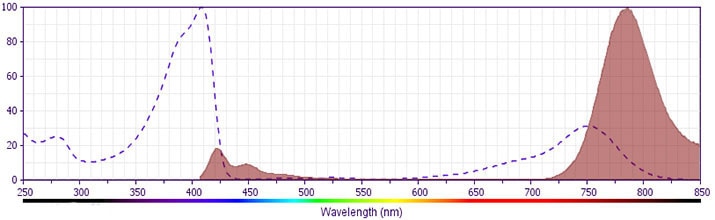
The antibody was conjugated to BD Horizon™ BV786 which is part of the BD Horizon Brilliant™ Violet family of dyes. This dye is a tandem fluorochrome of BD Horizon BV421 with an Ex Max of 405-nm and an acceptor dye with an Em Max at 786-nm. BD Horizon BV786 can be excited by the violet laser and detected in a filter used to detect Cy™7-like dyes (eg, 780/60-nm filter).
Please refer to Support Documents for Quality Certificates
Global - Refer to manufacturer's instructions for use and related User Manuals and Technical data sheets before using this products as described
Comparisons, where applicable, are made against older BD Technology, manual methods or are general performance claims. Comparisons are not made against non-BD technologies, unless otherwise noted.
For Research Use Only. Not for use in diagnostic or therapeutic procedures.