







Preparation And Storage


Recommended Assay Procedures
BD™ CompBeads can be used as surrogates to assess fluorescence spillover (Compensation). When fluorochrome conjugated antibodies are bound to BD CompBeads, they have spectral properties very similar to cells. However, for some fluorochromes there can be small differences in spectral emissions compared to cells, resulting in spillover values that differ when compared to biological controls. It is strongly recommended that when using a reagent for the first time, users compare the spillover on cells and BD CompBead to ensure that BD CompBeads are appropriate for your specific cellular application.
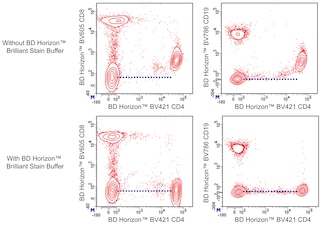
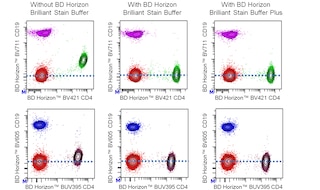
For optimal and reproducible results, BD Horizon Brilliant Stain Buffer should be used anytime two or more BD Horizon Brilliant dyes are used in the same experiment. Fluorescent dye interactions may cause staining artifacts which may affect data interpretation. The BD Horizon Brilliant Stain Buffer was designed to minimize these interactions. More information can be found in the Technical Data Sheet of the BD Horizon Brilliant Stain Buffer (Cat. No. 563794/566349) or the BD Horizon Brilliant Stain Buffer Plus (Cat. No. 566385).
Note: When using high concentrations of antibody, background binding of this dye to erythroid cell subsets (mature erythrocytes and precursors) has been observed. For researchers studying these cell populations, or in cases where light scatter gating does not adequately exclude these cells from the analysis, this background may be an important factor to consider when selecting reagents for panel(s).
Product Notices
- The production process underwent stringent testing and validation to assure that it generates a high-quality conjugate with consistent performance and specific binding activity. However, verification testing has not been performed on all conjugate lots.
- Researchers should determine the optimal concentration of this reagent for their individual applications.
- An isotype control should be used at the same concentration as the antibody of interest.
- Caution: Sodium azide yields highly toxic hydrazoic acid under acidic conditions. Dilute azide compounds in running water before discarding to avoid accumulation of potentially explosive deposits in plumbing.
- For fluorochrome spectra and suitable instrument settings, please refer to our Multicolor Flow Cytometry web page at www.bdbiosciences.com/colors.
- Please refer to www.bdbiosciences.com/us/s/resources for technical protocols.
- BD Horizon Brilliant Stain Buffer is covered by one or more of the following US patents: 8,110,673; 8,158,444; 8,575,303; 8,354,239.
- Please refer to http://regdocs.bd.com to access safety data sheets (SDS).
- CF™ is a trademark of Biotium, Inc.
- BD Horizon Brilliant Ultraviolet 615 is covered by one or more of the following US patents: 8,110,673; 8,158,444; 8,227,187; 8,575,303; 8,354,239.
Companion Products
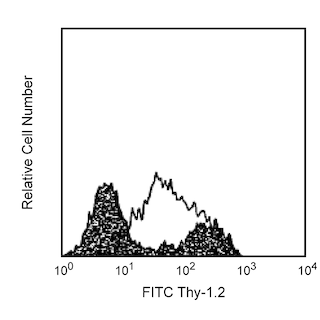
The MR9-4 monoclonal antibody specifically recognizes the Vβ 5.1 and Vβ 5.2 T-cell Receptors of strains having the b haplotype (e.g., C57BL) of the Tcrb gene complex. These gene loci are deleted in mice having the a (e.g., C57BR, C57L, SJL, SWR) or c (e.g., RIII) Tcrb haplotype. Vβ5.1 and 5.2 TCR-bearing T lymphocytes are clonally eliminated, either completely or partially, in mice expressing I-E and superantigens encoded by the Mtv-1 (Mls-4a, Mlsc), Mtv-3 (Mlsc), Mtv-8 (Mlsf), Mtv-9 (Etc-1, Mlsf), Mtv-11 (Mlsf), Mtv-13 (Mls-2a, Mlsc), Mtv-27, Mtv44 , and/or Mtv-MAI endogenous provirus (e.g., A, AKR, BALB/c, C3H/He, C58, CBA/Ca, CBA/J, DBA/2, NZB, NZW). Activation of Vβ5 TCR-expressing T cells by this determinant is dependent upon presentation by I-E. Plate-bound MR9-4 antibody activates Vβ5.1 or 5.2 TCR-bearing T cells.
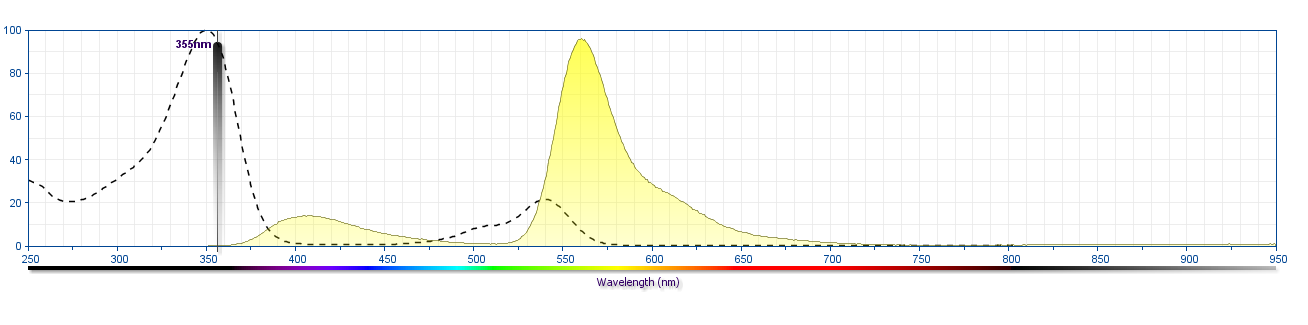
The antibody was conjugated to BD Horizon BUV615 which is part of the BD Horizon Brilliant™ Ultraviolet family of dyes. This dye is a tandem fluorochrome with an Ex Max near 350 nm and an Em Max near 615 nm. BD Horizon Brilliant BUV615 can be excited by the ultraviolet laser (355 nm) and detected with a 610/20 filter and a 595 nm LP. Due to the excitation of the acceptor dye by the blue/yellow-green laser line, there may be significant spillover into channels detecting PE-CF594 like emissions (eg, 610/20-nm filter).
Development References (9)
-
Behlke MA, Chou HS, Huppi K, Loh DY. Murine T-cell receptor mutants with deletions of beta-chain variable region genes. Proc Natl Acad Sci U S A. 1986; 83(3):767-771. (Biology). View Reference
-
Bill J, Kanagawa O, Linten J, Utsunomiya Y, Palmer E. Class I and class II MHC gene products differentially affect the fate of V beta 5 bearing thymocytes. J Mol Cell Immunol. 1990; 4(5):269-280. (Immunogen). View Reference
-
Haqqi TM, Banerjee S, Anderson GD, David CS. RIII S/J (H-2r). An inbred mouse strain with a massive deletion of T cell receptor V beta genes. J Exp Med. 1989; 169(6):1903-1909. (Biology). View Reference
-
Hodes RJ, Abe R. Mouse endogenous superantigens: Ms and Mls-like determinants encoded by mouse retroviruses.. Curr Protoc Immunol. 2001; Appendix 1:Appendix 1F. (Biology). View Reference
-
Hugin AW, Vacchio MS, Morse HC 3rd. A virus-encoded "superantigen" in a retrovirus-induced immunodeficiency syndrome of mice. Science. 1991; 252(5004):424-427. (Biology). View Reference
-
Tomonari K, Fairchild S, Rosenwasser OA. Influence of viral superantigens on V beta- and V alpha-specific positive and negative selection. Immunol Rev. 1993; 131:131-168. (Biology). View Reference
-
Utsunomiya Y, Kosaka H, Kanagawa O. Differential reactivity of V beta 9 T cells to minor lymphocyte stimulating antigen in vitro and in vivo. Eur J Immunol. 1991; 21(4):1007-1011. (Biology). View Reference
-
Woodland D, Happ MP, Bill J, Palmer E. Requirement for cotolerogenic gene products in the clonal deletion of I-E reactive T cells. Science. 1990; 247(4945):964-967. (Biology). View Reference
-
Woodland DL, Happ MP, Gollob KJ, Palmer E. An endogenous retrovirus mediating deletion of alpha beta T cells. Nature. 1991; 349(6309):529-530. (Biology). View Reference
Please refer to Support Documents for Quality Certificates
Global - Refer to manufacturer's instructions for use and related User Manuals and Technical data sheets before using this products as described
Comparisons, where applicable, are made against older BD Technology, manual methods or are general performance claims. Comparisons are not made against non-BD technologies, unless otherwise noted.
For Research Use Only. Not for use in diagnostic or therapeutic procedures.
