The site is undergoing maintenance. Ordering can continue through fax and phone.
Sunday, August 16, 2026, 1:30 - 4:30 pm (CEST).
If you encounter problems while ordering. Please contact us at BDBCustomerService@bd.com
See More
The site is undergoing maintenance. Ordering can continue through fax and phone.
Sunday, August 16, 2026, 1:30 - 4:30 pm (CEST).
If you encounter problems while ordering. Please contact us at BDBCustomerService@bd.com
See MoreThe site is undergoing maintenance. Ordering can continue through fax and phone.
Sunday, August 16, 2026, 1:30 - 4:30 pm (CEST)
.If you encounter problems while ordering. Please contact us at BDBCustomerService@bd.com
This page has been recently translated and is available in French now.
Looks like you're visiting us from {countryName}.
Would you like to stay on the current location site or be switched to your location?
Any use of products other than the permitted use without the express written authorization of Becton, Dickinson and Company is strictly prohibited.
The X40 hybridoma was derived from the fusion of mouse Sp2/0-Ag 14 myeloma cells with spleen cells from BALB/c mice immunized with keyhole limpet hemocyanin (KLH). The hybridoma secretes monoclonal antibody that binds specifically to KLH, an antigen not expressed on human cells or human cell lines.
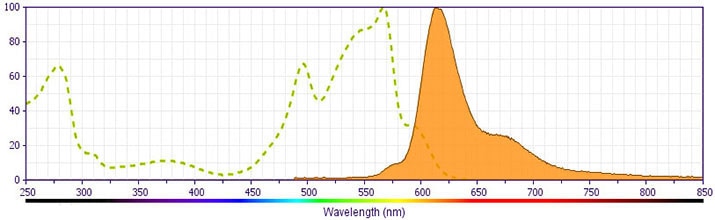
This antibody is conjugated to BD Horizon™ PE-CF594, which has been developed exclusively by BD Biosciences as a better alternative to PE-Texas Red. PE-CF594 excites and emits at similar wavelengths to PE-Texas Red yet exhibits improved brightness and spectral characteristics. Due to PE having maximal absorption peaks at 496 nm and 564 nm, PE-CF594 can be excited by the blue (488-nm), green (532-nm) and yellow-green (561-nm) lasers and can be detected with the same filter set as PE-Texas Red (eg 610/20-nm filter).
Please refer to Support Documents for Quality Certificates
Global - Refer to manufacturer's instructions for use and related User Manuals and Technical data sheets before using this products as described
Comparisons, where applicable, are made against older BD Technology, manual methods or are general performance claims. Comparisons are not made against non-BD technologies, unless otherwise noted.
For Research Use Only. Not for use in diagnostic or therapeutic procedures.