







Preparation And Storage


Recommended Assay Procedures
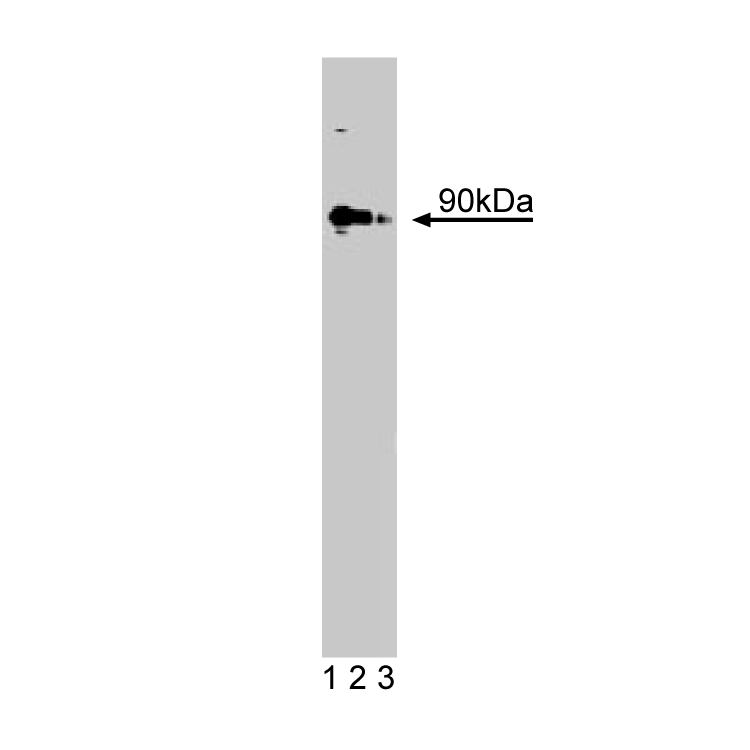
Western blot: Please refer to http://www.bdbiosciences.com/pharmingen/protocols/Western_Blotting.shtml
Product Notices
- Since applications vary, each investigator should titrate the reagent to obtain optimal results.
- Please refer to www.bdbiosciences.com/us/s/resources for technical protocols.
- Caution: Sodium azide yields highly toxic hydrazoic acid under acidic conditions. Dilute azide compounds in running water before discarding to avoid accumulation of potentially explosive deposits in plumbing.
- Source of all serum proteins is from USDA inspected abattoirs located in the United States.
Companion Products

Protein tyrosine phosphatases participate in the intracellular signaling pathways of mitosis, differentiation, migration, survival, transformation, and death. SHP-2, a SH-2 domain containing phosphotyrosine phosphatase, is a positive signal transducer of receptor tyrosine kinases (RTKs) and cytokine receptors. SIRPs (Signal-Regulatory Proteins) were identified as a result of their association with SHP-2. The 15+ members of this family consist of two subtypes based on the presence or absence of a cytoplasmic SHP-2-binding domain. SIRPα1 is a transmembrane polypeptide substrate of activated RTKs. When tyrosine-phosphorylated, SIRPα1 binds SHP-2, SHP-1, Grb2 through an SH2 interaction. The SIRP proteins also constitute a subfamily within the Ig superfamily because they contain transmembrane glycoproteins with three Ig-like extracellular domains. Additionally, SIRPs' cytoplasmic tails contain two ITI (immunoreceptor tyrosine-based inhibition motifs). Although SIRPs have been shown to inhibit signaling through RTKs, their function is yet to be determined.
Development References (4)
-
Adams S, van der Laan LJ, Vernon-Wilson E, et al. Signal-regulatory protein is selectively expressed by myeloid and neuronal cells. J Immunol. 1998; 161(4):1853-1859. (Biology). View Reference
-
Kharitonenkov A, Chen Z, Sures I, Wang H, Schilling J, Ullrich A. A family of proteins that inhibit signalling through tyrosine kinase receptors. Nature. 1997; 386(6621):181-186. (Biology). View Reference
-
Stofega MR, Wang H, Ullrich A, Carter-Su C. Growth hormone regulation of SIRP and SHP-2 tyrosyl phosphorylation and association. J Biol Chem. 1998; 273(12):7112-7117. (Biology). View Reference
-
Veillette A, Thibaudeau E, Latour S. High expression of inhibitory receptor SHPS-1 and its association with protein-tyrosine phosphatase SHP-1 in macrophages. J Biol Chem. 1998; 273(35):22719-22728. (Biology). View Reference
Please refer to Support Documents for Quality Certificates
Global - Refer to manufacturer's instructions for use and related User Manuals and Technical data sheets before using this products as described
Comparisons, where applicable, are made against older BD Technology, manual methods or are general performance claims. Comparisons are not made against non-BD technologies, unless otherwise noted.
For Research Use Only. Not for use in diagnostic or therapeutic procedures.