





.png)


Preparation And Storage


Product Notices
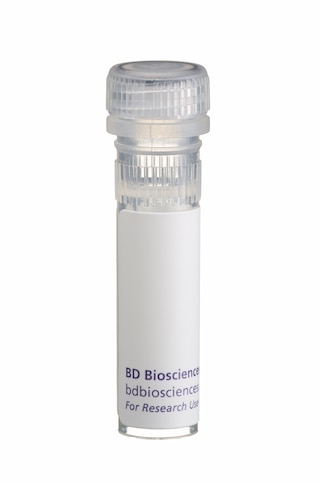
- This reagent has been pre-diluted for use at the recommended Volume per Test. We typically use 1 × 10^6 cells in a 100-µl experimental sample (a test).
- Since applications vary, each investigator should titrate the reagent to obtain optimal results.
- Please refer to www.bdbiosciences.com/us/s/resources for technical protocols.
- Caution: Sodium azide yields highly toxic hydrazoic acid under acidic conditions. Dilute azide compounds in running water before discarding to avoid accumulation of potentially explosive deposits in plumbing.
- Source of all serum proteins is from USDA inspected abattoirs located in the United States.
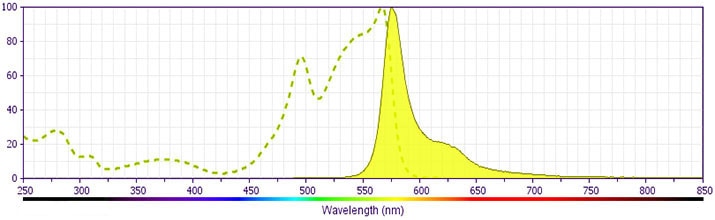
- For fluorochrome spectra and suitable instrument settings, please refer to our Multicolor Flow Cytometry web page at www.bdbiosciences.com/colors.
Companion Products

Interleukin-4 (IL-4), a major immunoregulatory cytokine, is secreted by activated T lymphocytes, basophils, and mast cells and plays an important role in modulating T helper cell lineage development. It induces specific gene expression via the tyrosine phosphorylation of Stat6 at tyrosine 641 (Y641). Stat6, a member of the signal transducers and activators of transcription protein family, mediates signals for IL-4 and, possibly, IL-13. While Stat6 is widely expressed in human tissues, it exhibits elevated expression in peripheral blood lymphocytes, colon, intestine, ovary, prostate, thymus, spleen, kidney, liver, lung, and placenta. Following cytokine receptor ligation, Jak kinases are activated and phosphorylate the cytoplasmic tails of the oligomerized receptors. The SH3:SH2 domain of Stat6 associates with tyrosine-phosphorylated IL-4 receptor and the proximal Jak kinase phosphorylates Stat6 at Y641 on the C-terminal side of the SH2 domain. Stat6 is then released from the receptor, dimerizes, and is thought to contact the basal transcription machinery by binding to p300/CBP. Thus, Stat6 mediates the IL-4 signal and is essential for the proper development of adaptive immunity.
Development References (6)
-
Bromberg J, Darnell JE. The role of STATs in transcriptional control and their impact on cellular function. Oncogene. 2000; 19(21):2468-2473. (Biology). View Reference
-
Dent AL, Hu-Li J, Paul WE, Staudt LM. T helper type 2 inflammatory disease in the absence of interleukin 4 and transcription factor STAT6. Proc Natl Acad Sci U S A. 1998; 95(23):13823-13828. (Biology). View Reference
-
Heim MH. The Jak-STAT pathway: specific signal transduction from the cell membrane to the nucleus. Eur J Clin Invest. 1996; 26(1):1-12. (Biology). View Reference
-
Hou J, Schindler U, Henzel WJ, Ho TC, Brasseur M, McKnight SL. An interleukin-4-induced transcription factor: IL-4 Stat. Science. 1994; 265(5179):1701-1706. (Biology). View Reference
-
Mikita T, Campbell D, Wu P, Williamson K, Schindler U. Requirements for interleukin-4-induced gene expression and functional characterization of Stat6. Mol Cell Biol. 1996; 16(10):5811-5820. (Biology). View Reference
-
Quelle FW, Shimoda K, Thierfelder W, et al.. Cloning of murine Stat6 and human Stat6, Stat proteins that are tyrosine phosphorylated in responses to IL-4 and IL-3 but are not required for mitogenesis. Mol Cell Biol. 1995; 15(6):3336-3343. (Biology). View Reference
Please refer to Support Documents for Quality Certificates
Global - Refer to manufacturer's instructions for use and related User Manuals and Technical data sheets before using this products as described
Comparisons, where applicable, are made against older BD Technology, manual methods or are general performance claims. Comparisons are not made against non-BD technologies, unless otherwise noted.
For Research Use Only. Not for use in diagnostic or therapeutic procedures.
