





.png)


Preparation And Storage


Product Notices
- This reagent has been pre-diluted for use at the recommended Volume per Test. We typically use 1 × 10^6 cells in a 100-µl experimental sample (a test).
- An isotype control should be used at the same concentration as the antibody of interest.
- Caution: Sodium azide yields highly toxic hydrazoic acid under acidic conditions. Dilute azide compounds in running water before discarding to avoid accumulation of potentially explosive deposits in plumbing.
- Source of all serum proteins is from USDA inspected abattoirs located in the United States.
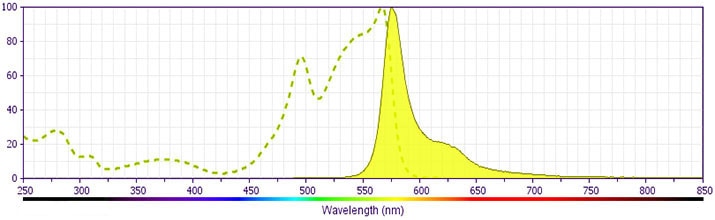
- For fluorochrome spectra and suitable instrument settings, please refer to our Multicolor Flow Cytometry web page at www.bdbiosciences.com/colors.
- Please refer to http://regdocs.bd.com to access safety data sheets (SDS).
- Please refer to www.bdbiosciences.com/us/s/resources for technical protocols.
Companion Products
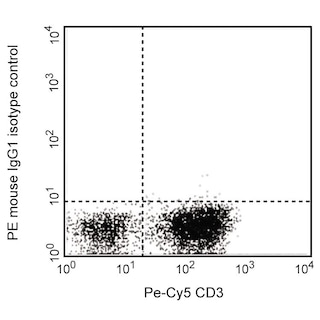
The 266 monoclonal antibody specifically binds to CD105. CD105 is a type I transmembrane glycoprotein that is encoded by END (Endoglin) and belongs to the transforming growth factor-β (TGF-β) type III receptor family. CD105 is expressed on cells as a homodimer comprised of ~95 kDa subunits. CD105 is expressed on vascular endothelial cells and placental syncytiotrophoblasts and at lower levels on stromal fibroblasts. It is also expressed on mesenchymal stem cells, erythroid precursors, activated macrophages, pre-B cells, and some tumor cells and cell lines including U937 cells. CD105 serves as a regulatory component of the TGF-β receptor system. In association with TGF- βRI or TGF- βRII, CD105 binds TGF-β1 and TGF-β3 with high affinity but does not bind to TGF-β2. Expression of CD105 is increased on activated endothelium in tissues undergoing angiogenesis, such as in tumors, or in cases of wound healing or dermal inflammation.
Development References (5)
-
Gougos A, Letarte M. Identification of a human endothelial cell antigen with monoclonal antibody 44G4 produced against a pre-B leukemic cell line. J Immunol. 1988; 141(6):1925-1933. (Biology). View Reference
-
Lastres P, Bellon T, Cabañas C, et al. Regulated expression on human macrophages of endoglin, an Arg-Gly-Asp-containing surface antigen. Eur J Immunol. 1992; 22(2):393-397. (Biology). View Reference
-
Tomchuck SL, Zwezdaryk KJ, Coffelt SB, Waterman RS, Danka ES, Scandurro AB. Toll-like receptors on human mesenchymal stem cells drive their migration and immunomodulating responses. Stem Cells. 2008; 26(1):99-109. (Clone-specific: Flow cytometry). View Reference
-
Wang JM, Kumar S, Pye D, van Agthoven AJ, Krupinski J, Hunter RD. A monoclonal antibody detects heterogeneity in vascular endothelium of tumours and normal tissues. Int J Cancer. 1993; 54(3):363-370. (Biology). View Reference
-
Westphal JR, Willems HW, Schalkwijk CJ, Ruiter DJ, de Waal RM. A new 180-kDa dermal endothelial cell activation antigen: in vitro and in situ characteristics. J Invest Dermatol. 1993; 100(1):27-34. (Biology). View Reference
Please refer to Support Documents for Quality Certificates
Global - Refer to manufacturer's instructions for use and related User Manuals and Technical data sheets before using this products as described
Comparisons, where applicable, are made against older BD Technology, manual methods or are general performance claims. Comparisons are not made against non-BD technologies, unless otherwise noted.
For Research Use Only. Not for use in diagnostic or therapeutic procedures.
