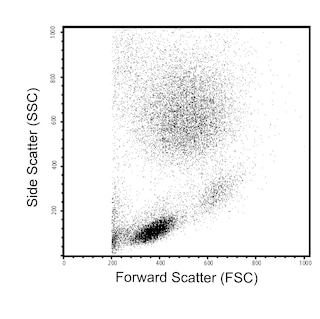
The TLD-3A12 antibody specifically recognizes CD31, also known as PECAM-1 (platelet endothelial cell adhesion molecule). CD31 is a ~130 kDa integral membrane glycoprotein, a member of the immunoglobulin superfamily, that mediates homophilic and heterophilic cell-cell adhesion. CD31 is expressed on endothelial cells, platelets, and subsets of leucocytes. In the human and mouse, multiple alternatively spliced isoforms have been identified, and this alternative splicing may be involved in the regulation of ligand specificity. CD31-mediated endothelial cell-cell interactions are involved in angiogenesis in the mouse and rat. In addition, PECAM-1 has been demonstrated to play an important role in extravasation of leucocytes in vivo, but in vivo treatment with TLD-3A12 mAb had no discernable effect upon the inflammatory infiltrate in experimental allergic encephalomyelitis. The TLD-3A12 mAb partially blocks the proliferative response of antigen-specific CD4+ T cells to antigen-presenting cells and relevant antigen. This mouse anti-rat CD31 antibody crossreacts with pig endothelial cells and platelets, as determined by immunohistochemical staining of acetone-fixed frozen sections and immunofluorescent staining with flow cytometric analysis, respectively. A suspension of Lewis rat microglial cells was used as the the immunogen.
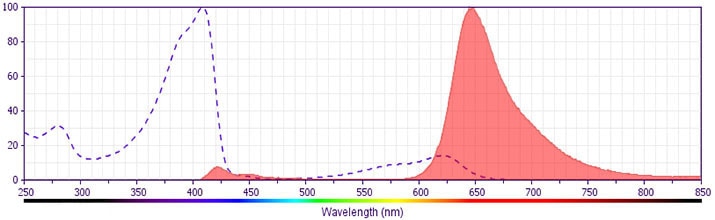
The antibody was conjugated to BD Horizon™ BV650 which is part of the BD Horizon Brilliant™ Violet family of dyes. This dye is a tandem fluorochrome of BD Horizon BV421 with an Ex Max of 405-nm and an acceptor dye with an Em Max at 650-nm. BD Horizon BV650 can be excited by the violet laser and detected in a filter used to detect APC-like dyes (eg, 660/20-nm filter). Due to the excitation and emission characteristics of the acceptor dye, there will be spillover into the APC and Alexa Fluor® 700 detectors. However, the spillover can be corrected through compensation as with any other dye combination.