







Preparation And Storage


Product Notices
- This reagent has been pre-diluted for use at the recommended Volume per Test. We typically use 1 × 10^6 cells in a 100-µl experimental sample (a test).
- An isotype control should be used at the same concentration as the antibody of interest.
- Brilliant Violet™ 650 is a trademark of Sirigen.
- Alexa Fluor® is a registered trademark of Molecular Probes, Inc., Eugene, OR.
- Source of all serum proteins is from USDA inspected abattoirs located in the United States.
- Caution: Sodium azide yields highly toxic hydrazoic acid under acidic conditions. Dilute azide compounds in running water before discarding to avoid accumulation of potentially explosive deposits in plumbing.
- For fluorochrome spectra and suitable instrument settings, please refer to our Multicolor Flow Cytometry web page at www.bdbiosciences.com/colors.
- Please refer to www.bdbiosciences.com/us/s/resources for technical protocols.
Companion Products
The SJ25C1 monoclonal antibody specifically binds to CD19, a B lymphocyte-lineage differentiation antigen. CD19, a 90-kDa transmembrance glycoprotein, is a member of the immunoglobulin superfamily and is expressed throughout B-lymphocyte development from the pro-B cell through the mature B-cell stages. Terminally differentiated plasma cells do not express CD19. On the surface of mature B cells, the CD19 molecule associates with CD21 (CR-2) and CD81 (TAPA-1), and this multimolecular complex synergizes with surface immunoglobulin to promote cellular activation. Studies with CD19-deficient mice have suggested that the level of CD19 expression affects the generation and maturation of B cells in the bone marrow and periphery. B-1 lineage B cells, also known as CD5+ B cells, are drastically reduced or absent in CD19-deficient mice. Increased levels of CD19 expression correlate with increased frequencies of peritonal and splenic B-1 cells and reduced numbers of conventional B lymphocytes in the periphery. CD19 participates in B-lymphocyte development, B-cell activation, maturation of memory B cells and regulation of tolerance. CD19 has also been detected on peritoneal mast cells, co-localized with CD21/CD35, and it is proposed to play a role in complement-mediated mast-cell activation.
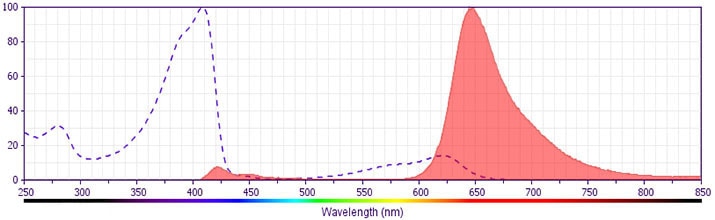
The antibody was conjugated to BD Horizon™ BV650 which is part of the BD Horizon™ Brilliant Violet™ family of dyes. This dye is a tandem fluorochrome of BD Horizon™ BV421 with an Ex Max of 405-nm and an acceptor dye with an Em Max at 650-nm. BD Horizon™ BV650 can be excited by the violet laser and detected in a filter used to detect APC-like dyes (eg, 660/20-nm filter). Due to the excitation and emission characteristics of the acceptor dye, there will be spillover into the APC and Alexa Fluor® 700 detectors. However, the spillover can be corrected through compensation as with any other dye combination.
Development References (7)
-
Dörken B, Möller P, Pezzutto A, Schwartz-Albiez R, Moldenhauer G. B-cell antigens: CD19. In: Knapp W. W. Knapp .. et al., ed. Leucocyte typing IV : white cell differentiation antigens. Oxford New York: Oxford University Press; 1989:34-36.
-
Loken MR, Shah VO, Dattilio KL, Civin CI. Flow cytometric analysis of human bone marrow. II. Normal B lymphocyte development. Blood. 1987; 70(5):1316-1324. (Biology). View Reference
-
Moldenhauer G, Dörken B, Schwartz R, Pezzutto A, Knops J, Hammerling GJ. Analysis of ten B lymphocyte-specific workshop monoclonal antibodies. In: Reinherz EL, Haynes BF, Nadler LM, Bernstein ID, ed. Leukocyte Typing II: Human B Lymphocytes. New York: Springer-Verlag; 1986:61-67.
-
Nadler LM, Anderson KC, Marti G, et al. B4, a human B lymphocyte-associated antigen expressed on normal, mitogen-activated, and malignant B lymphocytes. J Immunol. 1983; 131(1):244-250. (Clone-specific: Flow cytometry). View Reference
-
Nadler LM. B Cell/Leukemia Panel Workshop: summary and comments. In: Reinherz EL, Haynes BF, Nadler LM, Bernstein ID, ed. Leukocyte Typing II: Human B Lymphocytes. New York: Springer-Verlag; 1986:3-43.
-
Reichert T, DeBruyere M, Deneys V, et al. Lymphocyte subset reference ranges in adult Caucasians. Clin Immunol Immunopathol. 1991; 60(2):190-208. (Biology). View Reference
-
Tedder TF, Zhou LJ, Engel P. The CD19/CD21 signal transduction complex of B lymphocytes. Immunol Today. 1994; 15(9):437-442. (Biology). View Reference
Please refer to Support Documents for Quality Certificates
Global - Refer to manufacturer's instructions for use and related User Manuals and Technical data sheets before using this products as described
Comparisons, where applicable, are made against older BD Technology, manual methods or are general performance claims. Comparisons are not made against non-BD technologies, unless otherwise noted.
For Research Use Only. Not for use in diagnostic or therapeutic procedures.
