







Preparation And Storage


Product Notices
- Since applications vary, each investigator should titrate the reagent to obtain optimal results.
- An isotype control should be used at the same concentration as the antibody of interest.
- Caution: Sodium azide yields highly toxic hydrazoic acid under acidic conditions. Dilute azide compounds in running water before discarding to avoid accumulation of potentially explosive deposits in plumbing.
- Sodium azide is a reversible inhibitor of oxidative metabolism; therefore, antibody preparations containing this preservative agent must not be used in cell cultures nor injected into animals. Sodium azide may be removed by washing stained cells or plate-bound antibody or dialyzing soluble antibody in sodium azide-free buffer. Since endotoxin may also affect the results of functional studies, we recommend the NA/LE (No Azide/Low Endotoxin) antibody format, if available, for in vitro and in vivo use.
- Please refer to www.bdbiosciences.com/us/s/resources for technical protocols.
Companion Products
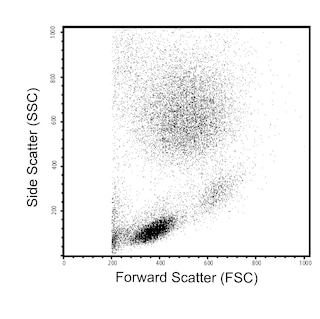
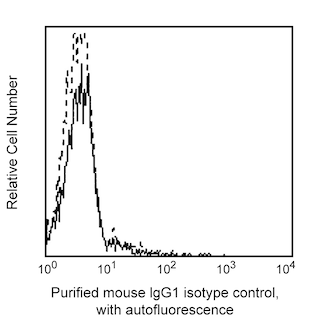
.png?imwidth=320)
The 1D11 monoclonal antibody specifically binds to NKG2D, a 42 kDa type II transmembrane glycoprotein that is also known as CD314 and KLRK1. NKG2D is a member of the C-type lectin family and is expressed on human NK cells. This activating receptor binds strongly to several ligands including MICA and MICB and ULBP-1, -2, and -3 proteins that are expressed by different target cell types. Different from natural cytotoxicity receptor (NCR), NKG2D expression is not confined to NK cells. It is also expressed on virtually all TCR γ/δ+ and CD8+TCR α/β+ T cells. NKG2D functions as a triggering receptor involved in natural cytotoxicity mediated by normal NK cells against a variety of tumors or normal target cells. Importantly, NKG2D can complement the role of NCR in tumor cell lysis. Remarkably, the combined maskings of NCR and NKG2D can reportedly lead to a complete inhibition of NK-mediated lysis of all tumor or normal cells. The 1D11 antibody can reportedly block or stimulate the function of NKG2D-positive cells.
Development References (2)
-
Bauer S, Groh V, Wu J, et al. Activation of NK cells and T cells by NKG2D, a receptor for stress-inducible MICA. Science. 1999; 285(5428):727-729. (Biology). View Reference
-
Groh V, Rhinehart R, Randolph-Habecker J, Topp MS, Riddell SR, Spies T. Costimulation of CD8alphabeta T cells by NKG2D via engagement by MIC induced on virus-infected cells. Nat Immunol. 2001; 2(3):255-260. (Biology). View Reference
Please refer to Support Documents for Quality Certificates
Global - Refer to manufacturer's instructions for use and related User Manuals and Technical data sheets before using this products as described
Comparisons, where applicable, are made against older BD Technology, manual methods or are general performance claims. Comparisons are not made against non-BD technologies, unless otherwise noted.
For Research Use Only. Not for use in diagnostic or therapeutic procedures.
