Dear Customer, If you experience any text readability or display issues on our website, please update your web browser to the latest version
.
See More
Dear Customer, If you experience any text readability or display issues on our website, please update your web browser to the latest version
.
See MoreDear Customer, If you experience any text readability or display issues on our website, please update your web browser to the latest version
.
This page has been recently translated and is available in French now.
Looks like you're visiting us from {countryName}.
Would you like to stay on the current location site or be switched to your location?
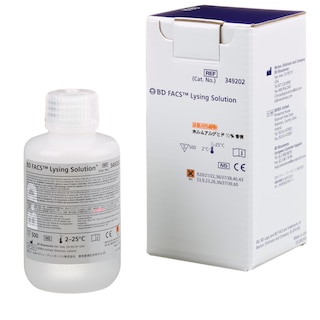
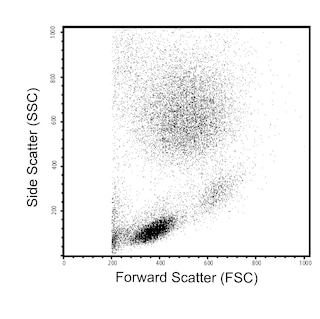
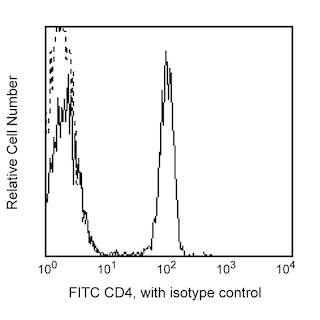
Multicolor flow cytometric analysis of CD39 expression on peripheral blood CD4+CD25+CD127low T cells. Whole human peripheral blood was stained with FITC Mouse Anti-Human CD4 (Cat. No. 555346/561005/561842), PerCP-Cy™5.5 Mouse Anti-Human CD25 (Cat. No. 560503), PE Anti-Human CD127 (Cat No. 557938/561028) antibodies, and either BV650 Mouse IgG2b, κ Isotype Control (Cat. No. 563437; dashed line histogram) or BD Horizon™ BV650 Mouse Anti-Human CD39 antibody (Cat. No. 563681; solid line histogram) (Left Panel). Erythrocytes were lysed with BD FACS™ Lysing Solution (Cat. No. 349202). The fluorescence histograms were derived from CD4+CD25+CD127low gated events (ie, cells with a Regulatory T cell immunophenotype; Right Panel) with the forward and side light-scatter characteristics of intact lymphocytes. Flow cytometric analysis was performed using a BD™ LSR II Flow Cytometer System.
Any use of products other than the permitted use without the express written authorization of Becton, Dickinson and Company is strictly prohibited.
The TU66 monoclonal antibody specifically recognizes human CD39 which is also known as Ectonucleoside triphosphate diphosphohydrolase 1 (NTPDase 1), Ecto-ATP diphosphohydrolase 1 (Ecto-ATPDase 1), or Ecto-apyrase. CD39 is an integral membrane glycoprotein with two transmembrane domains, N- and C-terminal cytoplasmic tails, and an extracellular region that contains the NTPDase 1 active site. CD39 is encoded by ENTPD1 which belongs to the ectoenzyme family. CD39 is variably expressed on activated T cells and B cells, regulatory T cells (Treg), dendritic cells, Langerhans cells, NK cells, monocytes, macrophages, endothelial cells, and granulocytes. CD39 acts on extracellular nucleoside triphosphates and diphosphates including ATP and ADP that are hydrolyzed into AMP. Through cell surface CD73 (Ecto-5'-nucleotidase), regulatory T cells can act on extracellular AMP to generate immunosuppressive adenosine. CD39 is involved in the control of the extracellular pool of phosphorylated nucleosides, the suppression of inflammation and immunity, and the regulation of platelet activation.
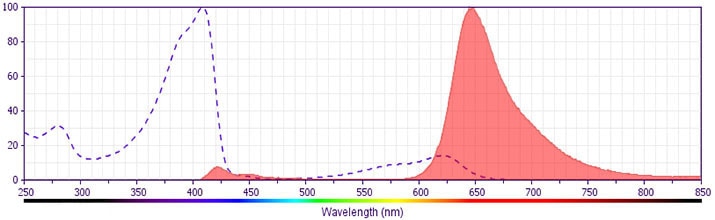
The antibody was conjugated to BD Horizon™ BV650 which is part of the BD Horizon™ Brilliant Violet™ family of dyes. This dye is a tandem fluorochrome of BD Horizon™ BV421 with an Ex Max of 405-nm and an acceptor dye with an Em Max at 650-nm. BD Horizon™ BV650 can be excited by the violet laser and detected in a filter used to detect APC-like dyes (eg, 660/20-nm filter). Due to the excitation and emission characteristics of the acceptor dye, there will be spillover into the APC and Alexa Fluor® 700 detectors. However, the spillover can be corrected through compensation as with any other dye combination.
Please refer to Support Documents for Quality Certificates
Global - Refer to manufacturer's instructions for use and related User Manuals and Technical data sheets before using this products as described
Comparisons, where applicable, are made against older BD Technology, manual methods or are general performance claims. Comparisons are not made against non-BD technologies, unless otherwise noted.
Please refer to Support Documents for Quality Certificates
Global - Refer to manufacturer's instructions for use and related User Manuals and Technical data sheets before using this products as described
Comparisons, where applicable, are made against older BD Technology, manual methods or are general performance claims. Comparisons are not made against non-BD technologies, unless otherwise noted.
For Research Use Only. Not for use in diagnostic or therapeutic procedures.